| Author |
 Replies: 23 / Views: 2,850 Replies: 23 / Views: 2,850 |
Page 2 of 2
|
|
|
|
Pillar of the Community
 United States
517 Posts |
In Oldgrouchyguy's post on the "cast Nova" he stated that "the base coin seems pretty much to be the same color as a Rosa Americana issue". Well, my Rosa looks more like its copper sister Hibernia issue! He also mentioned "bifurcated lettering" which is an interesting strike anomaly also seen in my Rosa; initially thought a possible die state Syd only noted perfect dies for this variety, Martin 2.7-Eb.3 with the double cut "A" of GRATIA. Image on the right is a known genuine example: 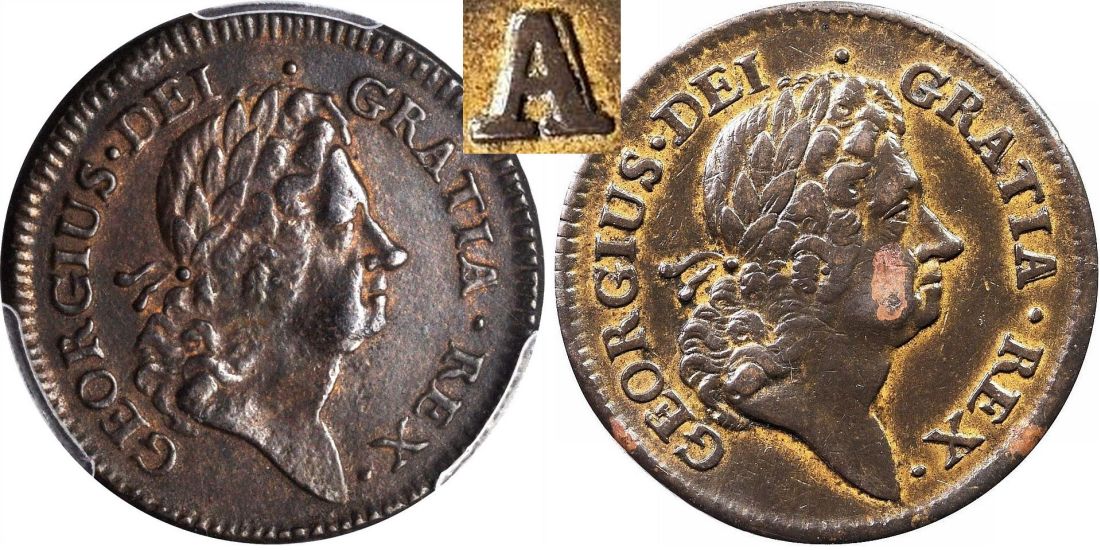 I nicknamed mine the "broken ER"...  Edited by burfle23
01/05/2023 10:19 pm
|
|
Pillar of the Community
United States
4233 Posts |
|
|
Pillar of the Community
United States
517 Posts |
The 2nd link is the same variety. Thanks kbbpll! Similar strike but not a direct match. Here is a direct match from Syd Martin's collection though: 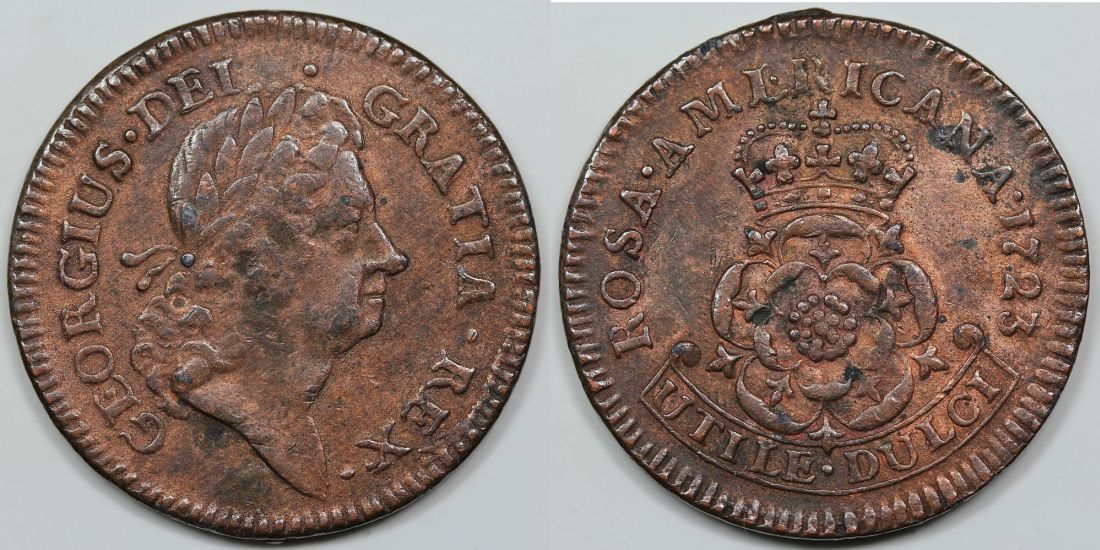 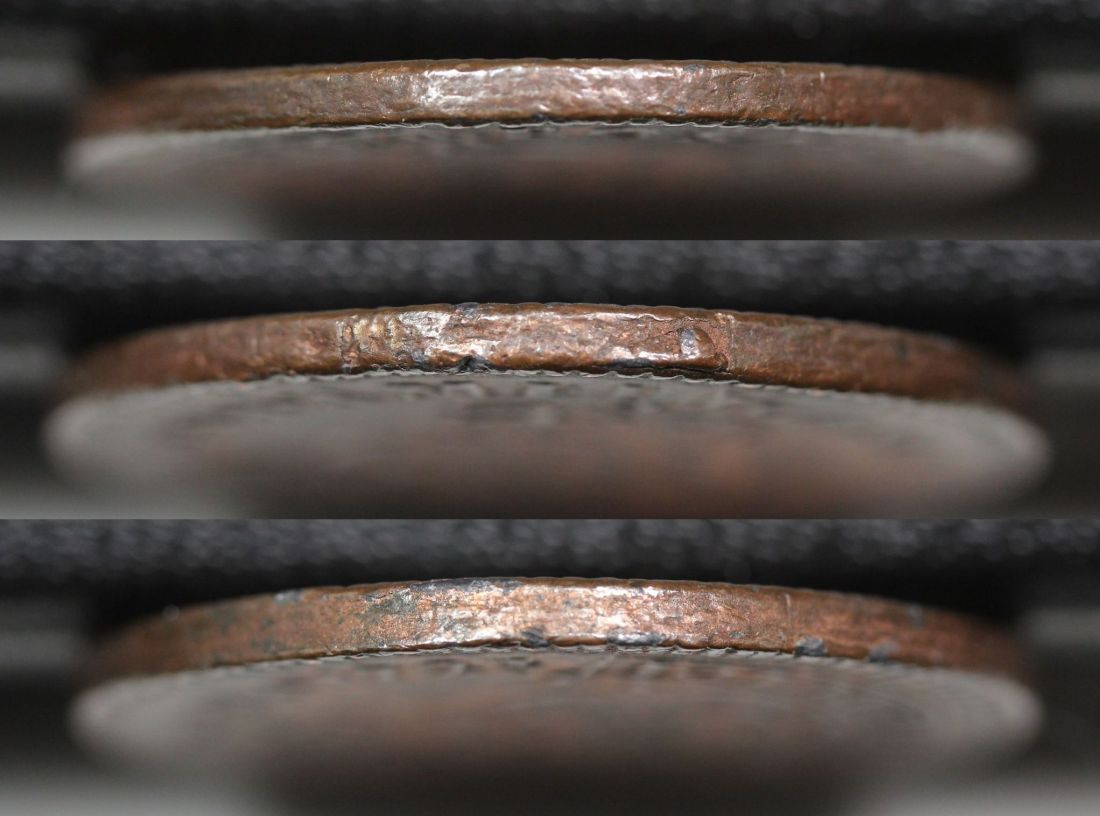 Note the similar "blobs" (for better terminology) of metal between mine and Syd's: 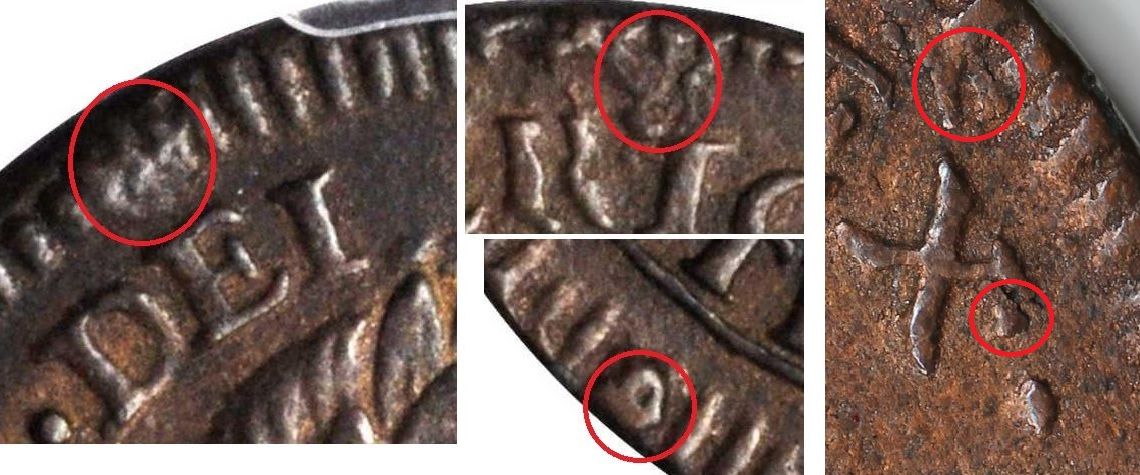 Edited by burfle23
01/06/2023 08:27 am
|
|
Pillar of the Community
United States
517 Posts |
Sorry I drug this out...
Edited by burfle23
01/07/2023 6:27 pm
|
|
Pillar of the Community
United States
4707 Posts |
I think the OP may have answered his own question. Thread is a bit confusing to follow, does it appear the OP TPG coin is a fake? |
|
Pillar of the Community
United States
517 Posts |
Thanks jimbucks; I was hoping for other opinions but I believe I do know the answer to the question if mine is counterfeit. Thanks for the clarification...
Edited by burfle23
01/07/2023 6:41 pm
|
|
Pillar of the Community
United States
756 Posts |
thats pretty interesting. thanks for sharing it.
|
|
Pillar of the Community
United States
517 Posts |
Coinfrog and nickelsearcher my explanation for why I believe my PCGS slabbed example is a fake. The short answer is there are MANY matching areas between my example and the cast one in Syd Martin's collection per the image that follows: 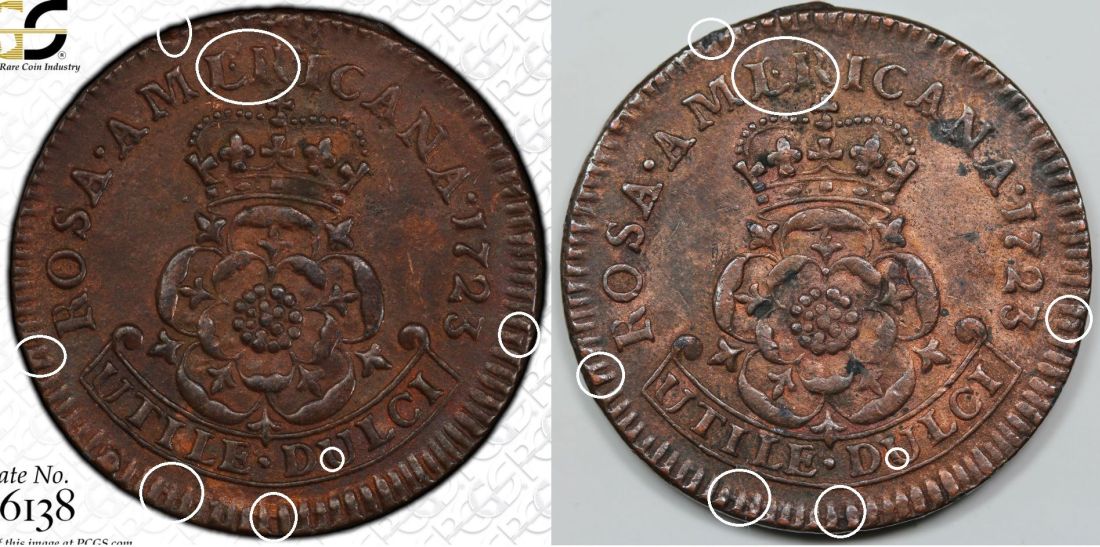 It is my understanding Syd actually commissioned master coin copier Peter Rosa to make examples and a mold/ die for his collection. It was described as a "copper plated lead cast". Genuine Rosa Americanas have been documented to consist of:  Peter Rosa's examples, consisted of "lead, antimony, and tin; the copper portion is all from the plating" as I noted above. XRF scanning my example gave the following results: 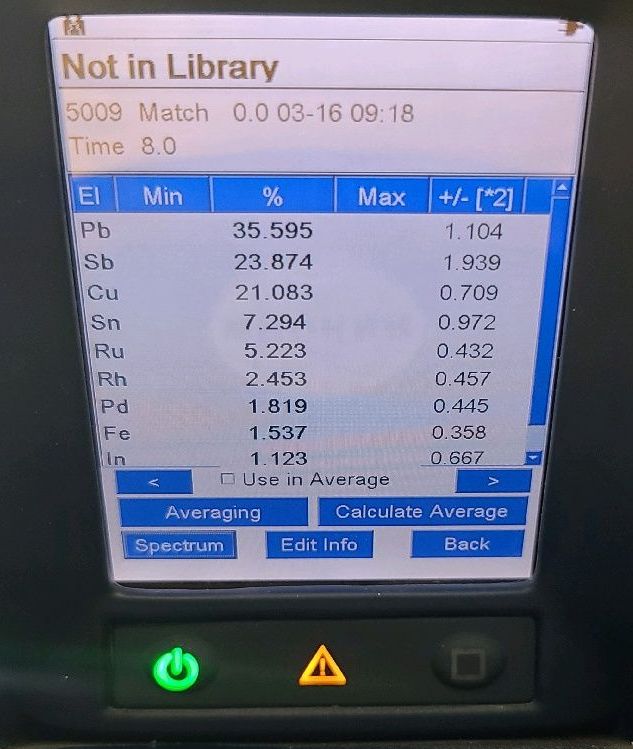 Edited by burfle23
01/07/2023 8:19 pm
|
|
Pillar of the Community
United States
1768 Posts |
You must be Jack Young of the Dark Corner site. As there is a web link to this very same discussion on your analysis here with identical photos. In 2008 I had a standout Type Collection of Rosa Americana's sold at the Americana Sale in 2008 by SB so I know the series and that's my reference point of knowledge. It seems you already found your answer with the broken ER motifs being similar to the same die used by Peter Rosa so this is just further exploratory work on your part. Since PCGS does not have a strict WEIGHT STANDARD on these Rosa's and assuming your correct about Peter Rosa's alloy which is actually so-called white metal (an alloy usually containing Sb alloyed with Sn, Cu and/or Pb) then Cu plated) and since this should? vary from the typical bath metal in weight? Probably - but what is the correct weight standard? ... so a well made Peter Rosa copy could fool PCGS or NGC for that matter. XRF if a strong enough beam intensity is introduced that could go deeper into the surface rather than the typical 5-10 microns could pick up these unwanted elements of white metal you would have your answer. In retrospect you may have a possible Peter Rosa copy in a PCGS slab. The real story here IMO is that all the Pre-Patent Issues were not American Issued for U.S. Colonies IMO. There is NO EVIDENCE AT ALL THAT THESE ISSUED WERE MADE FOR THE COLONIES CONSIDERING THEIR FULL HANOVERIAN LEGENDS!!! There is no mention in the Newton papers these were issued for the Colonies and probably at this time in 1717 Wood was just illustrating his die making skills using this new alloy called bath metal to IMPRESS UPON The Royal Mint his die making skills. PERIOD! But since American U.S. Coin catalogers since the early 20thC were cataloging these as U.S. Colonials since the Yanks loved them and the Brits could care less about them and since the same alloy was eventually used in the regular series it STUCK as U.S. Colonials! IMO. Your up DARK CORNER .... John Lorenzo, Numismatist, United States. P.S. That is unusual and interesting that a XRF can be taken thru TPG plastic as it was my experience the plastic constituents dilute or spoil the metal alloy results? Perhaps it can be done today I last attempted that on a typical benchtop XRF 10 years ago - so it does confirm the white metal alloy. CASE CLOSED. Edited by colonialjohn
01/07/2023 6:50 pm
|
|
Pillar of the Community
United States
517 Posts |
Thanks for your response colonialjohn! Yes, I am Jack D. Young and wrote this one up in both the C4 Newsletter and Coin Week/ Dark Corner. And yes, the purest XRF results are of a raw coin; my test lab specialist actually conducted XRF at two levels on my early copper fakes but I was not interested in removing this one from the slab so it was shot through the plastic. A 3rd similar example was sold in a past SB auction as uniface Rosa copies: 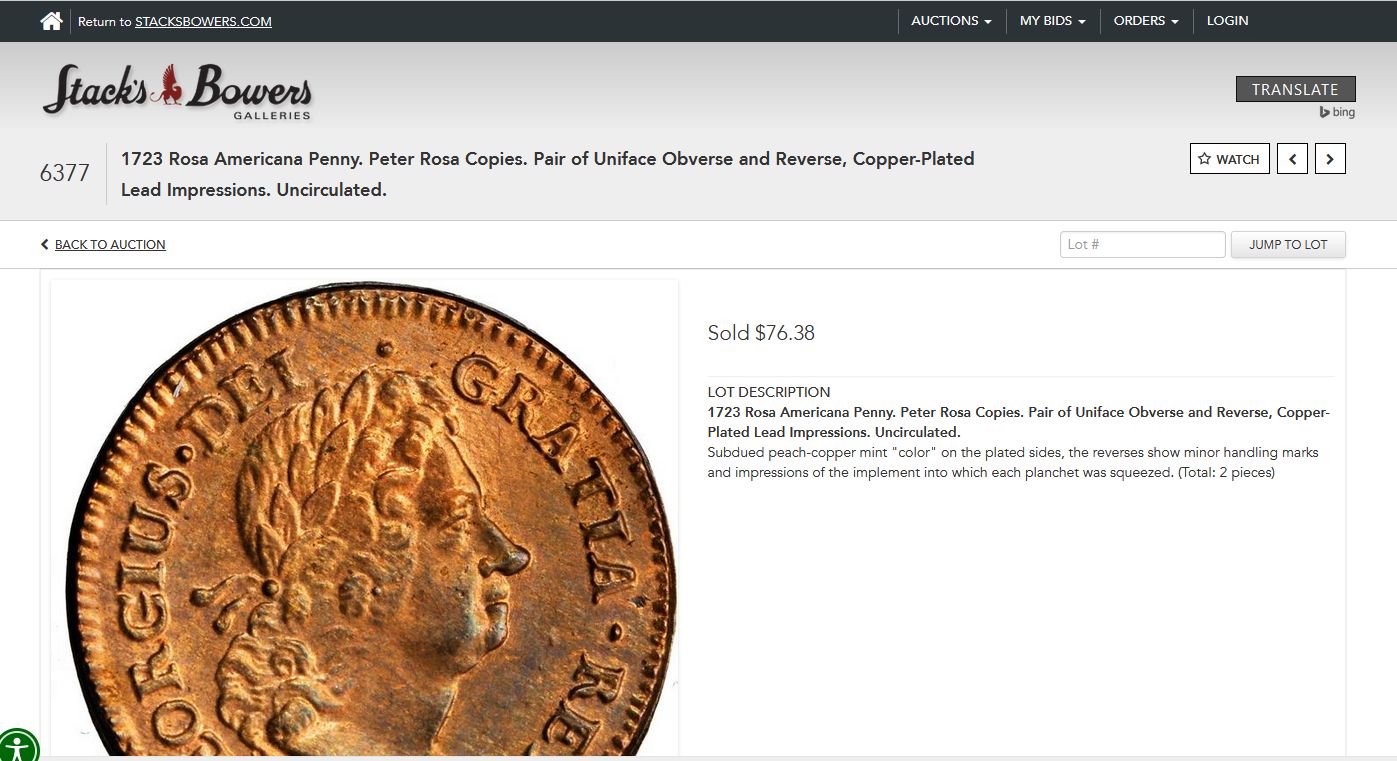 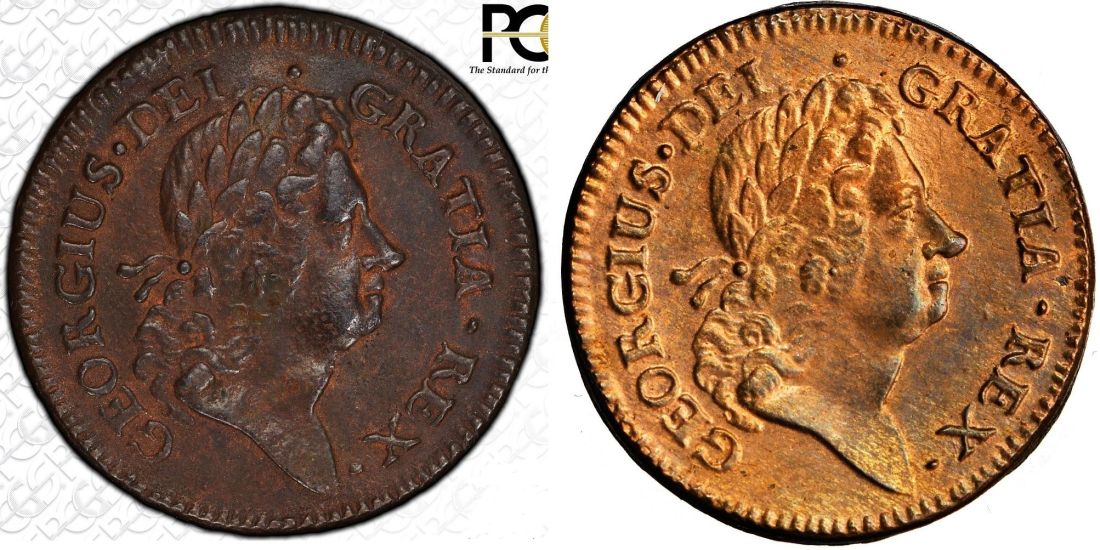 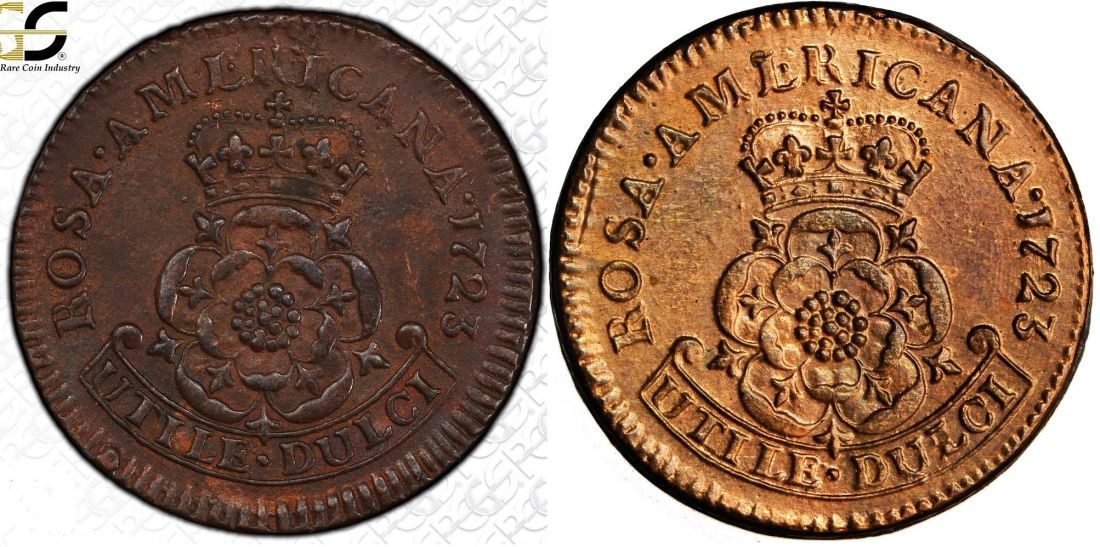 My posted question was if one could tell if mine were a cast fake simply by the images like some other posts I have seen in this forum; my premise is it takes more analysis before calling someone's "baby ugly". Best, Jack. Edited by burfle23
01/07/2023 7:03 pm
|
|
Pillar of the Community
United States
4707 Posts |
This begs some followup questions. 1) Did you purchase your coin through Stacks (it has a Stacks sticker on back)? If so, does Stacks have any liability in selling a counterfeit coin in a legit TPG holder? 2) Does the TPG guarantee apply to this coin? I suspect they don't want a fake residing in their holder. 3) What's your future intentions with this coin? Thank You. |
|
Pillar of the Community
United States
1768 Posts |
As you know the coins were made of an alloy called Bath metal composed of 75% brass, 20% zinc (mixed with tin and bismuth) and 5% silver and were to weigh slightly less than half the weight of English coins. With this much oxidative and environmentally Zn in the alloy overall we can expect many to have ROUGH surfaces as being a normal scenario and rightfully so - but this type of feature to the novice may SUGGEST the piece as questionable if not slabbed. A normal FIRST response. It will be interesting to see if future generations will take to variety collecting of Rosa's and Hibernia's other than major/minor type collecting as is the normal collecting route by most today even with Syd's books out there? JPL
|
|
Pillar of the Community
United States
517 Posts |
jimbucks, I did not purchase it through Stacks but from a Colonial collector and friend; I am sure Stack's would stand behind the coin if I were to complain about it but that isn't an issue. The TPG guarantee does apply to this one but I have no interest in it as I purchased it as "suspect" and went about researching it to prove it not genuine; the TPG is aware of this example. I intend to keep it as is as I have other more deceptive "coins" in genuine TPG holders; I actually had an educational display as "Dark Side" at last year's EAC Convention in St. Louis. |
|
Pillar of the Community
United States
756 Posts |
Jack I'm really impressed with the thorough way that you go about analyzing the coins you talk about. the attention to detail and professionalism is commendable. thank you for showing me a cast counterfeit in a TPG holder. I had never seen one before. |
|
Pillar of the Community
United States
517 Posts |
Thanks for the responses!
Edited by burfle23
01/09/2023 07:55 am
|
|
Page 2 of 2
|
Replies: 23 / Views: 2,850 |
Page 2 of 2
|







 First Page


 Posted 01/05/2023 11:41 pm


