| Author |
 Replies: 21 / Views: 3,653 Replies: 21 / Views: 3,653 |
Page 2 of 2
|
|
|
|
New Member
 United States
6 Posts |
|
|
New Member
United States
6 Posts |
|
|
Valued Member
United States
324 Posts |
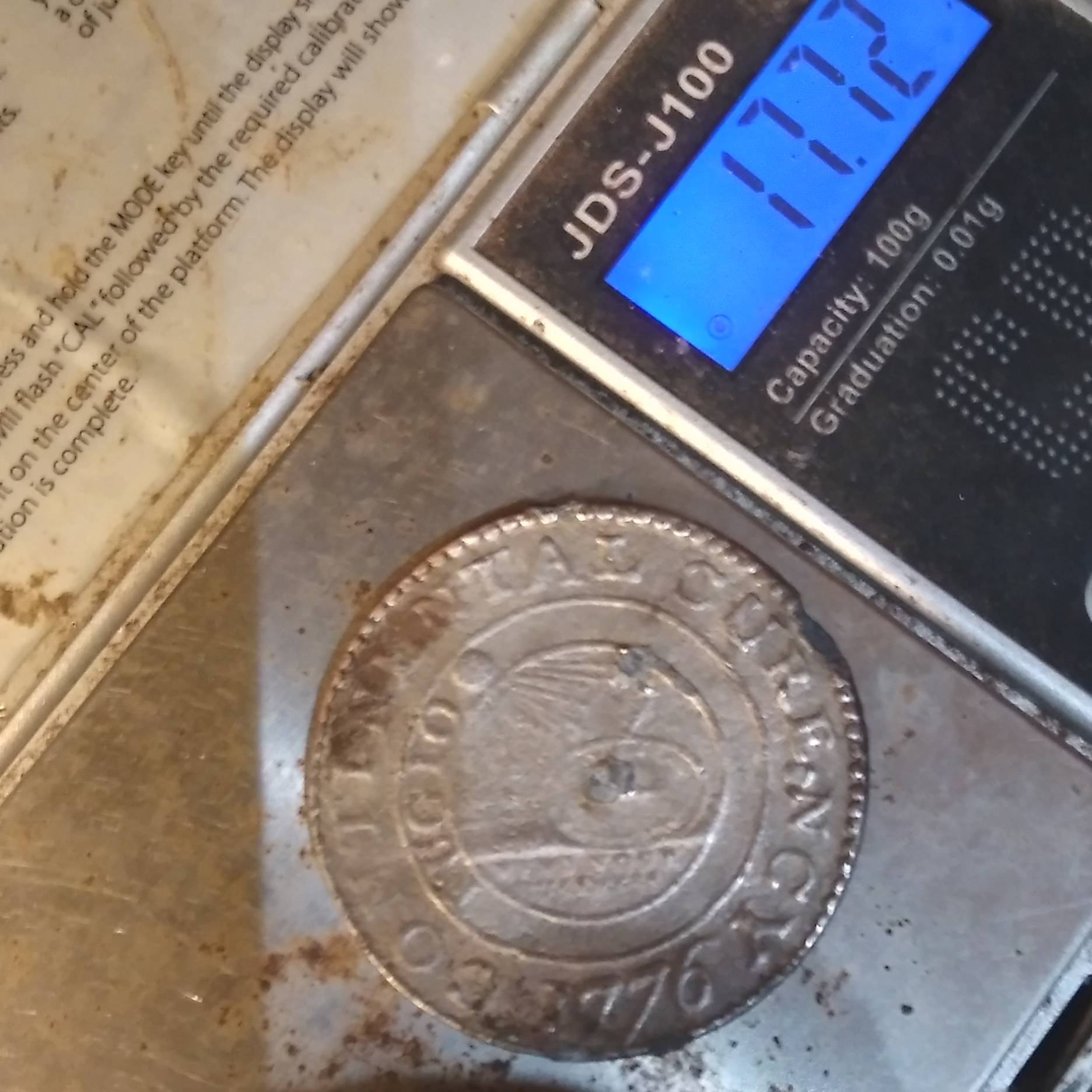
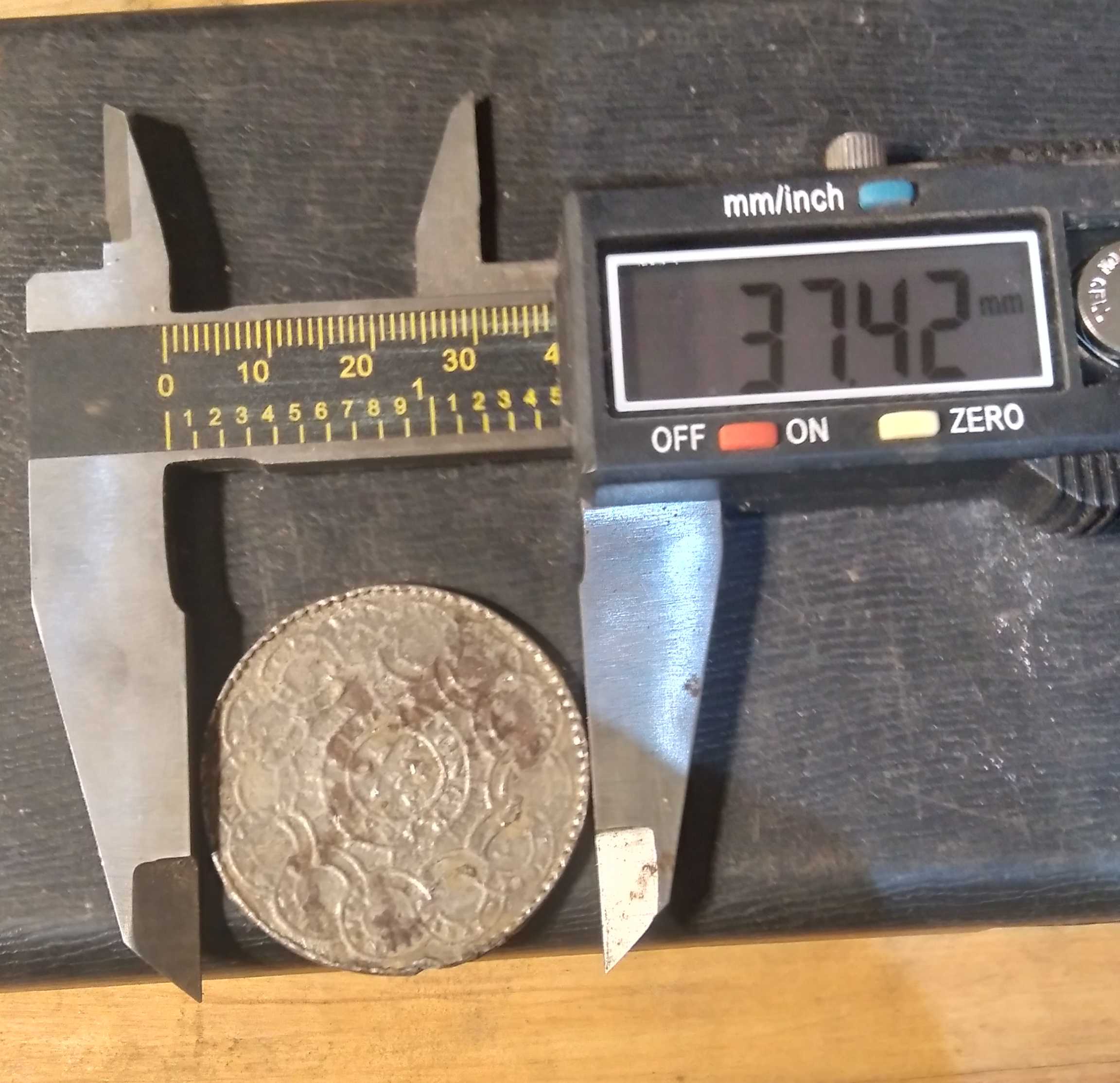
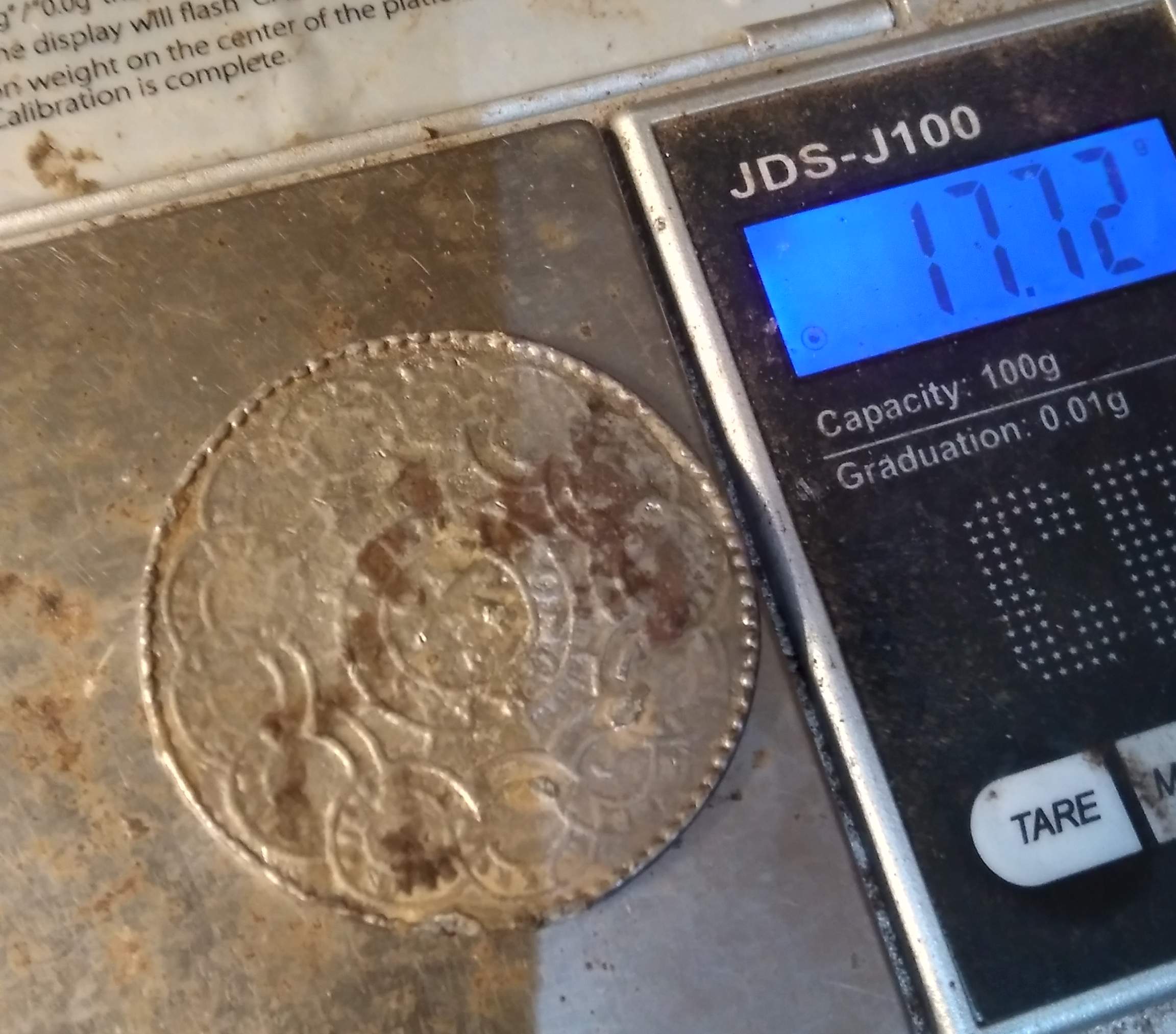
It looks cast. Also, no genuine continental dollar coins have been doug up in the U.S.
|
|
Pillar of the Community
United States
4233 Posts |
It has the appearance of corroded plated base metal with the plating wearing off. I wouldn't get your hopes up. Since there's no historical evidence that these ever circulated, let alone were ever minted in the US, the proximity to any encampment or route isn't something I'd consider as relevant. Being extremely cynical, I think it's more likely somebody planted one of the many "souvenir" copies to get their jollies. Only a professional authentication will say one way or another though. See what others say before you waste money on that.
|
|
Pillar of the Community
Germany
1856 Posts |
I believe "Continental Dollars" never circulated in America. Latest and well documented research points to a German origin for sale as tokens in Europe, and were actually unknown in the United States until the early 19th century. (I'll try to find the source for this information).
|
|
Pillar of the Community
United States
1677 Posts |
That is the typical, souvenir type, replica.
|
|
Moderator
 United States
15955 Posts |
 to the CCF Interesting discussion. Unrelated question - how did your scale become so corroded?  |
|
Pillar of the Community
United States
4233 Posts |
From a July 2018 Numismatist article debunking the conventional story of these coins: Quote:
Why have none of these pewter pieces been excavated from campsites occupied by the Continental Army during the Revolutionary War? Collectively, these sites have yielded thousands of pewter buttons and countless copper and small silver coins. Since one of the main purposes of the Continental Currency was to pay troops, huge quantities of the money went directly to the military. One would think ... that a good place to look for a lost or discarded example should be the site of a Continental Army encampment... I'm beginning to smell a rat. Somebody read this article, or heard the gist of it, and decided to have some fun by planting this, and probably at other places in the area. Do you have photographic evidence of the spot, before, during and after, was it undisturbed, how deep was it, etc. This is a problem with metal detecting - all the archaeological documentation/evidence is lost. |
|
Bedrock of the Community
United States
27514 Posts |
Inordinately fascinated by bits of metal with strange markings and figures
|
|
Bedrock of the Community
United States
11976 Posts |
These coins were not circulating money but unofficial private patterns using a Ben Franklin design for proposed U.S. coinage. As such, you wouldn't expect these coins to show up in camp or battle sites as they weren't used for any sort of payment.
IN NECESSARIIS UNITAS - IN DUBIIS LIBERTAS - IN OMNIBUS CARITAS THE MAN IN THE ARENA, Theodore Roosevelt at the Sorbonne Paris on April 23, 1910: " It is not the critic who counts; not the man who points out how the strong man stumbles or where the doer of deeds could have done better. The credit belongs to the man who is actually in the arena, whose face is marred by dust and sweat and blood, who strives valiantly, who errs and comes up short again and again, because there is no effort without error or shortcoming, but who knows the great enthusiasms, the great devotions, who spends himself in a worthy cause; who, at the best, knows, in the end, the triumph of high achievement, and who, at the worst, if he fails, at least he fails while daring greatly, so that his place shall never be with those cold and timid souls who knew neither victory nor defeat." My coin website: https://fairfaxcoins.comEdited by numismatic student
01/21/2023 5:45 pm
|
|
Bedrock of the Community
United States
11976 Posts |
https://coins.nd.edu/ColCoin/ColCoi...r.intro.html"The Continental Currency "Dollar" is one of the most frequently reproduced colonial era coins." "It is thought that this Continental coin was meant to replace the paper dollar in these emissions [of paper continental currency]. Also, the coin was made to be about the same size as the Spanish milled dollar and, like the Spanish coin, had an edge design. However who authorized or minted the coins is unknown. Interestingly, there are no records of this coin in the actions of the Continental Congress, although other coinage concerns were recorded. On April 19, 1776 the Congress appointed a committee to determine the value of several foreign coins in relation to the Spanish dollar and on February 20, 1777 a congressional treasury committee recommended a mint be established, but nothing further was done on this matter. To date there is no evidence the Continental Currency coins were authorized or issued by the Continental Congress. Indeed, Robert Morris, the Superintendant of Finance during the Confederation period, appears not to have known of the Continental Dollars as he called his 1783 Nova Constellation patterns the first that were, "struck as an American Coin." (Morris, Diary for April 2, 1783)."
IN NECESSARIIS UNITAS - IN DUBIIS LIBERTAS - IN OMNIBUS CARITAS THE MAN IN THE ARENA, Theodore Roosevelt at the Sorbonne Paris on April 23, 1910: " It is not the critic who counts; not the man who points out how the strong man stumbles or where the doer of deeds could have done better. The credit belongs to the man who is actually in the arena, whose face is marred by dust and sweat and blood, who strives valiantly, who errs and comes up short again and again, because there is no effort without error or shortcoming, but who knows the great enthusiasms, the great devotions, who spends himself in a worthy cause; who, at the best, knows, in the end, the triumph of high achievement, and who, at the worst, if he fails, at least he fails while daring greatly, so that his place shall never be with those cold and timid souls who knew neither victory nor defeat." My coin website: https://fairfaxcoins.com |
|
Pillar of the Community
United States
4233 Posts |
@numismaticstudent Are you an ANA member? If so, look in the archives for a January 2018 article "The Myth of the Continental Dollar" and Part 2 in July 2018. Interesting stuff. Everybody has been trying to figure out who EG was for 200 years. I wonder if anyone has considered that EG in EG FECIT is also an abbreviation for exempli gratia, "for example." Fecit by itself means "he made", but if I put "Joe Smith fecit", Google translate says "Joe Smith did it." However, "exempli gratia fecit" means "for example he did." Taken together, the coin might read "mind your business / for example he did." That's rather cryptic - who minded his business as an example? I'm no Latin scholar but I'm wondering why "EG" has to be interpreted as someone's initials, as opposed to exempli gratia. |
|
Bedrock of the Community
United States
11976 Posts |
I was fortunate enough to chat with David McCarthy who coauthored that article on the continental dollars postulating that they are just souvenirs. Eric Newman wrote that his research indicated that Elisha Gallaudet [EG Fecit] of New Jersey engraved the dies for the continental dollars. According to the ANA: "As the founding fathers met in Philadelphia to discuss independence for the colonies, their thoughts turned to the creation of a new coinage, a traditional symbol of national independence. In anticipation of a loan of silver bullion from France, Elisha Gallaudet of New Jersey prepared dies to strike the new coins. Franklin-inspired designs that Gallaudet had previously created for fractional Continental notes were chosen for the proposed Continental Dollar of 1776. These coins were intended to announce the sovereignty of the United Colonies and to prop up the value of Continental paper currency. Unfortunately, the proposed French bullion loan never materialized, and only small numbers of patterns were produced in silver, tin, brass and copper. " McCarthy's article disputes that these coins were patterns. IN NECESSARIIS UNITAS - IN DUBIIS LIBERTAS - IN OMNIBUS CARITAS THE MAN IN THE ARENA, Theodore Roosevelt at the Sorbonne Paris on April 23, 1910: " It is not the critic who counts; not the man who points out how the strong man stumbles or where the doer of deeds could have done better. The credit belongs to the man who is actually in the arena, whose face is marred by dust and sweat and blood, who strives valiantly, who errs and comes up short again and again, because there is no effort without error or shortcoming, but who knows the great enthusiasms, the great devotions, who spends himself in a worthy cause; who, at the best, knows, in the end, the triumph of high achievement, and who, at the worst, if he fails, at least he fails while daring greatly, so that his place shall never be with those cold and timid souls who knew neither victory nor defeat." My coin website: https://fairfaxcoins.com |
|
Pillar of the Community
United States
4233 Posts |
Part 2 by Erik Goldstein disputes that Elisha Gallaudet had anything to do with it. As with the rest of it, no documentation connects Gallaudet to the coins, other than the initials EG. Who decided that EG was someone's initials? The only Latin on the coin is FUGIO, and on some FUGIO EG FECIT. "I flee/fly, for example, he did". Taking a dig at King George?
Regardless, maybe the OP will provide more details about digging up a presumed replica coin.
|
|
New Member
United States
6 Posts |
Thank you everyone for your insight and information. A few of you had questions that I just now seen. I found the coin in a feild behind a Tractor Supply store adjacent to the intersection of route 10 & route 30. Approximately 20 miles due east of Lancaster city. It was roughly down 6.5 to 8 inches in the ground. In the same vicinity I recovered 15 indian head pennys ranging from 1864 to 1903. The War encampment I mentioned was a little further south east ( 3 miles give or take)in between Parkesburg and Pomeroy. I was told that it was a very large encampment, housing many soildiers and other personnel.I assume it was for the preparation/ anticipation of the battle of the Brandywine, which is not far away.
I believe the corrosion on the scale derived from the remanants of acid from acid testing jewelry & coins. Thanks again to all whom have weighed in with knowledge and insight! Its greatly appreciated!
|
|
Page 2 of 2
|
Replies: 21 / Views: 3,653 |
Page 2 of 2
|







 First Page
 Posted 01/20/2023 10:47 pm