| Author |
 Replies: 20 / Views: 1,804 Replies: 20 / Views: 1,804 |
Page 2 of 2
|
|
|
|
Bedrock of the Community
Australia
21793 Posts |
Don't see any evidence of Blakesley effect.
|
|
Pillar of the Community
 United States
9026 Posts |
While I was marking up pics, you explained to Dearborn already.... I'm too slow.  I have a bigger issue with the coin not being oriented correctly, than the clip not. I know very little about clips but hope you knock down a great grade! 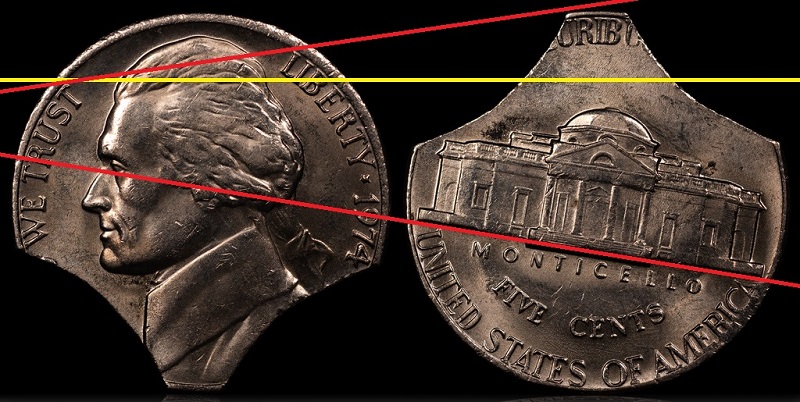 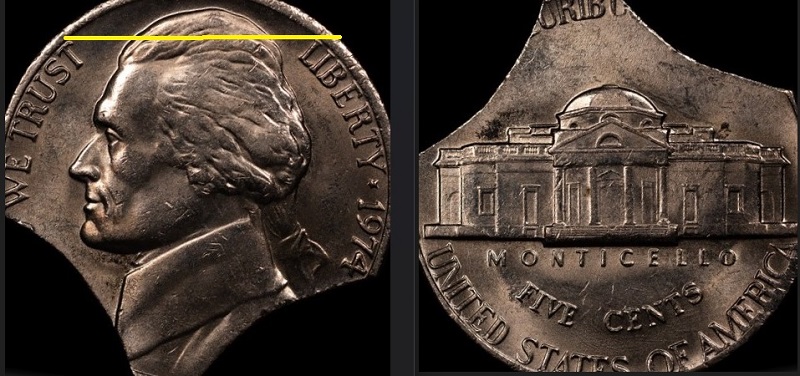 -makecents-
|
|
Moderator
 United States
108482 Posts |
Quote:
Yeah I wasn't trying to mislead anyone, I was trying to imply rotation is exact as in from the obverse placement to the reverse they line up correctly. I never meant to imply that you were. In your new images, I believe that the second one correctly show the correct orientation from obverse to reverse. I definitely under your OCD when it comes to everything being perfect. I'm in that same OCD boat with you (I have the other oar- paddling right alongside you-LOL) Quote:
Don't see any evidence of Blakesley effect. I do, on the rim opposite each one. Albeit weak, but it is there. |
|
New Member
 United States
37 Posts |
Quote:
I'm in that same OCD boat with you (I have the other oar- paddling right alongside you-LOL)
I actually laughed when you originally posted about the orientation because before I made my post I had a brief internal debate whether or not to post it correctly or not. Quote:
Don't see any evidence of Blakesley effect. The left clip (from the obverse side) has the very weak "ERICA" in America on the reverse + slight softening of the rim around "LIB" in Liberty on the obverse. The right clip (from the obverse side) has the beginning signs of a flattening rim above "RUST" in trust. The coin is within a few arc seconds of being absolute parallel to the camera sensor. So whatever rim variation is true to the coin. Quote:Please follow up with this thread when you get this coin back from the TPG. I'm interested to see where they grade it I'd be ecstatic with a MS63. Then I see photos of 1980-D nickels on PCGS and rethink everything I know about how to grade a Jefferson. |
|
Pillar of the Community
Canada
6244 Posts |
Me I look more of the clip borders. What look the sides of the clip? And also why is rim on the tinny part?!!! I magnify the photos and do not fit my narrative of the double clip. A new man made error?
Edited by silviosi
05/02/2023 10:34 pm
|
|
Moderator
United States
15971 Posts |
Best of wishes with your TPG certification. Take a look at my other hobby ... http://www.jk-dk.art |
|
Moderator
United States
108482 Posts |
Quote:
The coin is within a few arc seconds of being absolute parallel to the camera sensor and just what instrument did you use to measure this?  |
|
New Member
United States
37 Posts |
Quote:
I magnify the photos and do not fit my narrative of the double clip. A new man made error? Just because I dont have a 4, or 5 digit post count, doesn't mean I have no clue what I am doing. To fit my so called "narrative" here: Taken via an Olympus SZX12 at roughly 75x total optical magnification. Equivalent to using a 7.5x objective on a normal microscope. 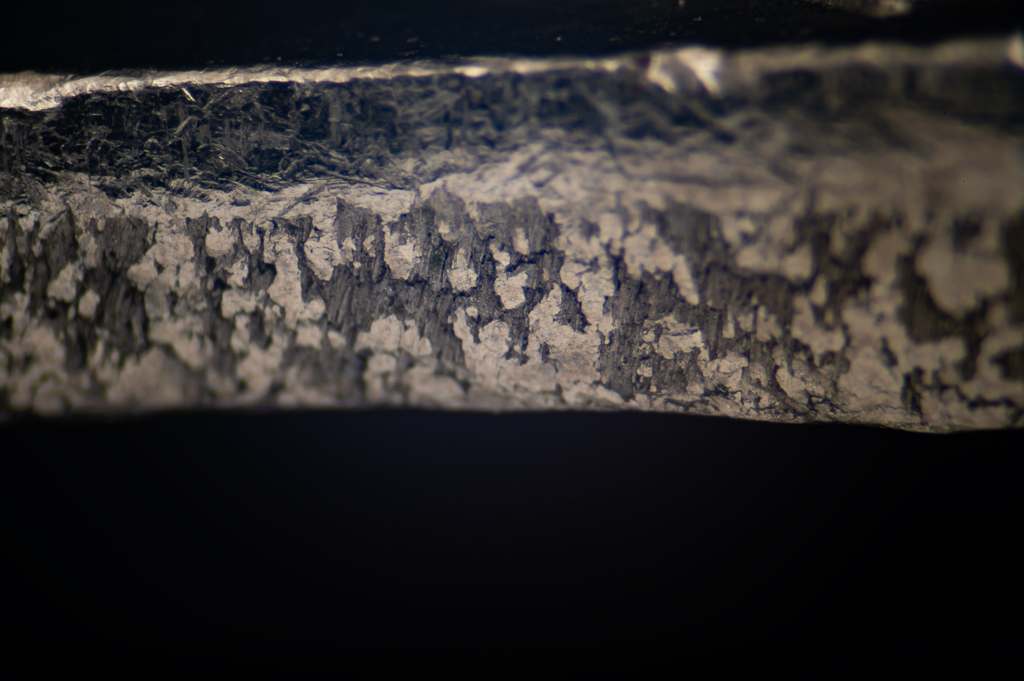 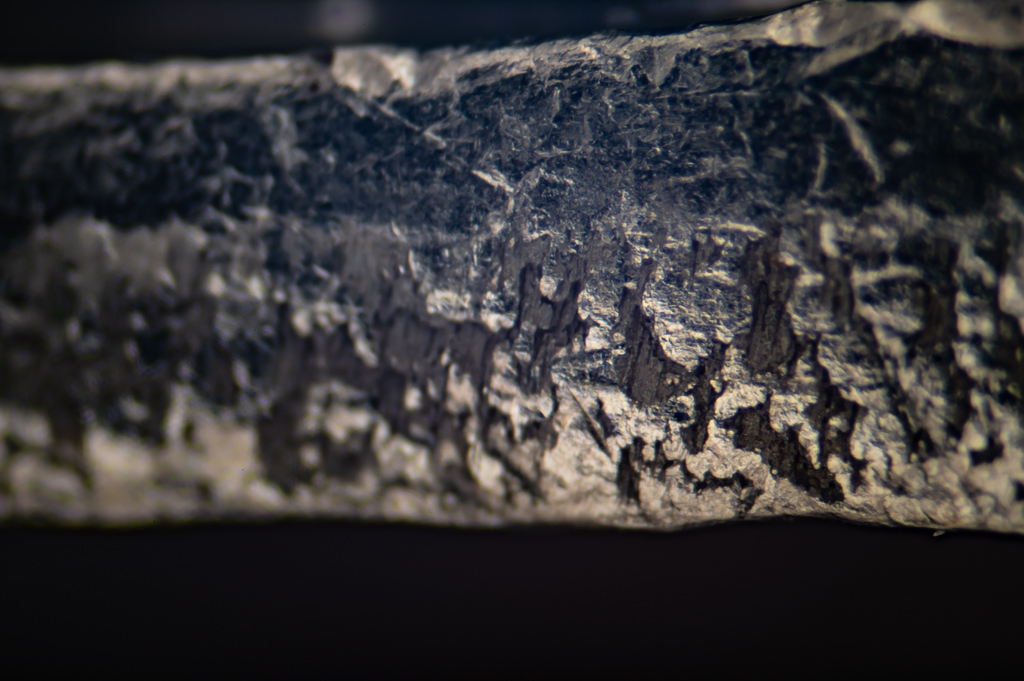 Last image is at over 100x total optical magnification. Or roughly a 10x objective on a regular microscope. 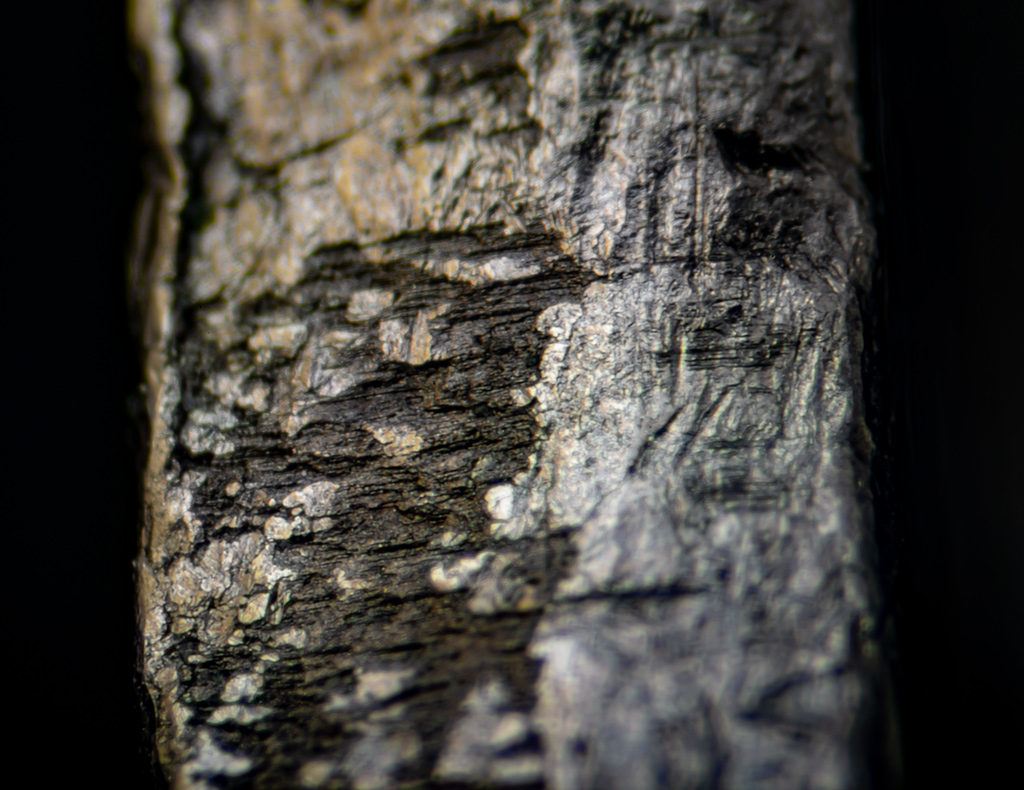 Per the Error-Ref page: Blanking And Cutting Errors Per the Error-Ref page: Blanking And Cutting Errors
Part V: Planchet Errors:Blanking and Cutting Errors: Quote:
3. "Cut-and-tear texture" on the exposed edge of the clip. Only curved clips and elliptical clips will have this feature. It is also referred to as a "breakaway zone" or a "belly line". The cut-and-tear texture refers to the microscopic texture of the clipped edge. Part of it is smooth, while part of it is grainy. The grainy part tells you that this was the original bottom of the coin metal strip. As the blanking die (punch) penetrates the coin metal strip, it forces a blank through a hole in a perforated base plate. The sharp, right-angle edge of the blanking die slices through the upper part of the coin metal strip. The lower part of the blank simply tears away from its hole in the coin metal strip as it is pushed down by the flat face of the blanking die. Quote:
and just what instrument did you use to measure this? A pair of stacked precision goniometer cradles from Newport. I do a lot of stuff with laser optics, so no, not many will have something like that. |
|
Bedrock of the Community
United States
19646 Posts |
|
|
Moderator
United States
108482 Posts |
WOW! incredible images. very nice!
|
|
Moderator
United States
196772 Posts |
Very nice!  |
|
Pillar of the Community
Canada
6244 Posts |
Quote:
Just because I dont have a 4, or 5 digit post count, doesn't mean I have no clue what I am doing.
The goniometric cradler it is a motor use to slow movements. It is OK to see. The photo system is nice but hard to master. If you has 4,5 or 6 digits posts here for me is nothing. What count is the coin. The last photos I presume are from the side of clips. If so, by the texture of the cut I will say: Was not blank cutting Mint machine. I understand you has knowledge on analyzing design. When I say my narrative it is from data (the mint data). On your software just simulate the clips circle and you will see that you do not have 2 mm between them. Conclusion: Fake double clip. |
|
Pillar of the Community
United States
9026 Posts |
That's nice! I did mine with "paint". -makecents-
|
|
Pillar of the Community
United States
5722 Posts |
It does not look like a genuine clipped planchet to me. There is virtually no Blakesley effect—that area near RICA looks more like rim damage, and there is no corresponding rim weakness on the obverse as you would expect with a true Blakesley effect. There is no tapering of the rim at the corners of the clip, and no weakness of the devices along the clip edges.
Edit: Actually , there is some weakness on the U in Pluribus, so I could be wrong.
Edited by Zurie
05/03/2023 11:14 pm
|
|
Pillar of the Community
Canada
6244 Posts |
@ ZURIE
This time I have to agree with You. Very nice explanation and clear. Me I am leasy to explain everything.
|
|
Page 2 of 2
|
Replies: 20 / Views: 1,804 |
Page 2 of 2
|





 First Page


 Posted 05/02/2023 9:22 pm


