IN NECESSARIIS UNITAS - IN DUBIIS LIBERTAS - IN OMNIBUS CARITAS THE MAN IN THE ARENA, Theodore Roosevelt at the Sorbonne Paris on April 23, 1910: "It is not the critic who counts; not the man who points out how the strong man stumbles or where the doer of deeds could have done better. The credit belongs to the man who is actually in the arena, whose face is marred by dust and sweat and blood, who strives valiantly, who errs and comes up short again and again, because there is no effort without error or shortcoming, but who knows the great enthusiasms, the great devotions, who spends himself in a worthy cause; who, at the best, knows, in the end, the triumph of high achievement, and who, at the worst, if he fails, at least he fails while daring greatly, so that his place shall never be with those cold and timid souls who knew neither victory nor defeat." My coin website:https://fairfaxcoins.com
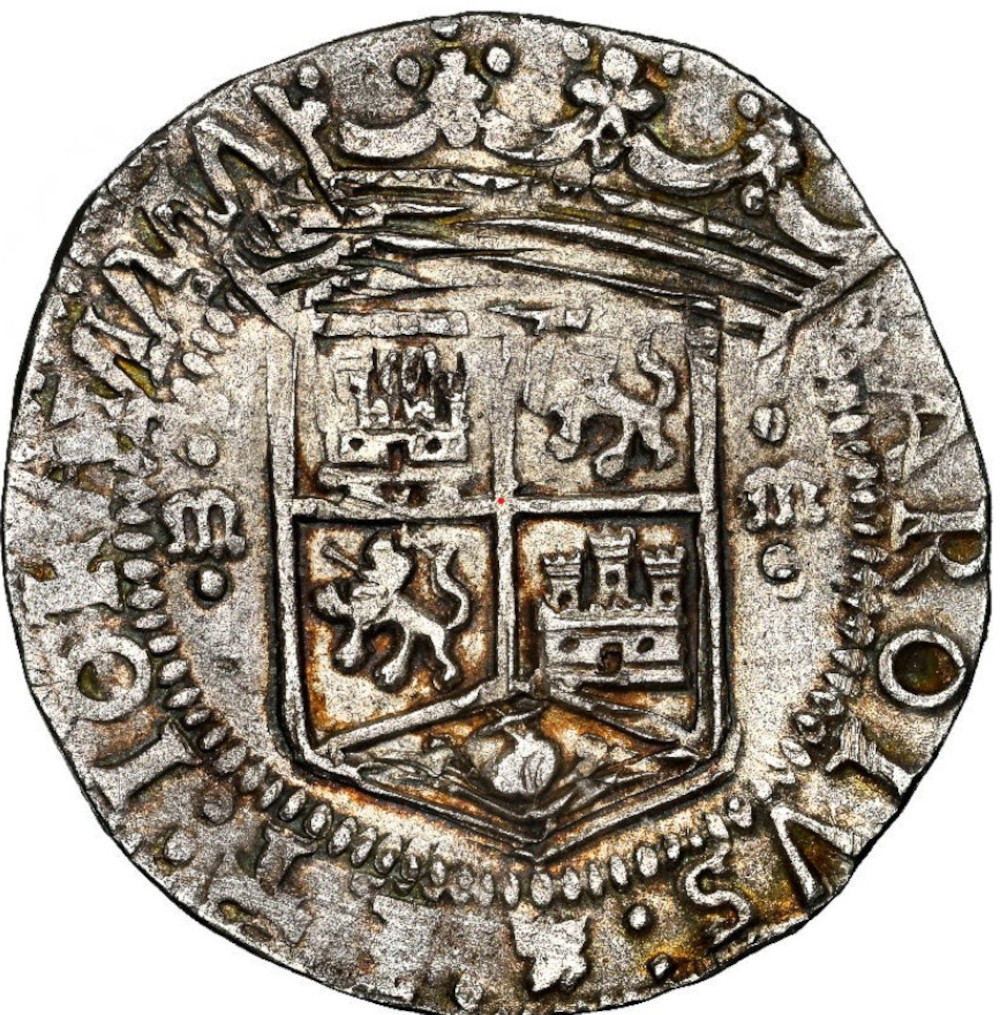
@realeswatcher - thank you for sharing your observation. I understand that the crown on the shield overhang on the right side can be due to a double strike with a rotated die on the second strike. But if this had happened, I would expect other elements of the design to be doubled. How is it that only the crown impression is so prominently rotated, maybe 30 degrees, but no other elements of the design appear to appear on the coin from the second strike?
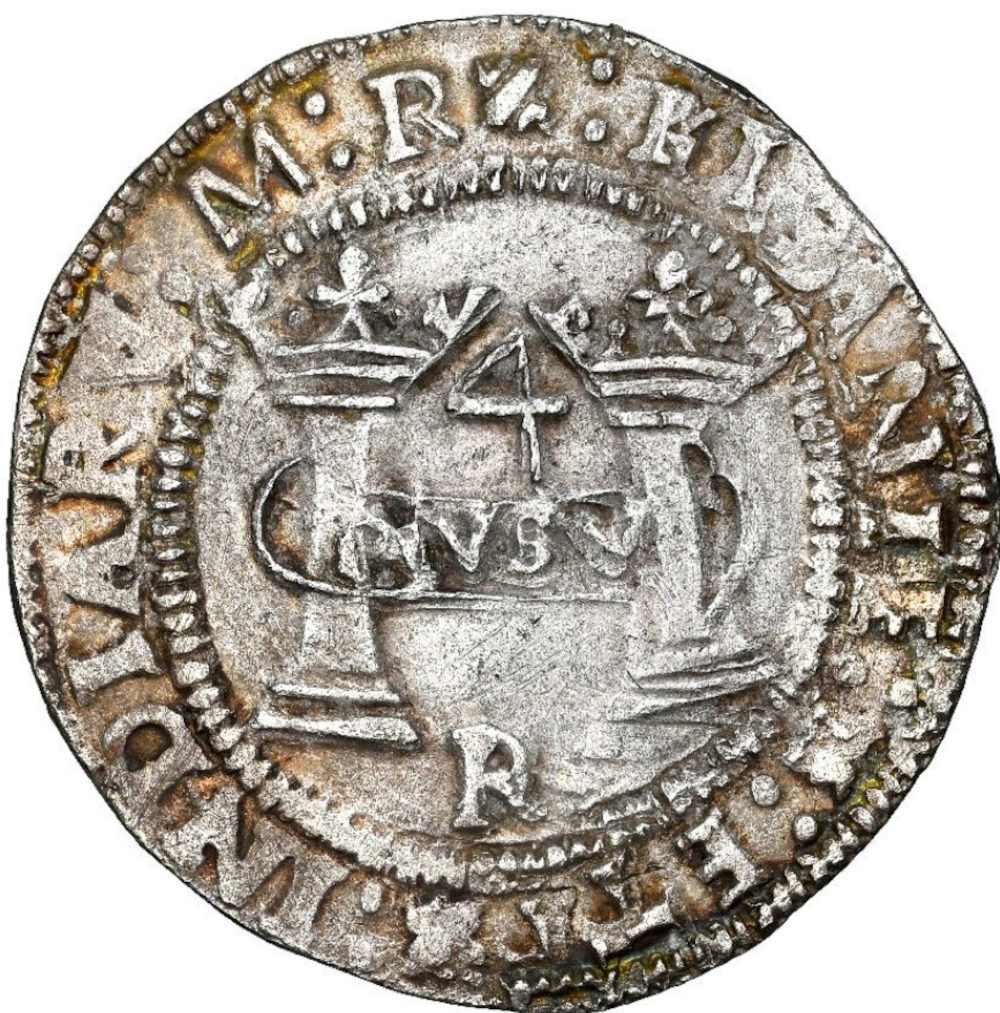
Also on the columns side in 'HISPANIE' the 'ISPA' portion of the word is shifted out to the edge with a portion of the beading below. We actually see two rows of beading only in that specific section. How can just that portion of the lettering shift out while everything else remains intact?
We known from Sedwick's article that these dies were created using punches for the lettering and other design elements. It seems more reasonable to me that a crown shaped punch was used to place the crown in the die and was punched twice, with a 30 degree rotation when the crown was repunched into the die. A lot like when digits are repunched on a date in more modern coins that we are more familiar with.
My thesis is that dies were never more dear than in the early days of the Mexico City Mint. If some element of the die was misaligned or misconstructed, they would never throw out the die, but mint laborers would try to put it to use even with all their glaring flaws. They would have been that parsimonious.
Just my working theory ready to be torn to shreds.
IN NECESSARIIS UNITAS - IN DUBIIS LIBERTAS - IN OMNIBUS CARITAS THE MAN IN THE ARENA, Theodore Roosevelt at the Sorbonne Paris on April 23, 1910: "It is not the critic who counts; not the man who points out how the strong man stumbles or where the doer of deeds could have done better. The credit belongs to the man who is actually in the arena, whose face is marred by dust and sweat and blood, who strives valiantly, who errs and comes up short again and again, because there is no effort without error or shortcoming, but who knows the great enthusiasms, the great devotions, who spends himself in a worthy cause; who, at the best, knows, in the end, the triumph of high achievement, and who, at the worst, if he fails, at least he fails while daring greatly, so that his place shall never be with those cold and timid souls who knew neither victory nor defeat." My coin website:https://fairfaxcoins.com
Quote: I would expect other elements of the design to be doubled.
As you say, the corresponding location reverse also shows some kind of shifting of the planchet on a second strike.
Like you, I have a hard time wrapping my head around why some details show the die rotation and others don't, but remember these were hammered, and there were lots of things that are non-uniform about that process (unlike milling, where the pressure is applied more uniformly). I have several hammered coins showing these types of effects.
I am with realeswatcher, that this is just a double strike with the coin rotating a bit.
Here is an informative article titled: "Early Spanish and Portuguese Coinage in America" published in the American Journal of Numismatics dated July 1881. https://www.jstor.org/stable/43585767?seq=1
Seems consistent with everything we know today, but the title suggests it speaks to early Portuguese coinage in the New World, but this part seems entirely missing from he article.
IN NECESSARIIS UNITAS - IN DUBIIS LIBERTAS - IN OMNIBUS CARITAS THE MAN IN THE ARENA, Theodore Roosevelt at the Sorbonne Paris on April 23, 1910: "It is not the critic who counts; not the man who points out how the strong man stumbles or where the doer of deeds could have done better. The credit belongs to the man who is actually in the arena, whose face is marred by dust and sweat and blood, who strives valiantly, who errs and comes up short again and again, because there is no effort without error or shortcoming, but who knows the great enthusiasms, the great devotions, who spends himself in a worthy cause; who, at the best, knows, in the end, the triumph of high achievement, and who, at the worst, if he fails, at least he fails while daring greatly, so that his place shall never be with those cold and timid souls who knew neither victory nor defeat." My coin website:https://fairfaxcoins.com
IN NECESSARIIS UNITAS - IN DUBIIS LIBERTAS - IN OMNIBUS CARITAS THE MAN IN THE ARENA, Theodore Roosevelt at the Sorbonne Paris on April 23, 1910: "It is not the critic who counts; not the man who points out how the strong man stumbles or where the doer of deeds could have done better. The credit belongs to the man who is actually in the arena, whose face is marred by dust and sweat and blood, who strives valiantly, who errs and comes up short again and again, because there is no effort without error or shortcoming, but who knows the great enthusiasms, the great devotions, who spends himself in a worthy cause; who, at the best, knows, in the end, the triumph of high achievement, and who, at the worst, if he fails, at least he fails while daring greatly, so that his place shall never be with those cold and timid souls who knew neither victory nor defeat." My coin website:https://fairfaxcoins.com
IN NECESSARIIS UNITAS - IN DUBIIS LIBERTAS - IN OMNIBUS CARITAS THE MAN IN THE ARENA, Theodore Roosevelt at the Sorbonne Paris on April 23, 1910: "It is not the critic who counts; not the man who points out how the strong man stumbles or where the doer of deeds could have done better. The credit belongs to the man who is actually in the arena, whose face is marred by dust and sweat and blood, who strives valiantly, who errs and comes up short again and again, because there is no effort without error or shortcoming, but who knows the great enthusiasms, the great devotions, who spends himself in a worthy cause; who, at the best, knows, in the end, the triumph of high achievement, and who, at the worst, if he fails, at least he fails while daring greatly, so that his place shall never be with those cold and timid souls who knew neither victory nor defeat." My coin website:https://fairfaxcoins.com
This one is a similar example also showing the crown sliding off the shield. This was sold by Sedwick earlier this year and was recovered from the 1550 shipwreck of The Golden Fleece. This one is Nesmith 6c whereas the subject of this thread is Nesmith 6b/6a.
IN NECESSARIIS UNITAS - IN DUBIIS LIBERTAS - IN OMNIBUS CARITAS THE MAN IN THE ARENA, Theodore Roosevelt at the Sorbonne Paris on April 23, 1910: "It is not the critic who counts; not the man who points out how the strong man stumbles or where the doer of deeds could have done better. The credit belongs to the man who is actually in the arena, whose face is marred by dust and sweat and blood, who strives valiantly, who errs and comes up short again and again, because there is no effort without error or shortcoming, but who knows the great enthusiasms, the great devotions, who spends himself in a worthy cause; who, at the best, knows, in the end, the triumph of high achievement, and who, at the worst, if he fails, at least he fails while daring greatly, so that his place shall never be with those cold and timid souls who knew neither victory nor defeat." My coin website:https://fairfaxcoins.com
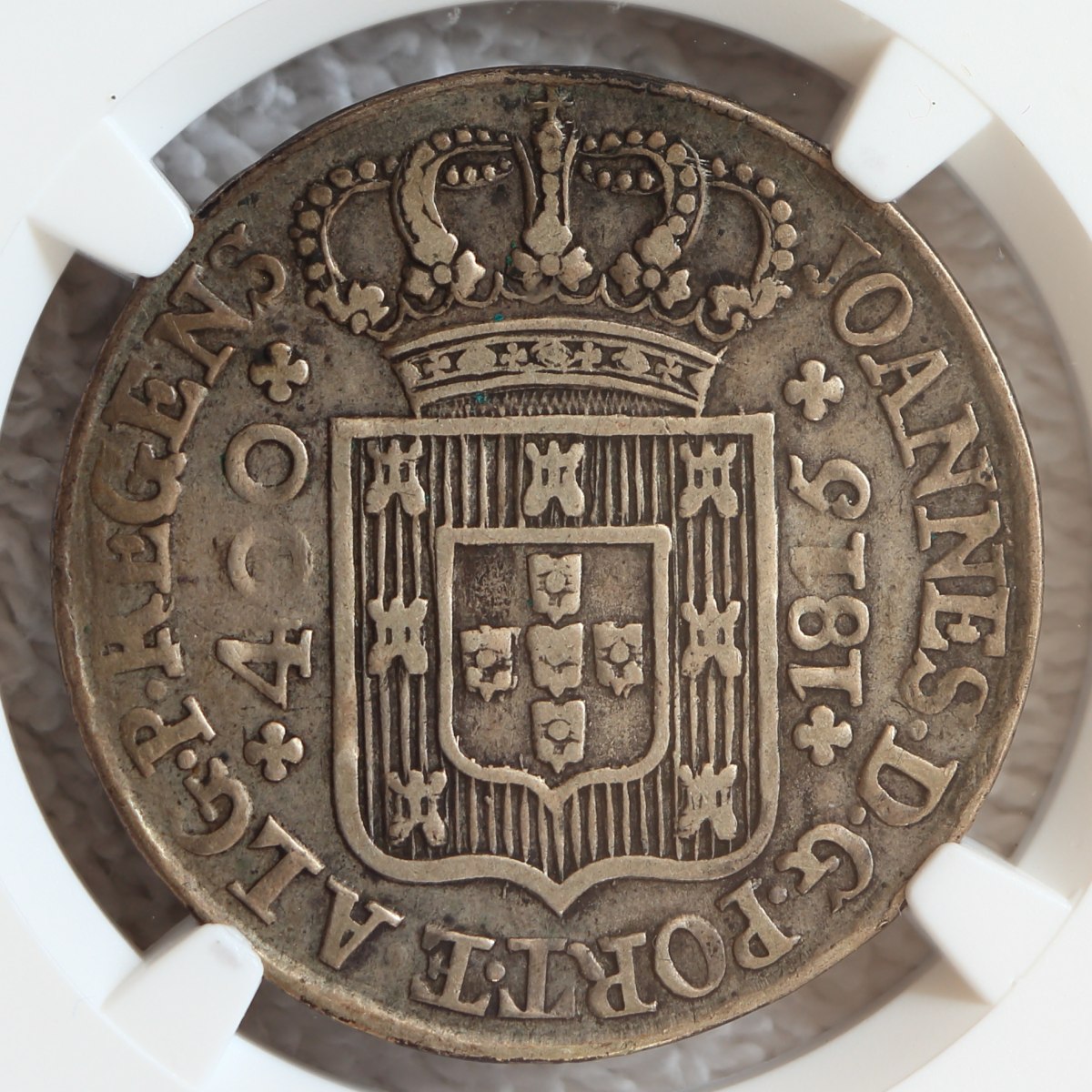
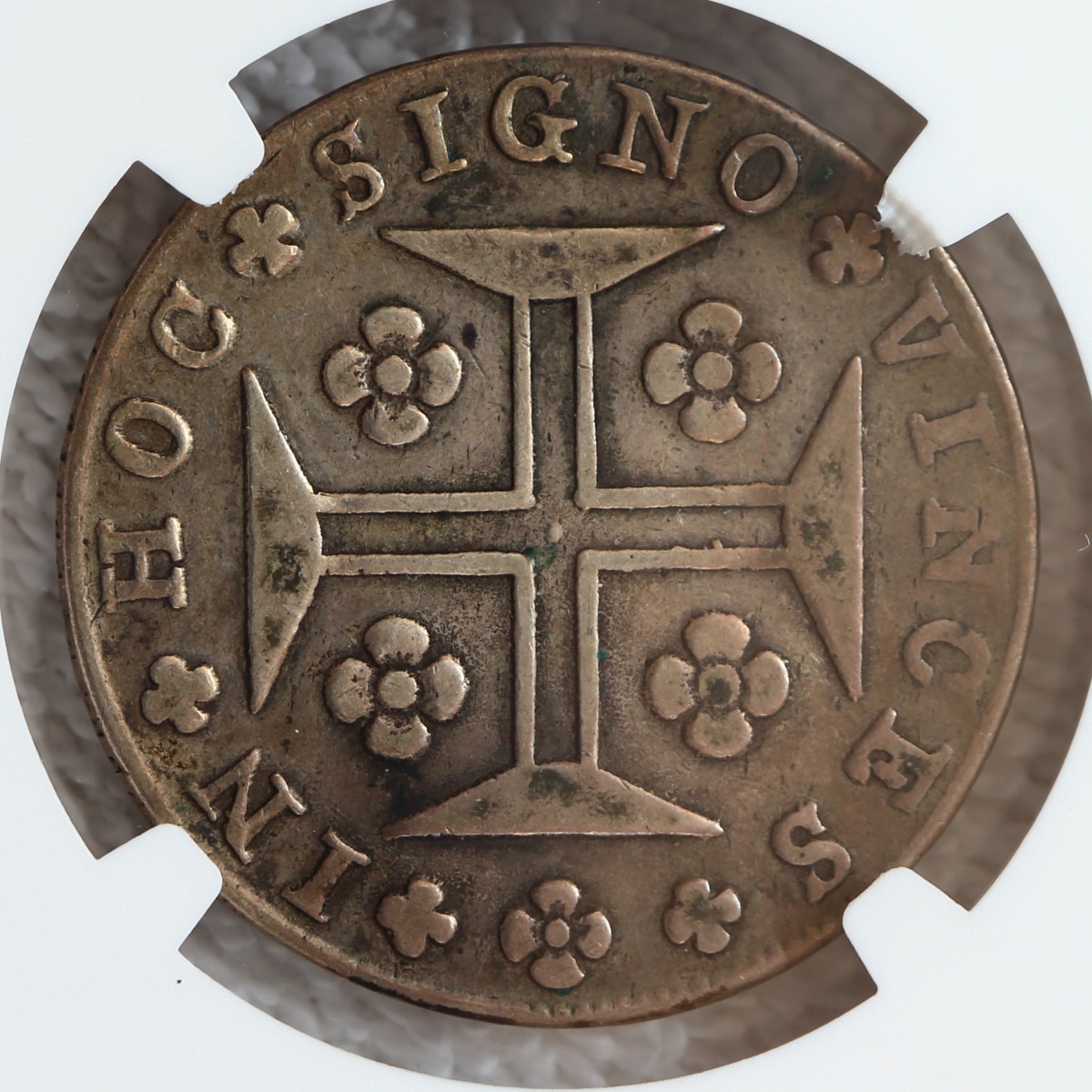
Thank you for your kind comments and sharing your Portuguese dollar. Was that 400/480 Reis struck in Portugal or in Brazil?
Turns out there is a video of the subject coin for this thread:
3K4fQOk4f6o
IN NECESSARIIS UNITAS - IN DUBIIS LIBERTAS - IN OMNIBUS CARITAS THE MAN IN THE ARENA, Theodore Roosevelt at the Sorbonne Paris on April 23, 1910: "It is not the critic who counts; not the man who points out how the strong man stumbles or where the doer of deeds could have done better. The credit belongs to the man who is actually in the arena, whose face is marred by dust and sweat and blood, who strives valiantly, who errs and comes up short again and again, because there is no effort without error or shortcoming, but who knows the great enthusiasms, the great devotions, who spends himself in a worthy cause; who, at the best, knows, in the end, the triumph of high achievement, and who, at the worst, if he fails, at least he fails while daring greatly, so that his place shall never be with those cold and timid souls who knew neither victory nor defeat." My coin website:https://fairfaxcoins.com
That coin was minted in Portugal. There are many coins that were minted in Brasil as Brasil had most of the precious metals but the 400/480 Reis was only minted by Portugal, Brasil issued a comparable coin after they declared independence.
Disclaimer: While a tremendous amount of effort goes into ensuring the accuracy of the information contained in this site, Coin Community assumes no liability for errors. Copyright 2005 - 2026 Coin Community Family- all rights reserved worldwide. Use of any images or content on this website without prior written permission of Coin Community or the original lender is strictly prohibited. Contact Us | Advertise Here | Privacy Policy / Terms of Use




 First Page


 Posted 09/20/2023 4:30 pm