| Author |
 Replies: 18 / Views: 1,557 Replies: 18 / Views: 1,557 |
Page 2 of 2
|
|
|
|
Bedrock of the Community
United States
19646 Posts |
|
|
Bedrock of the Community
United States
94367 Posts |
|
|
Moderator
 United States
196758 Posts |
A very nice example!  |
|
Moderator
United States
108481 Posts |
 very nice coins!! Thanks for posting these - BUT are the edge lettering raised? if so that is quite unusual from my experience.. |
|
New Member
 Argentina
33 Posts |
Thank you everybody for your kind replies! Yes, the letters on the edge are raised. It is not that unusual, for instance, the 50 centesimos coin in this same series has the same raised lettered edge. Also Argentina's 1 peso (patacón) 1881-1883 and the 5 peso (argentino oro) coins have raised lettered edges (Igualdad * ante * la * ley). Today I will be uploading a coin from Paraguay, in this case having an incused lettered edge: Paraguay. 300 guaraníes. 1968-1973. Silver .720. 26,73 g. 38.1 mm. Non-circulating coin. 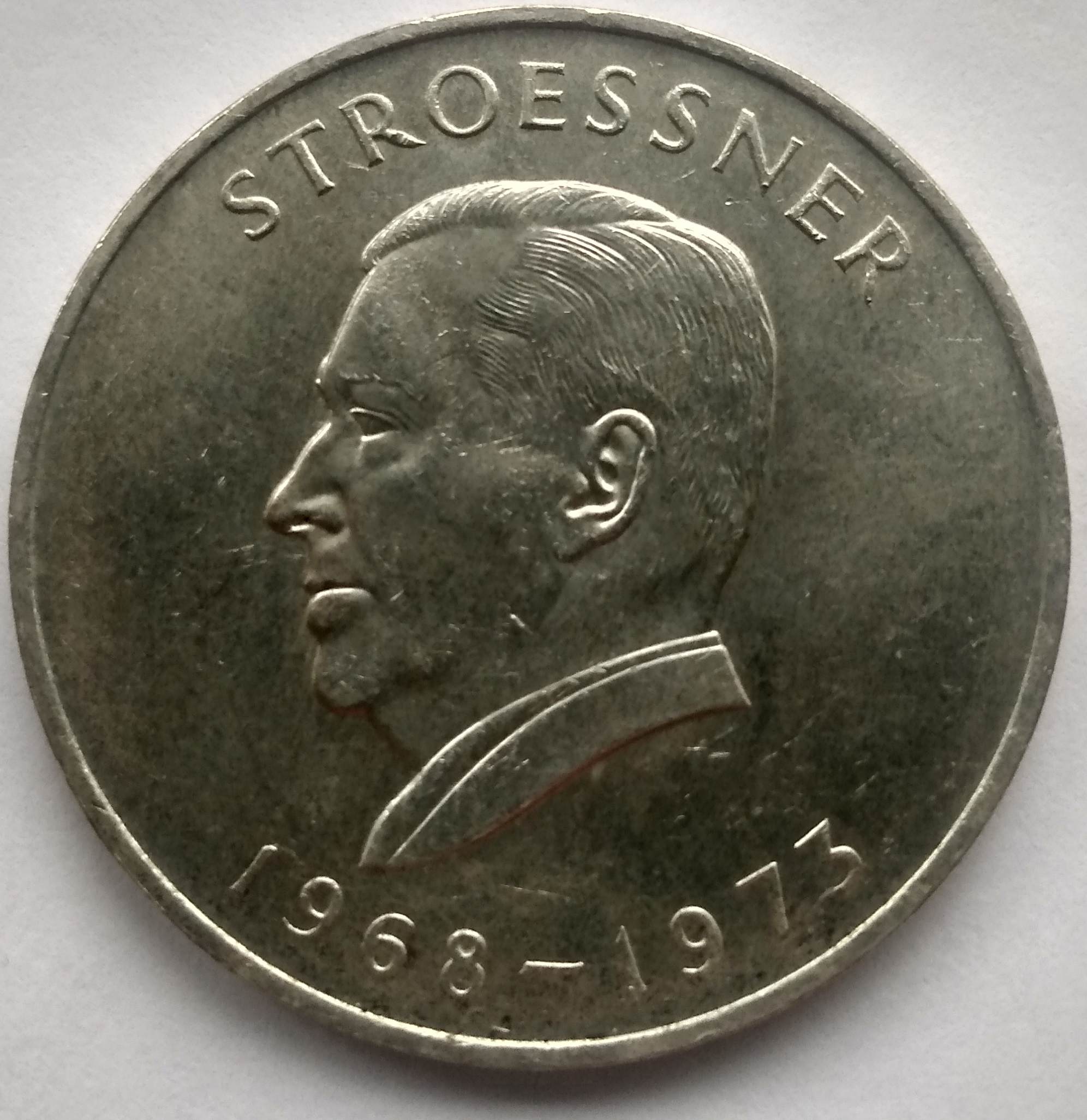 Obverse: bust of Paraguayan military ruler Stroessner, with dates 1968-1973 corresponding to his 4th term as president. 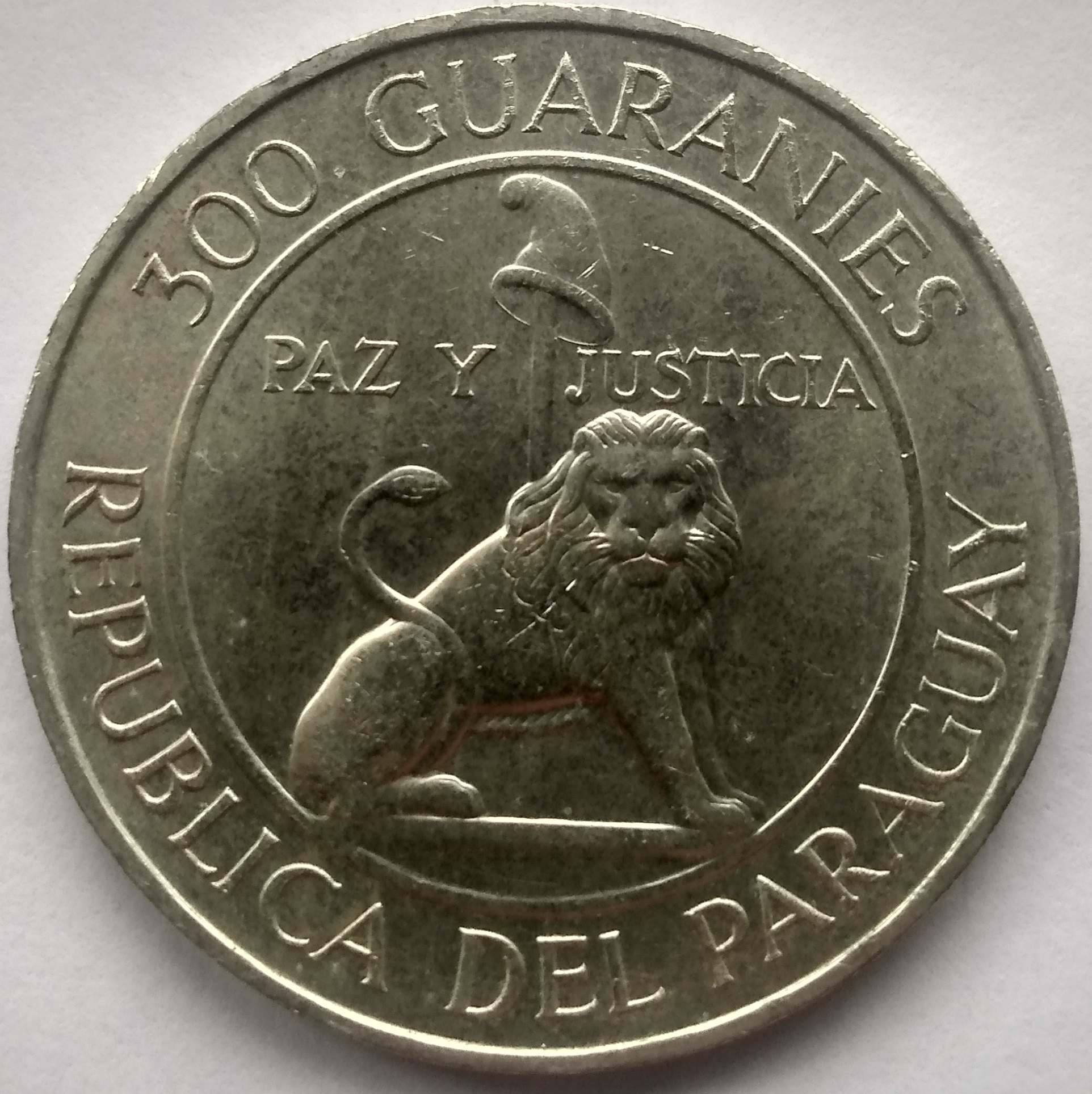 Reverse: coat of arms of financial institutions (sello de hacienda), face value 300 guaraníes, country's name República del Paraguay, and motto paz y justicia (peace and justice). 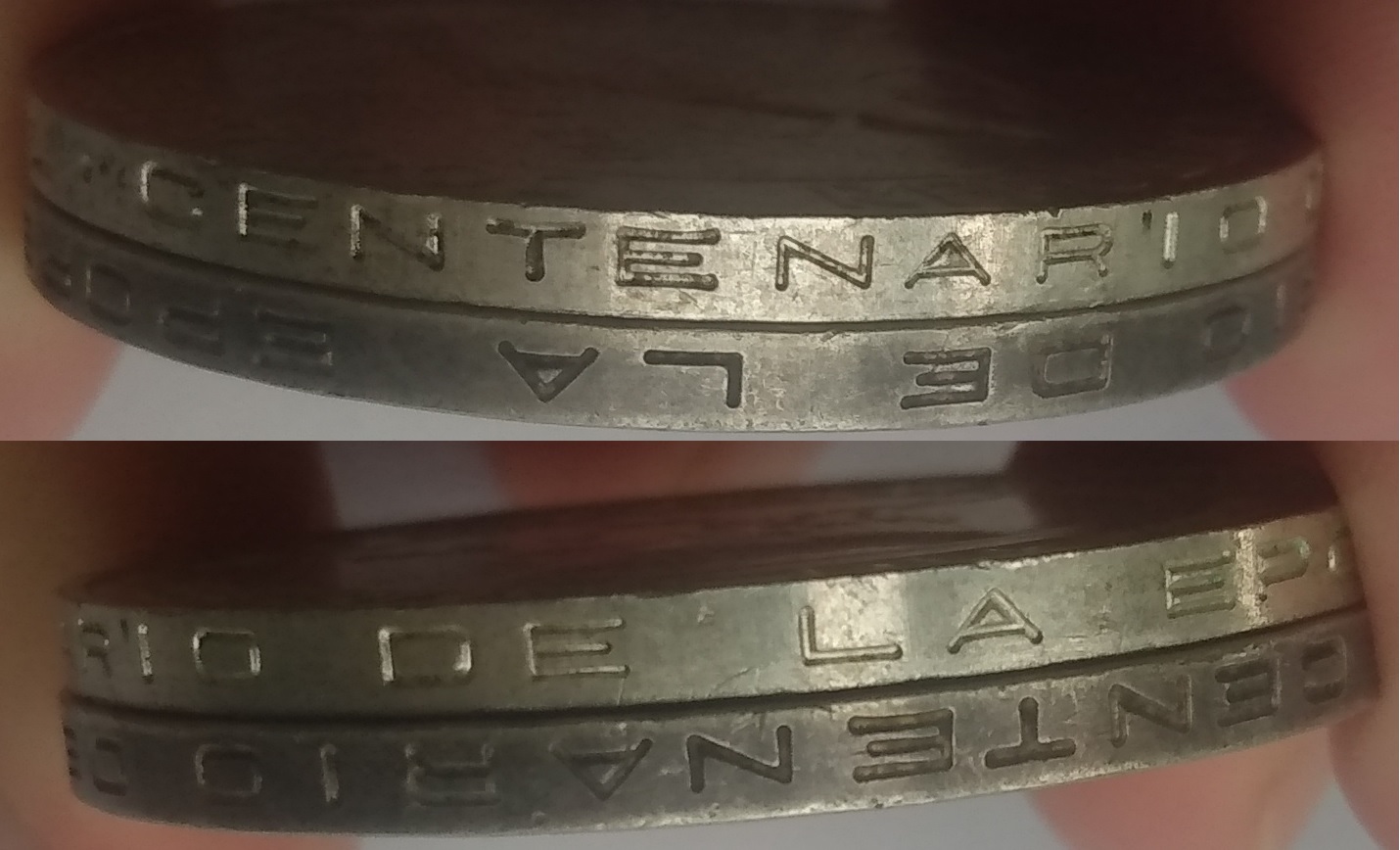 Edge: incuse lettering CENTENTARIO DE LA EPOPEYA NACIONAL (referring to the 19th century Paraguayan war). I have two coins of this type, as you can see in the picture. For this picture, the obverse of both coins were perfectly aligned. What I find interesting is that each has the text on the edge pointing at a different direction: one looks to the obverse, the other to the reverse of the coin. Thus I doubt if it might be an error, or a known variety (of which I have found no information). I hope you like it! I will be back with more Latin American silver coins soon. Cheers! Edited by RickyO
04/21/2024 5:12 pm
|
|
Moderator
United States
108481 Posts |
Very nice ricky. Thanks for the update on the raised edge lettering too
|
|
Bedrock of the Community
United States
79761 Posts |
Very nice! Errers and Varietys.
|
|
Moderator
United States
196758 Posts |
Quote:
Today I will be uploading a coin from Paraguay, in this case having an incused lettered edge: Excellent! |
|
New Member
Argentina
33 Posts |
Hello everybody! This is Ricky Olcese again with a new Latin American silver coin! Yay! Today we will be talking about... Cuba! Pre-revolutionary Cuban coinage is my favourite in Latin America. I bought this particular coin last month, when I visited Buenos Aires to participate in the city's annual numismatic convention. I didn't buy the coin directly at the convention, but at a shop in Buenos Aires. Cuba. 40 centavos. 1915. Silver .900. 10 g. 28.9 mm.  Obverse: Radiant star. Engraver: Charles E. Barber. Date: 1915. In that year, mintage of Cuban coins was started. As many Latin American coins of the time, the coin presents a legend with its own weight and fineness. 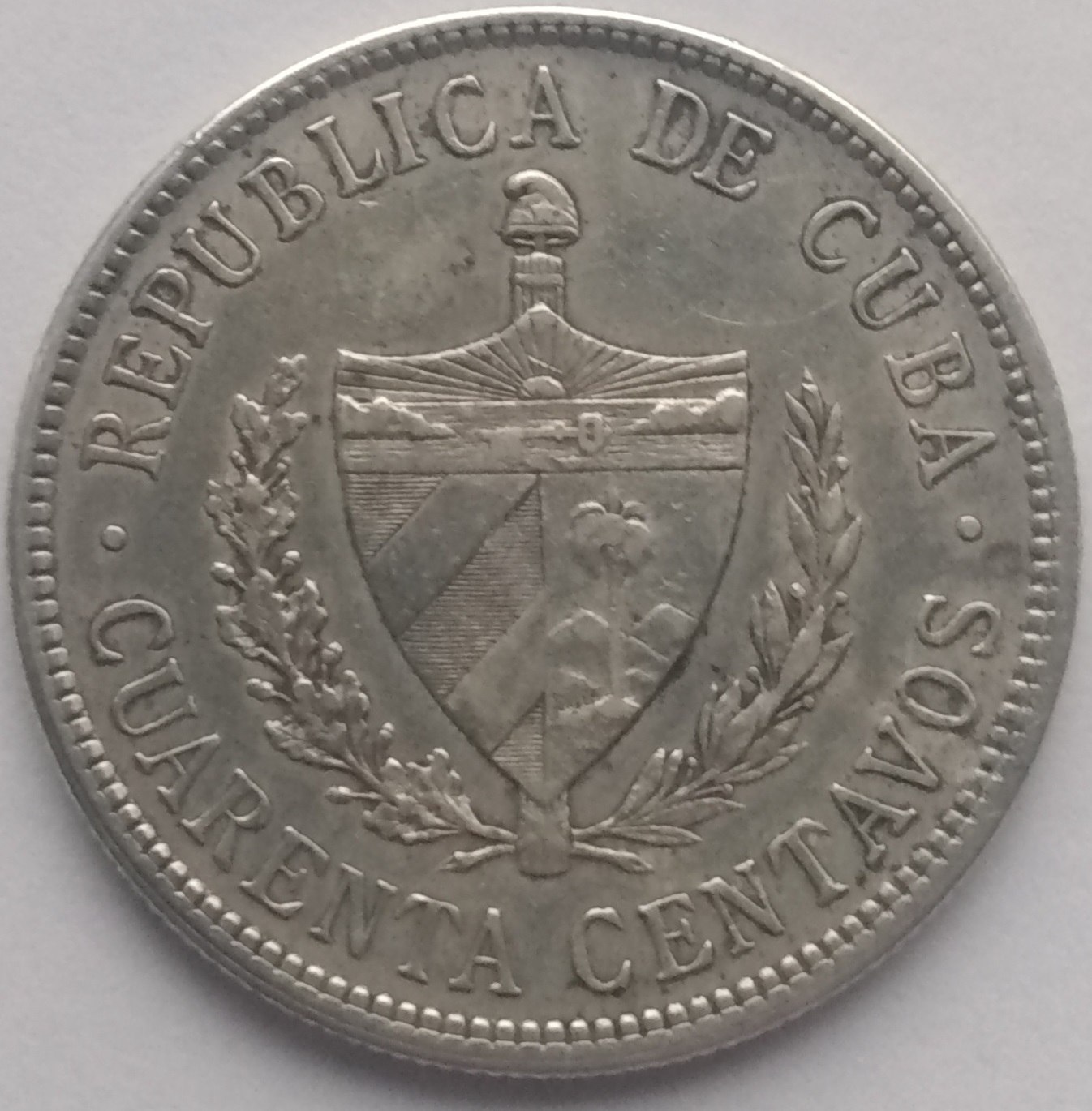 Reverse: Cuban coat of arms. Phrigian hat on a fasces. The hat itself had a star engraved on it, which in my experience is the first detail lost after circulation. The coat of arms is surrounded by laurel and oak leaves. Country's name: República de Cuba. And denomination: Cuarenta centavos.  Edge: reeded. I tried to count the number of... reeds? Estrías, in Spanish. After failing multiple times, I reached to the conclusion that they are more than eight and less than a million. This is the best Cuban 40 centavos coin I have, considering its grade. I was lucky enough to buy the other ones (1916, 1920, 1952, the latter having a different design but the same weight, composition, etc.). I also own a bunch of Cuban 1 peso coins, which are bigger and kind of more famous or more popular. But I like my 40 centavos coin better! |
|
Bedrock of the Community
United Kingdom
18981 Posts |
Ricky O - just discovered this thread and really enjoying your coins! Quote:
What I find interesting is that each has the text on the edge pointing at a different direction: one looks to the obverse, the other to the reverse of the coin. This is quite normal for coins with incuse edge inscriptions. The lettering is normally applied to the blanks before the coins are struck, so the blanks (with edge inscriptoin applied) get put into the hopper and pass between the dies quite randomly. You would expect half the coins to have the legend one way up and half the other way up. Raised edge legends are on a collar that is applied to the coins when they pass between the dies, so (usually) the legend is always the same way up and ln the same position with reference to the obverse and reverse designs.  Edited by NumisRob
04/22/2024 6:39 pm
|
|
New Member
Argentina
33 Posts |
NumisRob, thank you very much for the information on lettered edges, I had no idea!
|
|
Valued Member
Canada
491 Posts |
The reeded edges on the Cuban coin is very easy to identify from experience. Both coins are in the collection though yours are in better condition.
Your descriptions are detailed and informative. Very nice.
|
|
Moderator
United States
196758 Posts |
Quote:
Today we will be talking about... Cuba! Very interesting and nice example! |
|
New Member
Argentina
33 Posts |
Today, a new edition of Ricky's Latin American silver coins! Hooray! This post starts a small series about Latin American quarters, that is, coins that are equal, or similar to US quarters, considering their size and composition. We will begin with my favourite Latin American quarter! El Salvador. 1911. 25 centavos. Silver .835. 6,25 g. 24,5 mm. Reeded edge. 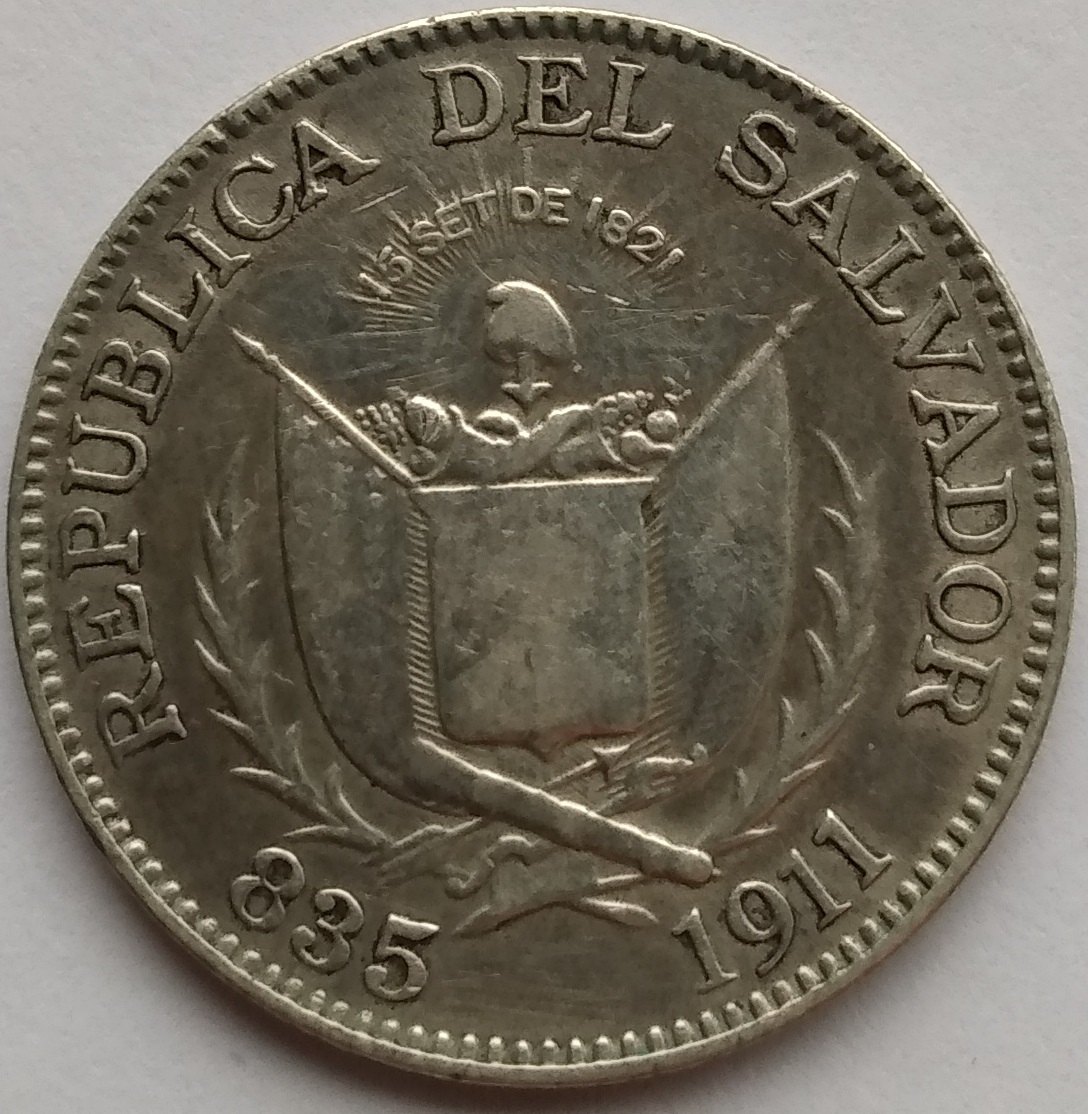 Obverse: El Salvador's coat of arms. In this case, because of the coin's wear, the central motive on the shield is not easily recognizable, but it's a volcano erupting. And I do love coins with volcanoes erupting! Almost all Andean countries in Latin America have this motive. Chile in particular has some superb coins depicting erupting volcanoes. The obverse also presents two dates: minting date, 1911; and independence day, 15 set de 1821. Other Central American countries such as Guatemala show multiple dates on their coins, the minting year, independence day, and even some other significant dates in addition to those. The coin also states its fineness, which is .835 silver. Most Latin American coins of that time period inform the bearer about its content in weight and fineness, which is a convenient courtesy, isn't it? 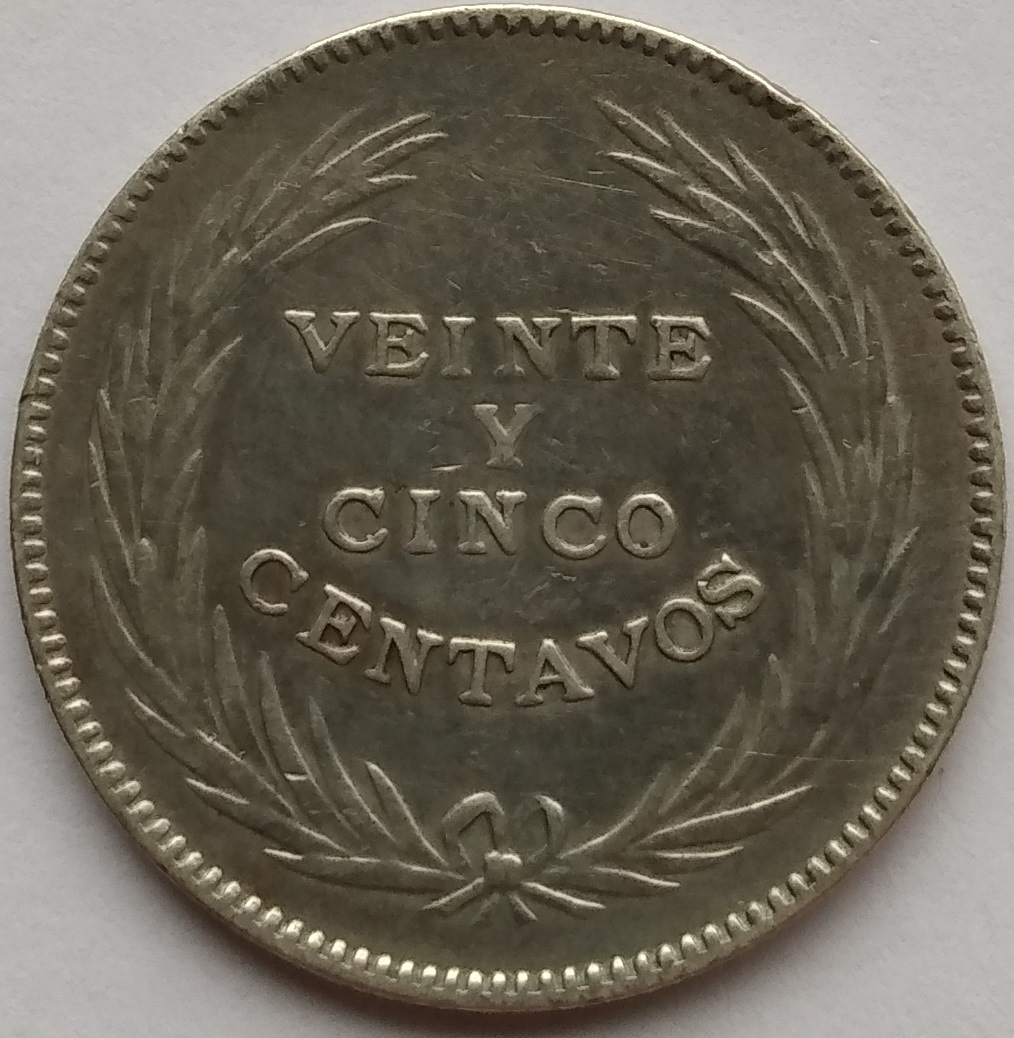 Reverse: coin's face value, which is veinte y cinco centavos. That is nowadays a weird way of saying it, because we would write veinticinco centavos. It's as saying twenty and five instead of twenty five. The value is sorrounded by some leaves, that are also very special because they don't seem to be neither olive, nor oak, plants generally used representing glory and strength, but some sort white palms, a plant that we generally bear during Easter (Palm Sunday). 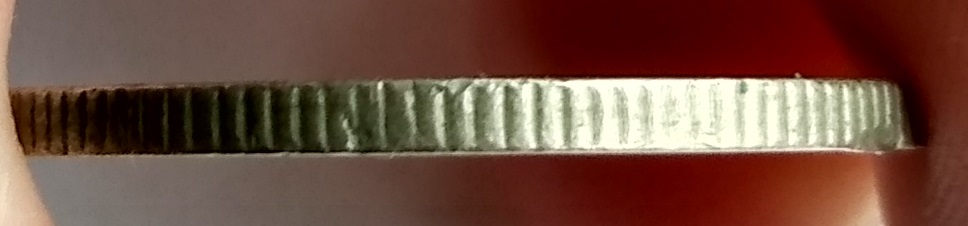 Edge: it is reeded. I am certain there are more than 12 reeds on it, but less than 7 trillion. The exact number must be in between those. That's all for today, folks! I hope you liked my little coin, and tomorrow I will try to come online to post another cute Latin American quarter. See ya! Edited by RickyO
04/26/2024 3:27 pm
|
|
Moderator
United States
196758 Posts |
Very nice! |
|
Page 2 of 2
|
Replies: 18 / Views: 1,557 |
Page 2 of 2
|




 First Page


 Posted 04/18/2024 08:24 am





