| Author |
 Replies: 34 / Views: 13,901 Replies: 34 / Views: 13,901 |
Page 3 of 3
|
|
|
|
Pillar of the Community
3660 Posts |
I have never tried to post a picture before, so this might not be too cool, but I am going to give it a shot. (This is supposed to be an Elizabeth shilling of around 1562 as I recall): 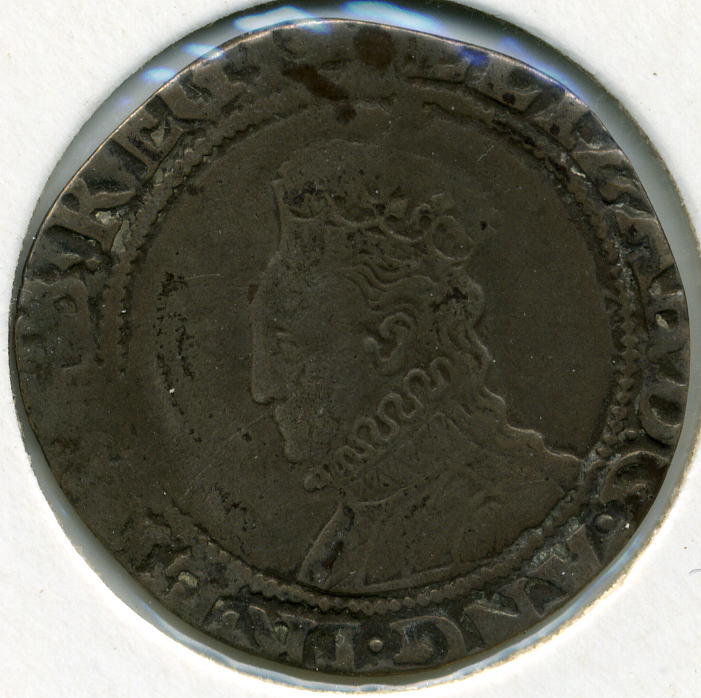 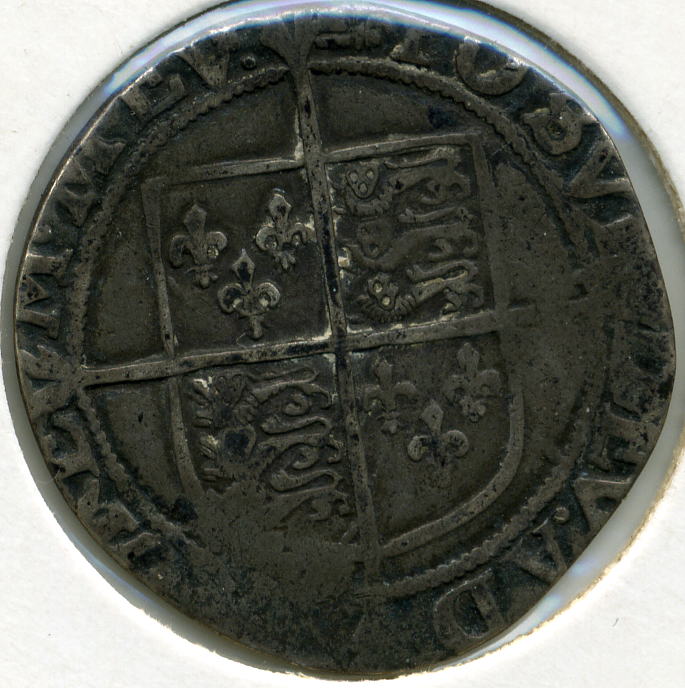 |
|
Pillar of the Community
3660 Posts |
I like the bold strike of your coin nohope. I cannot identify it though, and I have been staring at if for a while now. What is this coin, and what are the two dots behind the Queen's head?
|
|
Pillar of the Community
 United States
5953 Posts |
|
|
Pillar of the Community
3660 Posts |
Thanks for that! I had heard of the dots previously, but I could not remember what the significance was. I really think that old British coins are 'so cool', and just to keep things going a bit, here is a Mary groat: 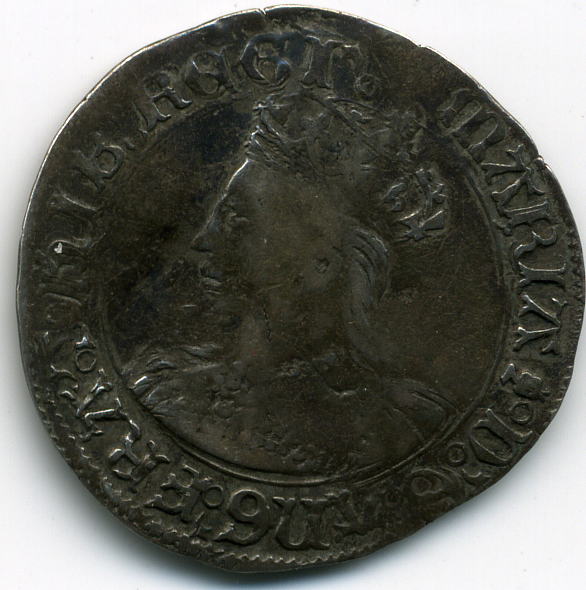 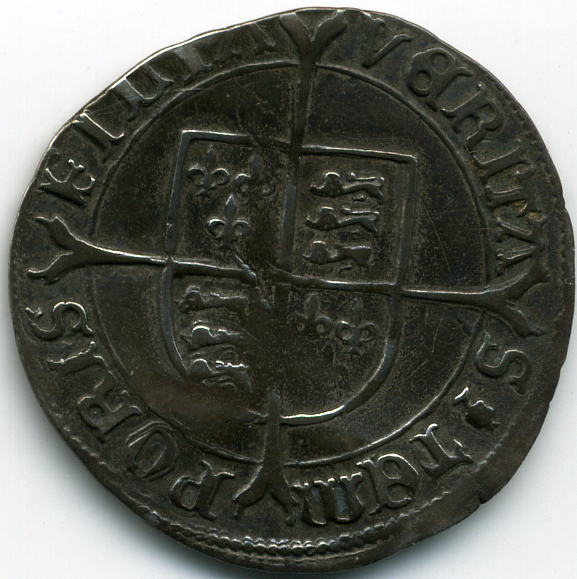 |
|
Pillar of the Community
3660 Posts |
Guys, I don't know if this one qualifies, but here is a crown sized coin of Scottish mintage produced shortly after James VI of Scotland became James I (first King of Great Britain, the way I see it). I have had this coin for only a few months and still haven't investigated it too much. The denomination is 30 shillings. Maybe someone knows a wee bit about it? 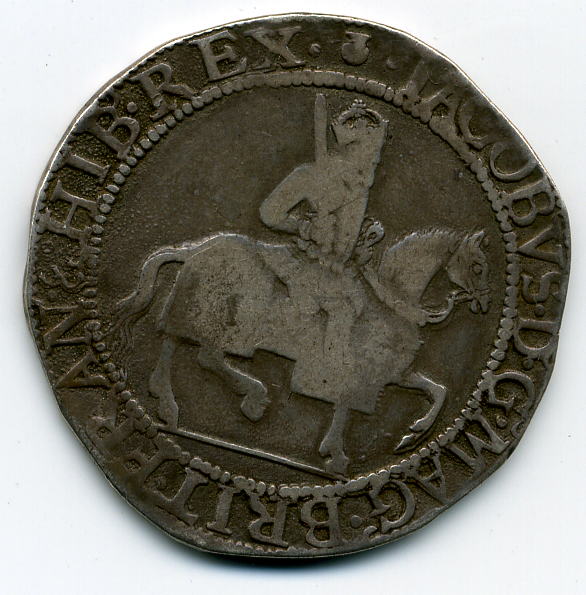 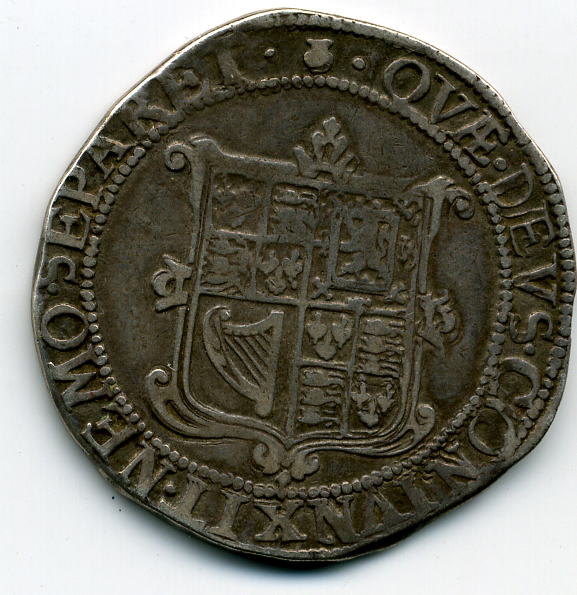 |
|
Pillar of the Community
United States
3363 Posts |
Good stuff, zeewool. Nice to see so much of Betty Stuart here.
cgb is running another French auction right now, with a lot of pre 1600 coins. I'm warming up to the idea of French hammered coins, maybe a Henry IV half franc to start out with. I'm not quite ready to step and pay the price for Charlemagne.
"Two minutes ago I would have sold my chances for a tired dime." Fred Astaire
|
|
Pillar of the Community
United States
2605 Posts |
Quote:
What is this coin, and what are the two dots behind the Queen's head? The coin is a halfgroat. All E1 halfgroats were minted at the Tower mint in London. The reverse legend (which was used only for the 5th and 6th issues) states "CIVITAS LONDON". The two pellets, that were put there also only for the 5th and 6th issues, are designed to help with the denomination, 2 pence. The threepence and three-halfpence that were of a very close size to the halfgroat had a rose behind the queen's head. For the 5th issue they had a number of mintmarks, for the 6th it was only "1" or "2". Since the MM doesn't look to me as one of those numbers, I believe yours is the 5th issue, dates 1582 - 1600. The obverse legend, by the way, says "E.D.G. ROSA SINE SPINA" - Elizabeth by the grace of God a rose without a thorn. |
|
Pillar of the Community
United States
2605 Posts |
Quote:
This is supposed to be an Elizabeth shilling of around 1562 as I recall Judging by the obverse legend, "ELIZAB DG ANG FR ET HIB REGI" (Elizabeth by the grace of God Queen of England France and Ireland) it is the 5th issue, 1582 - 1600. The previous issues spelled ELIZABETH and REGINA in full. The 6th issue was similar to the 5th, but the mintmark then should be a number "1" or "2", which it is not. |
|
Pillar of the Community
3660 Posts |
Wow svslav! You know your stuff. Thanks very much. I like learning and you seem like a good 'just the facts ma'am' type of teacher.
|
|
Pillar of the Community
United States
2605 Posts |
Sure!
I'm learning myself as I'm digging out info for other people. By the way, zeewool, did you notice nice pomegranate mintmarks on your Mary groat after words MARIA and VERITAS?
|
|
Pillar of the Community
3660 Posts |
Yes, but I am unclear as to the significance. I assumed a mint mark.
|
|
Pillar of the Community
United States
5953 Posts |
Mary 1553-1554 two mint marks Half rose and Pomegranate.. (On silver coins)
|
|
Pillar of the Community
United States
2605 Posts |
I have a bit different info on the MM's. Groats and halfgroats had pomegranates during the reign of Mary alone (1553-54), fleur de lis during the reign with the husband, Philip of Spain (the woman was deemed not able to rule by herself), 1554-58. Shillings and sixpence bore no MM, but had the effigy of both monarchs facing each other. The exception was some 1557 sixpence with the MM lis.
The penny followed similar pattern, pomegranate (or no MM bur the reverse legend "CIVITAS LONDON") for Mary alone, lis for the couple. EXCEPT! Some pennies were issued in base metal with MM rose for Mary, and half rose or "H" for M&P.
The real meaning of the MM's escapes me as all the coins were struck in London.
|
|
Pillar of the Community
United States
5953 Posts |
That's why I only included 1553 and 54.
"Mint marks were a form of quality control matching dies to coins and, with documentary and hoard evidence, many issues can be accurately dated."
|
|
Pillar of the Community
United Kingdom
856 Posts |
Apologies for resurecting an old thread, but someone mentioned mint marks. These are also known as initial marks and privy marks. Really the last term is most appropriate, though mint mark is what has stuck*. Basically they were a form of quality control for hammered coinage. In the early days of English/British coinage the moneyer (person who made the coin) would put their name as part of the legend. But by Tudor/Stuart times (16th/17th century) most coins were struck in London at the Tower of London. Makes sense really as it's security as a prison and army garrison also made it ideal to hold a mint! The operation was effectively franchised by the Crown to a Mint Master, who was responsible for ensuring that the quality (weight and purity of metal) of the coins fell within set margins. The reponsibility for checking this quality was that of the Goldsmiths Company and each year at something called the Trials of the Pyx, a selection of recently made coin was assayed. To allow the Master of the Mint to identify which year's issue was which a special privy (private) mark was incorporated into the design. Records of the Trials allow us to say when a particular mark was in circulation, so a useful means of identifying a coin when otherwise (apart from in some instances sixpences) they were undated. This coin for example bears the (R) mark (the mark isn't properly struck up on the reverse) showing it was struck under the authority of Parliament between 15 July 1644 and 12 May 1645 (the King having abandoned London early in the Civil War in 1642, to set up his base in Oxford). 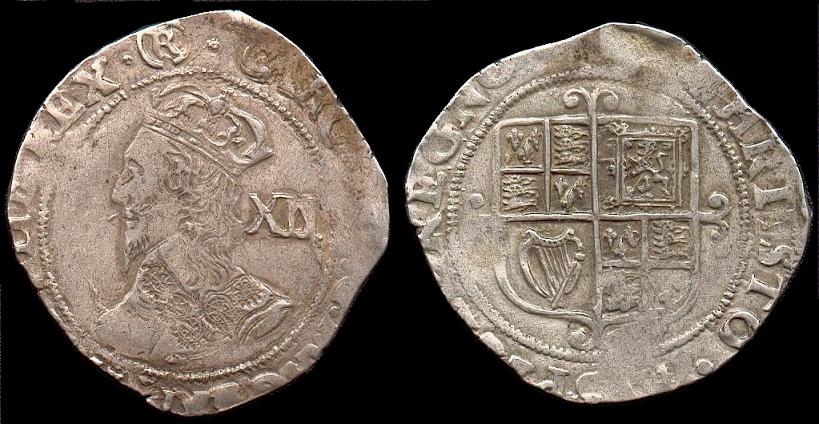 * "Initial mark" isn't strictly correct since the mark generally wasn't an initial, nor did it always appear at the begining of the legend (initially). "Mint mark" is also not quite appropriate because for much of the time there was only one mint (in London), unlike modern 'mint marks' which correctly identify the location of manufacture of a particular coin! Whereas 'privy' marks were only of significance to those who were told about (made privy to) their meaning. |
|
Page 3 of 3
|
Replies: 34 / Views: 13,901 |
Page 3 of 3
|







 First Page
 Previous Page
 Posted 01/10/2010 02:04 am





