| Author |
 Replies: 17 / Views: 3,304 Replies: 17 / Views: 3,304 |
Page 2 of 2
|
|
|
|
Pillar of the Community
United Kingdom
1324 Posts |
1 is a 10 Grani from Malta
4 looks German, possibly Hesse-Darmstadt, is any of the writing readable?
|
|
Valued Member
 United States
110 Posts |
The only readable thing on it is Landmunz if that helps at all
I can read some of the denomination 1 Sturer?
|
|
Pillar of the Community
Belgium
651 Posts |
I solved the problem of nr.4: it's a 1 stuber from the duchy of Jülich-Berg, struck in 1736 or 1737.
|
|
Pillar of the Community
United Kingdom
1324 Posts |
Bart has this one, it would be an Albus were it from Hesse, but I couldn'r make out any of the word Stuber from the picture.
I'm not so positive coin 1 is from Malta either in the daylight!
Coin 3 is again German, but it's too far gone to identify from the picture, probably dates from 1600 to 1750 or so.
Coin 5 is not a coin - but again I can't make the words out properly.
|
|
Pillar of the Community
United Kingdom
2490 Posts |
Number 5 "Balayage Extra"
Balayer is French for to sweep
The reverse is hard to discern, but could be two stylised sweeping brushes.
So, some kind of token from a street cleaner?
|
|
Valued Member
United States
110 Posts |
Thank you all for your help, I know these coins are really tough!
|
|
Pillar of the Community
United Kingdom
1324 Posts |
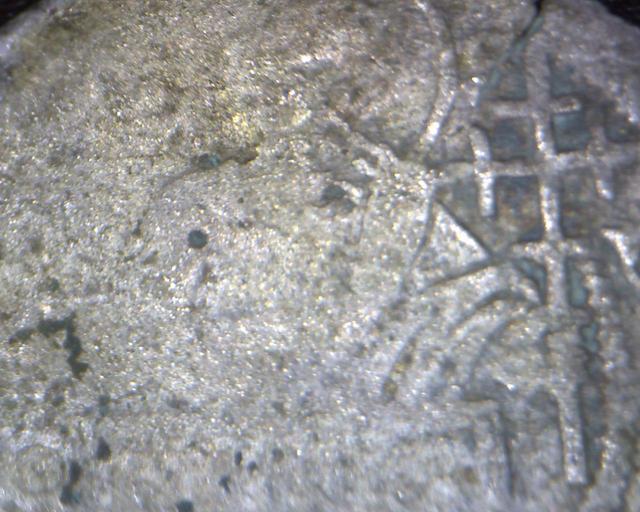
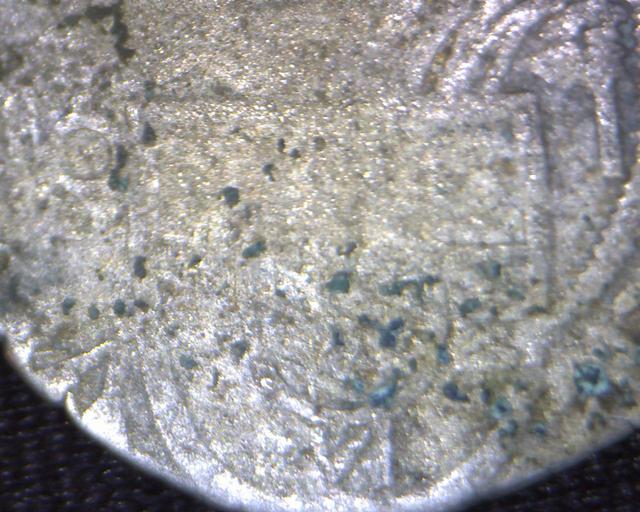
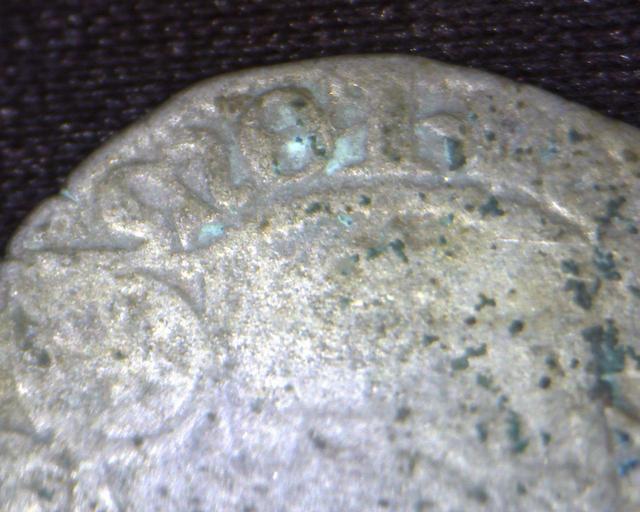
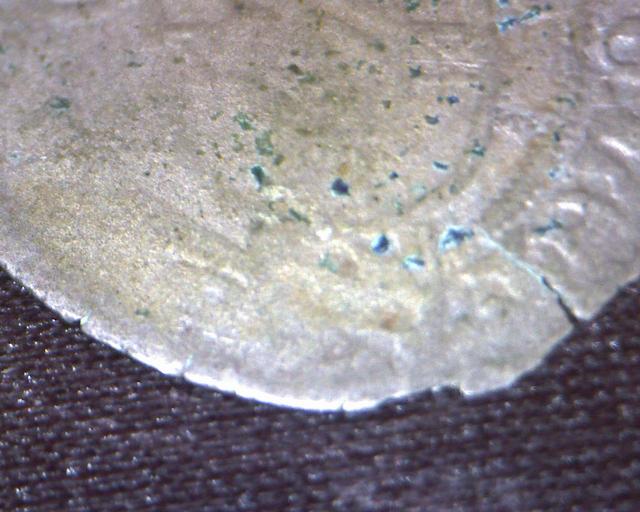
If you rotate coin 3 180 degrees you can see a seated figure (probably a saint) with a shield in front of it.
|
|
Pillar of the Community
United Kingdom
2490 Posts |
Back to Number 5.
Balayage Extra and the brushes on the reverse; it's an advertising token for a brush/broom maker emphasising the extra sweeping power of their products
|
|
Moderator
 Australia
17002 Posts |
Gforce, some of the pics (in this thread and the other one) seem to have been mirror-inverted; that may be adding to the confusion. #1: andyg was right first time - it's a 10 grani from Malta. This is one of the "backwards" pics; I can clearly see a retrograde "17" where the date should be. Here's an example dated 1786. #2: Definitely Russian; there's no crown on the reverse of Finnish coins. If you give us a diameter, we can probably confirm the denomination. (Giving us the dimaeter and, if possible, the weight, always helps narrow down an uncertain identification and helps us avoid wasting time looking at coins tat are too big or too small) #3: I still can't get it. Can we have clearer pics and dimensions, please? Don't say "infinitely" when you mean "very"; otherwise, you'll have no word left when you want to talk about something really infinite. - C. S. Lewis
|
|
Valued Member
United States
110 Posts |
Number 2 weighs 4.4 grams
and Number 3 is 0.8 grams, I will take some pictures with my microscope right now
|
|
Valued Member
United States
110 Posts |
|
|
Pillar of the Community
United Kingdom
2490 Posts |
Gforce, I've been driving myself mad for months now over what microscope suits our mania best.
Yours seems to be what I'm looking for. Can you please tell me: a) Make and model b) Does it support Vista
And c) What resolution were you using for your pics?
|
|
Valued Member
United States
110 Posts |
|
|
Moderator
Australia
17002 Posts |
Back to the mysterious #3:
The shapes of the visible lettering on #4 indicate it's a very early coin, late 1400's to 1500's - too early for Krause, or for any of my other books.
The cross is the crosslet cross, or "evangelist's cross", and is often held by St. Philip the Evaneglist. I've found him on coins of Flanders during the reign of Philip the Fair (the Hapsburg king of Castile), 1482-1506 which is the correct time frame for the style of lettering. Unfortunately, I have no idea what the fractional silver coins of Flanders and other Hapsburg territories of the time look like.
Don't say "infinitely" when you mean "very"; otherwise, you'll have no word left when you want to talk about something really infinite. - C. S. Lewis
|
|
Pillar of the Community
Belgium
651 Posts |
I don't think the coin comes from the Habsburg Netherlands. Sap is right about the time range: late middle ages.
I looked through Vanhoudt's Atlas of the Belgian coins from Celts until now and I found the figure of a saint holding a shield is used on gold coins in the Habsburg Netherlands during the reigns of Philip the Fair and Charles V. I didn't find any silver coinage displaying this figure (with the exception of 2 coins, where the shield displays a climbing lion)
|
|
Page 2 of 2
|
Replies: 17 / Views: 3,304 |
Page 2 of 2
|






 First Page

 Posted 04/04/2010 9:11 pm