| Author |
 Replies: 22 / Views: 58,301 Replies: 22 / Views: 58,301 |
Page 2 of 2
|
|
|
|
Pillar of the Community
 Canada
864 Posts |
So many things to still learn  |
|
Pillar of the Community
United States
1027 Posts |
Proof coins rarely, as in almost never, show up in circulation. Proofs are minted for collectors and generally sold in sets (though there have been some singles, like the 1999 SBA proof dollar). COntrary to popular belief, proof is not a look. It is a method of manufacturing the coin. Proof coins at the start of the 20th century were mostly satin finish and from 1936 through 1964 they were fully brilliant (cameo coins were an artifact, not the desired finish). When the mint began making proof coins again after quitting in the mid 1960s, they began striving for the ultra cameo look that has become to be associated with proof coinage. They eventually developed the ability to produce this look on large production runs by using new alloys and hardening techniques for the proof die sets. The numismatic definition of proof is a coin that is minted on a specially prepared planchet, using specially prepared die, struck at least twice, and then given special handling, usually by hand, and specially packaged and delivered to the collector. Some of the double Eagle proofs that were struck in 1907 were struck nine times with an annealing (heat treatment) step between strikes! The only thing that prevents the newer (since 2005) satin finish uncirculated coins from being proofs is that they are only struck once. |
|
Pillar of the Community
 United States
2448 Posts |
Quote:
So many things to still learn Yes, but that's only about one third the fun. The other thirds are the "sport or art" of the negotiation and the enjoyment of owning a piece of historical pocket art. |
|
Pillar of the Community
Canada
864 Posts |
Thanks a lot for all that education about "Proofs" Clairhardesty. Thats all really interesting info and processes and is really helpful to know  Carmykle, I am having fun. Haven't really negotiated as yet, unless you consider some trading. I'll be plucking a few Canadian coins from my searches to send to a couple of people, trades, so far My own collections is still VERY small - well under $10 worth of pennies so far, and a small number of other denominations coins. But the pennies are multiplying quickly! I admit I started buying rolls of other coins from the bank that stores don't mind receiving 5, 10, 25, Loonies and Toonies, so I can check them before spending them in the stores. You never know when a Canadian Mule might show up. I've also decided to stop spending the odd silver coins I find. The 1967 (Fish) dime still shows up as does the occasional other silver coin. We do have a lot of anniversary and sommemorative types coins still show up. Wish I had started hanging on to all the colorized ones! |
|
New Member
United States
1 Posts |
I was hoping biokemist6 or someone equally in the "know" would answer this for me..why would my Roosevelt dime be wrapped in cellophane? I have lots of family coins and don't even know how to begin with the values but I thought I would start here. I also have a 1896-O Morgan dollar and I don't know how to begin there either. Any advice? Thank you! |
|
Pillar of the Community
United States
901 Posts |
Many old prooflike coins are now being graded as proofs. I have an 1885 Liberty nickel that graded BU by PGCS in 1989, resubmitted for better grade and came back as a proof. |
|
Pillar of the Community
United States
808 Posts |
 benember, the dime could have been cut from a mint set. They usually have 6 coins of various denominations. Penny, Nickel, Dime,Quarter, Half Dollar for the year say 1999. They also come in P and D mint sets. Someone may have cut it off of a mint set. For the morgan there is a Morgan/Peace dollar forum here. Pictures would be a help! Here is the link to the Morgan/Peace Forum. http://www.coincommunity.com/forum/...FORUM_ID=129Edited by papatony
08/08/2012 10:09 pm
|
|
Bedrock of the Community
United States
12437 Posts |
I see that I have been called out  As papatony mentioned, your dime most likely came from a Mint Set if it is in a sealed square of mylar such as this [eBayItem]110924128314[/eBayItem]. If it does not look like that, then the packaging is most likely not from the US Mint although a picture would be needed to say for sure. As for your 1896-O Morgan, that is an interesting example. The vast majority of 1896-Os were circulated so coins in grades of AU(About Uncirculated) and above are what is known as a conditional rarity- fairly common in low grades but it can be quite valuable if uncirculated. Of course, pictures of both sides would be needed to determine the grade. |
|
Valued Member
United States
54 Posts |
Hi,
I'm also curious. From what I read 'Once a Proof coin, always a Proof coin', no matter condition. True?
What about resources to determine if a World coin is a Proof?
Thanks,
Dan
|
|
Bedrock of the Community
United States
14454 Posts |
yes proof is the process of minting not a condition thing, so once a proof always a proof
|
|
Valued Member
United States
329 Posts |
Hey guys I'm having trouble with identifying wheat proofs now... Do all wheaat proofs carry no mint mark? If that is the case isn't there a possibility to mistake a P Wheat cent that is PL with an actual proof that is just RD instead of cameo? |
|
Valued Member
United States
57 Posts |
Hello, I'm just chiming in and wondering if a 2006 D penny could be a proof coin? If its shiny and mirror like then is it possible? Its in superb condition, at least for being a 2006 D penny and its not a frosted look either.
Your thoughts....
Edited by artstaz
02/22/2018 11:07 pm
|
|
Bedrock of the Community
Australia
21792 Posts |
The concept of mirror fields and cameo design detail is product of a type of modern mint product marketed at collectors.
A century ago, proofs were never made this way; they were never intended for collectors.
A proof was a coin struck from selected blanks, were the first strikes off new dies. The Mint retained such products for record purposes. They were quite rare.
It was this rarity that attracted collectors.
Such coins today, struck under such circumstances would be rightly termed as 'specimen strikes', and would have the appearance on an extremely well struck business strike, preferably in pristine condition.
It is these scarce or rare coins, struck such a long time ago, that attract my interest today. Generally speaking, I am not very interested in modern mint proof product that is aimed at collectors.
That happens to explain why my (World) collection of proof coins is so tiny.
|
|
Valued Member
United States
57 Posts |
|
|
Bedrock of the Community
United States
62064 Posts |
Proof rims thicker, sharp on outside edge: 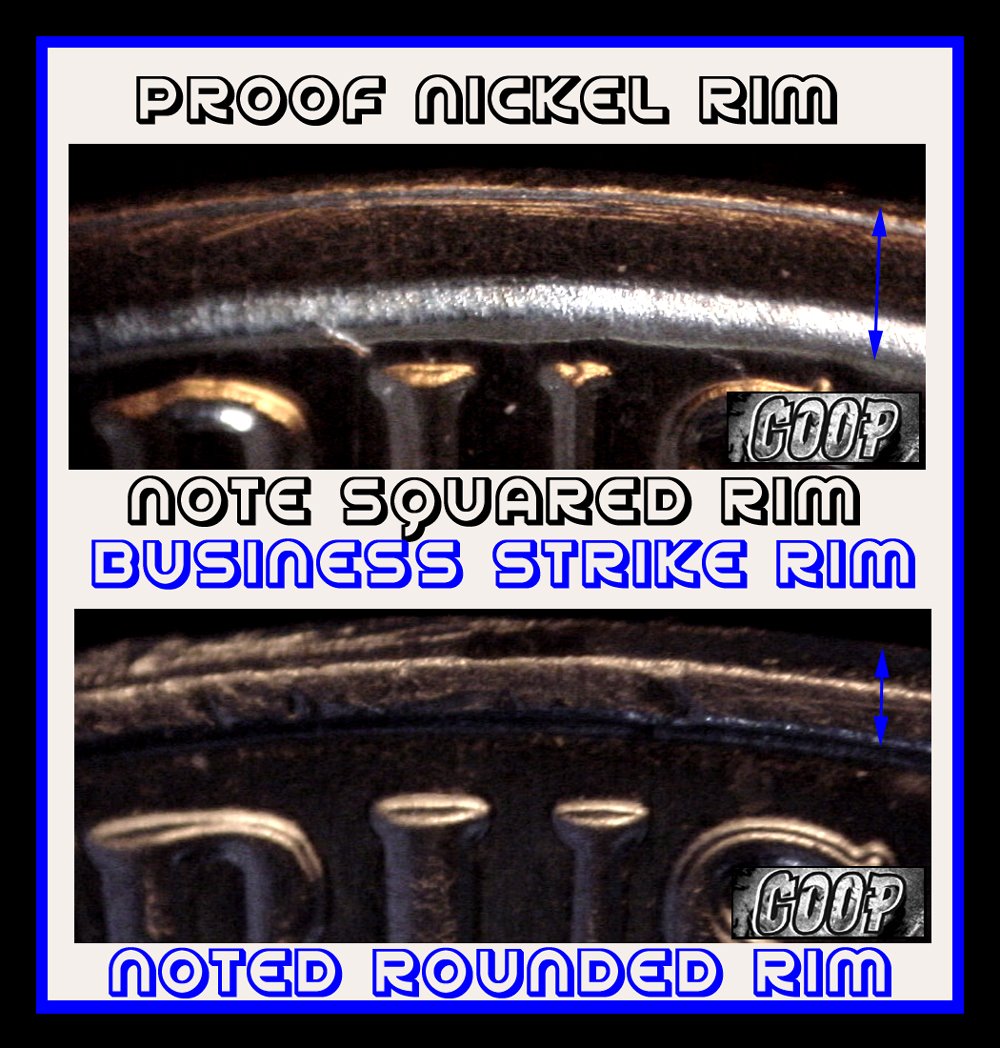 Matte proof rims: 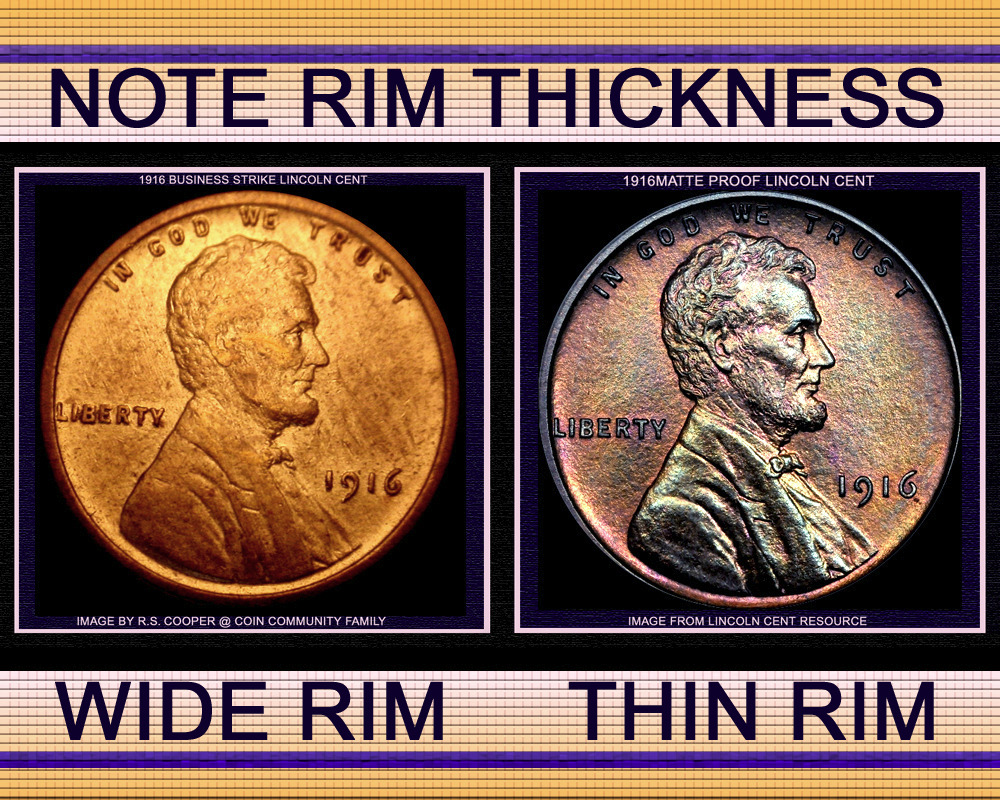 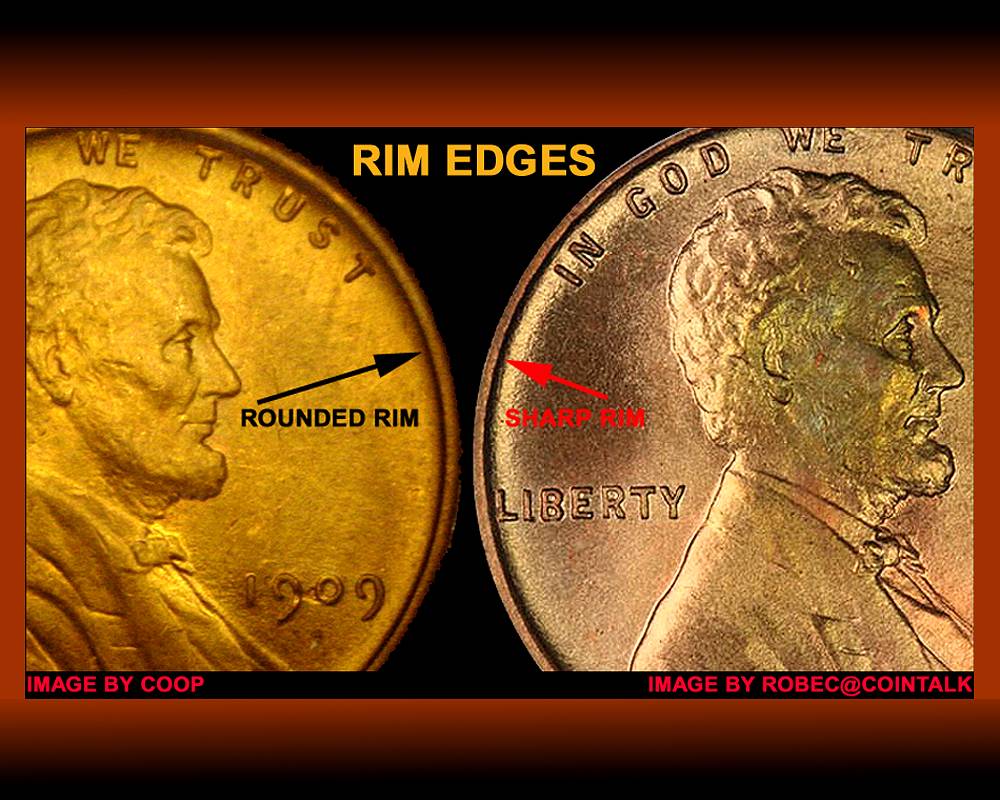 Proof coins without the mint marks: (these are proof coins with a proof finish. Not to be confused with Philadelphia no mint mark business strike cents.) 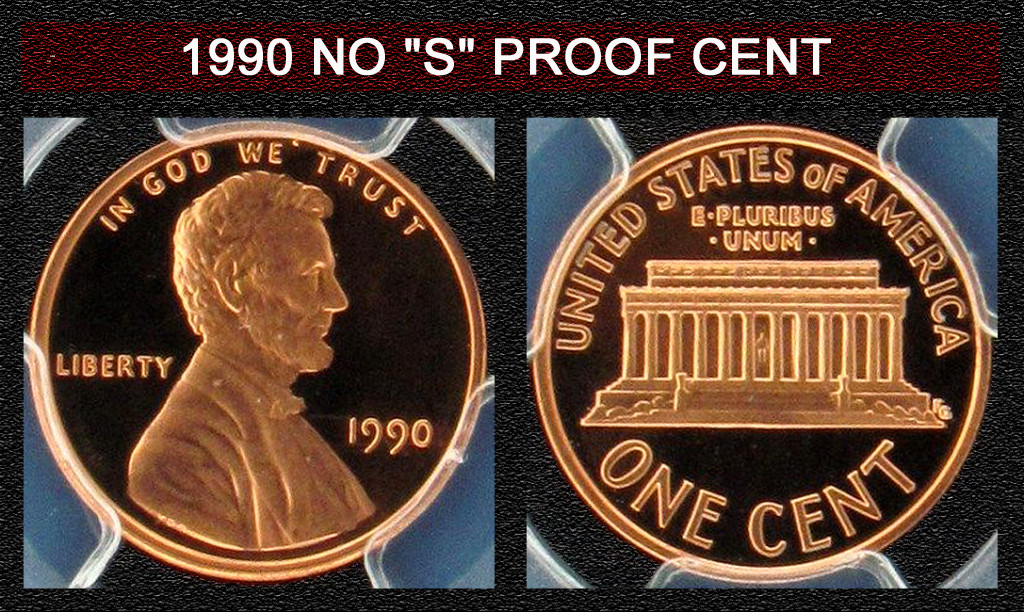 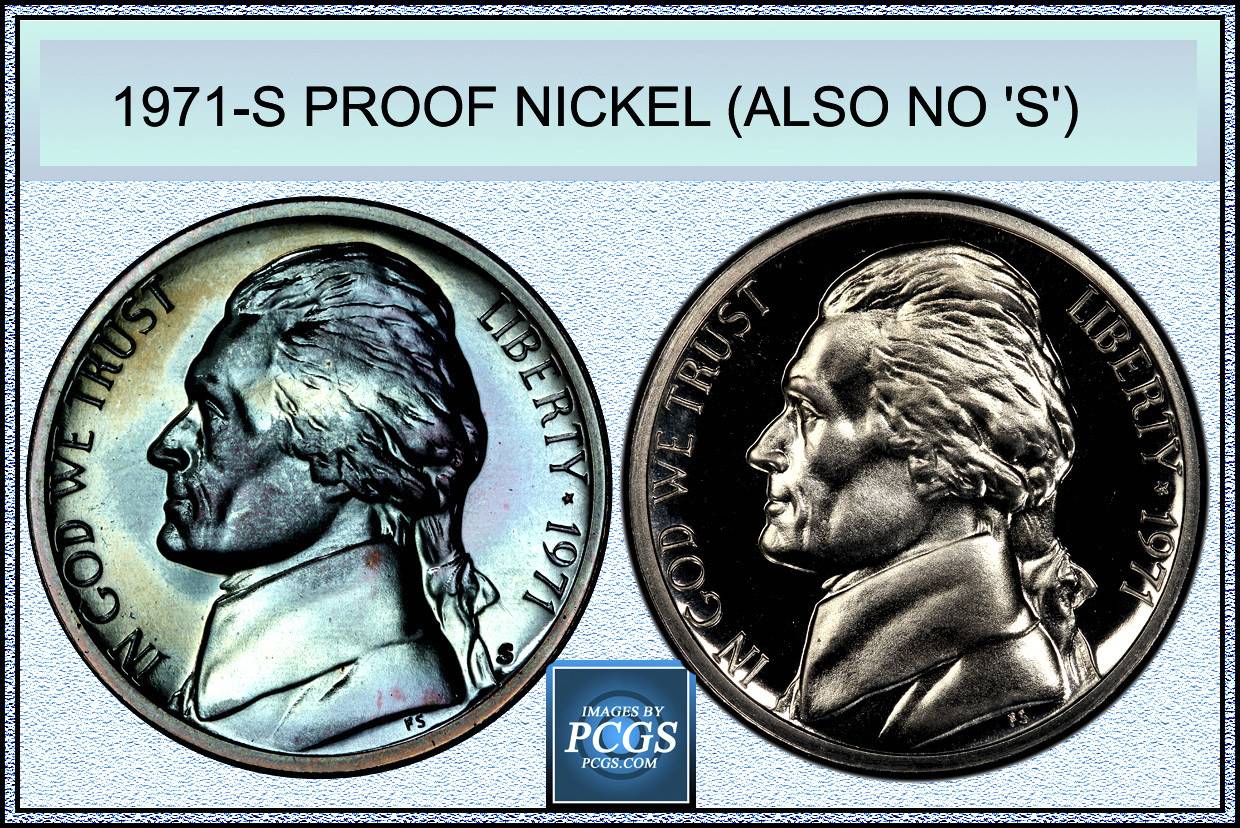 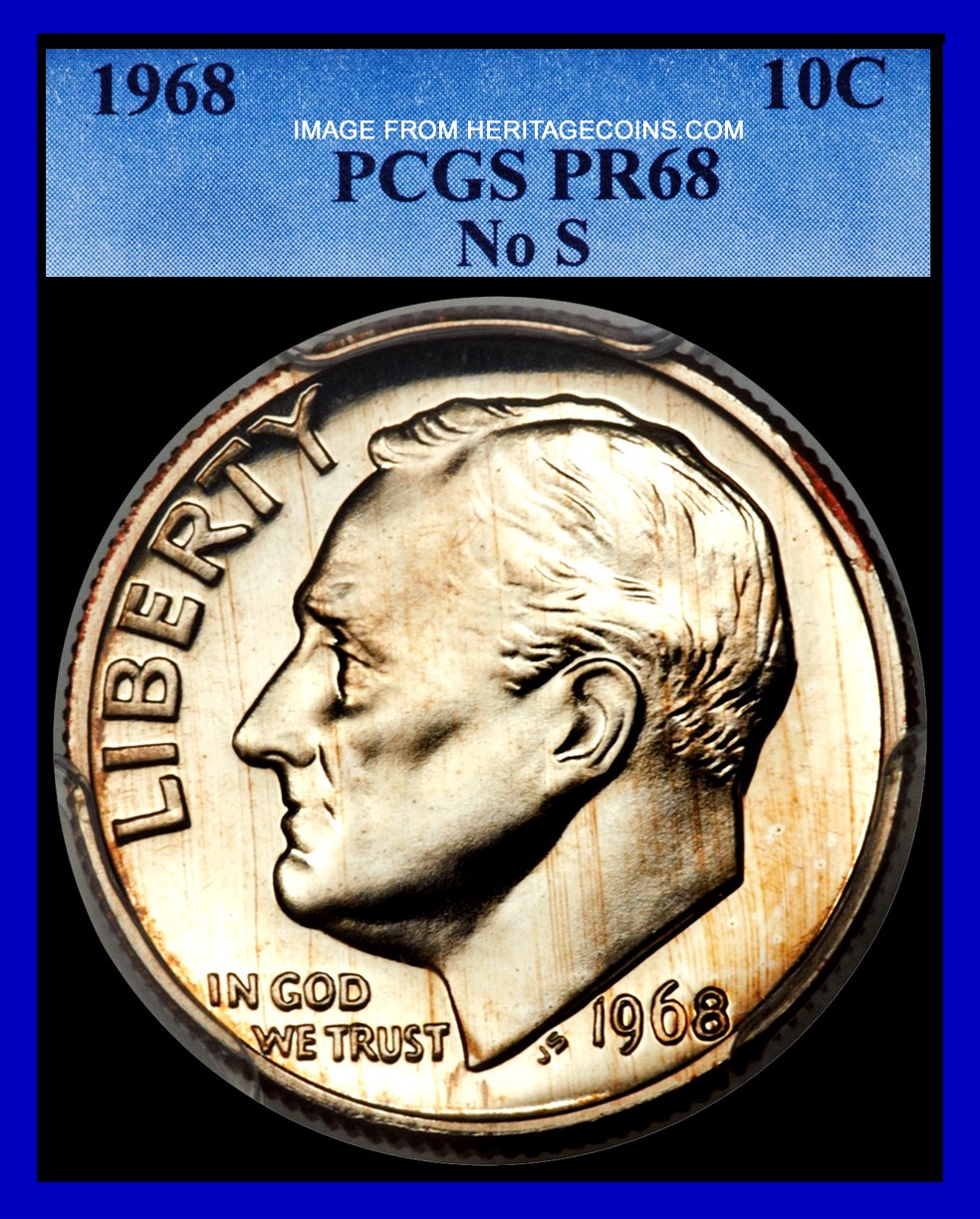 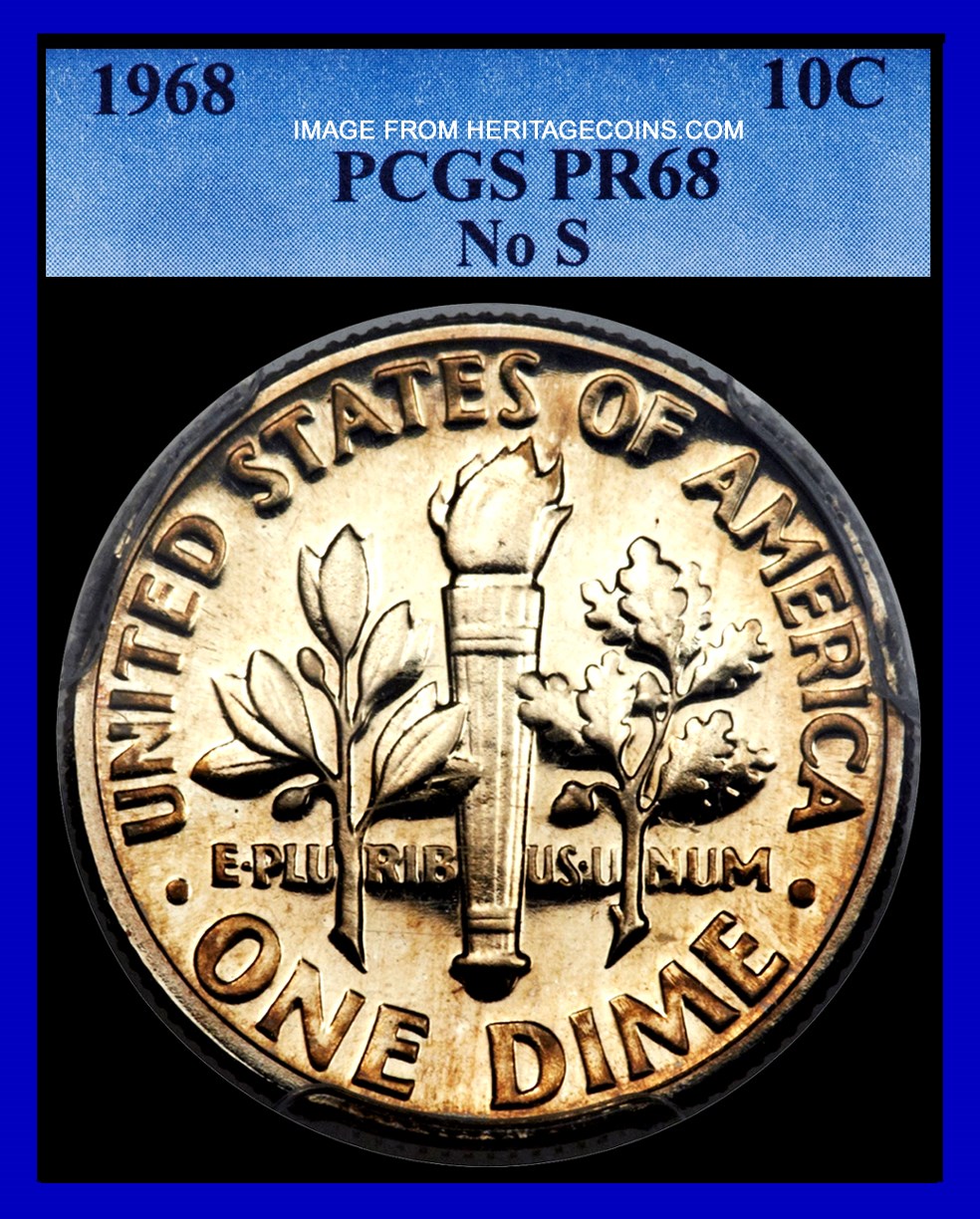 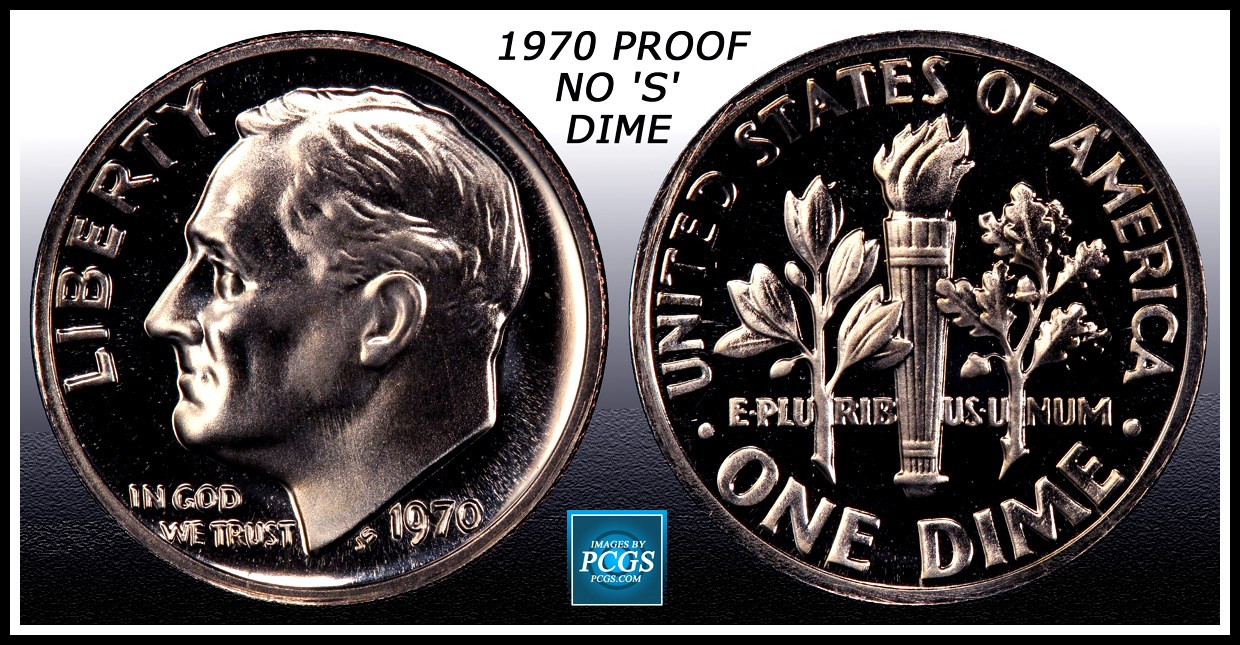 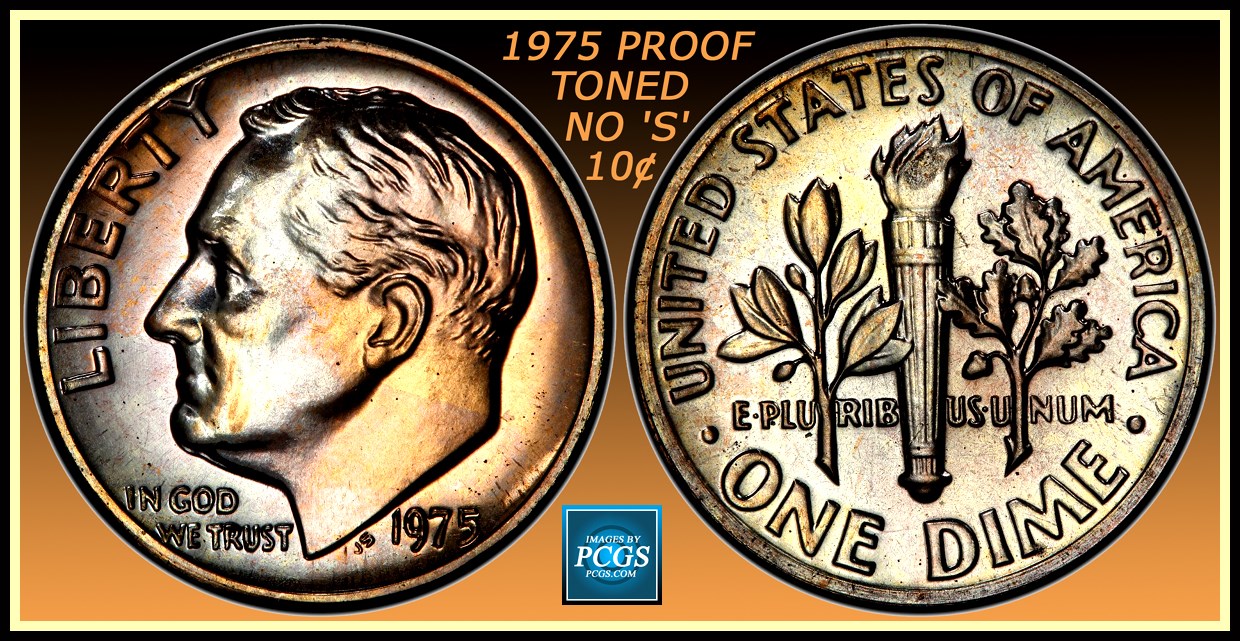 So if you are not sure, check a Red Book or a CPG (Cherry-Pickers-Guide) or ask here. Edited by coop
02/23/2018 2:04 pm
|
|
Page 2 of 2
|
Replies: 22 / Views: 58,301 |
Page 2 of 2
|







 First Page


 Posted 10/28/2010 11:20 am


