| Author |
 Replies: 9 / Views: 14,090 Replies: 9 / Views: 14,090 |
|
|
New Member
United States
2 Posts |
Hi there, I was searching coins on the Internet and came across the term "mule." I have been carrying this coin around for years and always thought it was some trick using a fancy saw and superglue, but now I wonder if it is a true mule. Wikipedia suggested I post some pictures and ask your opinions. This coin is the size of a dime. The edge of the dime has ridges and the penny is small, it's border is cut off. The copper is thinner than a regular penny. It is not hollowed out as both sides are even. A mule or clever hoax....whadda ya' think?   Thanks!! 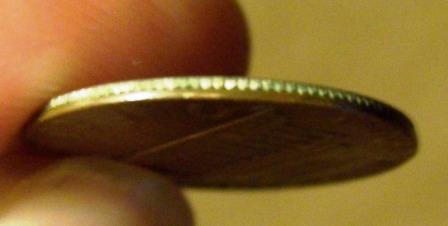  4.jpg" border="0" style='cursor:default' onClick='doimage(this,event)'>  3.jpg" border="0" style='cursor:default' onClick='doimage(this,event)'> 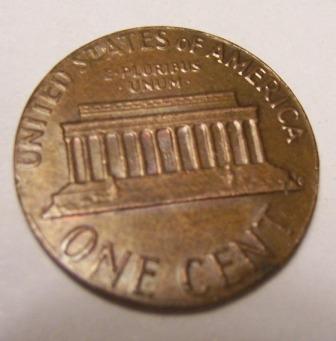 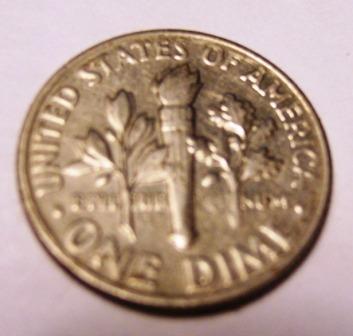 |
|
|
|
Pillar of the Community
Australia
3841 Posts |
I disagree - it seems that someone had too much time, saw them into half an them glued them together. Welcome to coincommunity by the way.
|
|
Pillar of the Community
United States
533 Posts |
Looks like a gimmick/magic coin of some sort. Just my opinion, welcome to the forum!
|
|
Moderator
 Australia
16989 Posts |
It can't be a genuine mule, struck at the mint like that, for two reasons.
1. Your coin is 'copper' on the cent side, and 'silver' on the other. This would be impossible to achieve, without the planchet, the blank piece of metal the coin had been struck from, being specially made just for the purpose of striking this coin. A "true cent/dime mule" would be struck from either a normal cent planchet and sow the dime side as "coppery", or struck from a normal dime planchet, with the cent side looking "silvery".
2. The edge, with the reeding extending only halfway across the edge of the coin, would be impossible to achieve unless a special collar die was made just for striking this particular coin. Again, with a "true mule", it would either have been struck with a normal penny collar die, giving a completely plain edge in both the silver and copper halves, or a normal dime collar die, which would yield normal dime-like reeding all the way across the coin.
Don't say "infinitely" when you mean "very"; otherwise, you'll have no word left when you want to talk about something really infinite. - C. S. Lewis
|
|
New Member
 United States
2 Posts |
Thanks for the welcome and all the input. I have always wondered what this was and now am pretty sure its not some anomaly from the mint - mystery solved. Guess I'd better practice up on my magic tricks (turning a common penny into a dime with a slight of hand)  I keep looking through my change for that rare beauty to appear... Thanks again! |
|
Pillar of the Community
United States
2600 Posts |
Welcome to the forum, nm. You will find this a great place with many knowledgeable collectors willing to share. Sap has this one nailed. One more attempt at fooling people.
Jim
|
|
Bedrock of the Community
United States
14454 Posts |
quote:
One more attempt at fooling people
Yes but atleast this one wasn't made to try and fool the collector, it was made to try and fool the eye, as all magic tricks do. Magicians coins have been around a very long time and you can get them any number of places including magic shops, they either have doubled heads or doubled tails and they can be same denomination or multi denomination (like above) just according to what the coin was made to do, they are made to be a illusion to make you think the magician has magical powers not to make a collector think he has something special, even though you will see one show up from time to time on these boards by new collectors and even some older collectors that just have never seen anything like it before and are curious how it could have happened |
|
Pillar of the Community
United States
954 Posts |
Welcome! Bored machinists love doing that kind of thing.  |
|
Valued Member
United States
383 Posts |
A cent can be struck on a dime planchet but not the other way around. A planchet larger then the denomination intended to be struck will not feed into the dies.
|
|
Pillar of the Community
United States
3507 Posts |
That is indeed a piece of a Magician's coin as they are called. That piece would fit into a manufactured, hollowed out cent obverse. That way when the insert (your piece) is turned in one direction, it will look like a normal cent. When the magician wants to produce a dime, he flips the piece over inside the shell of the Lincoln Cent that was hollowed out and just shows the dime side to the person being tricked:-) |
| |
Replies: 9 / Views: 14,090 |
|







 Posted 11/25/2007 08:06 am





