Tonight we take a look at the "Bridgeport," a commemorative half-dollar struck to help celebrate the 100th anniversary of the incorporation of the city of Bridgeport, Connecticut. The coin is presented via an example in PCGS MS-66.
Bridgeport is located at the mouth of the Pequonnock River in southwestern Connecticut, along the Long Island Sound. The city can trace its roots back far more than the 100 years being celebrated with the half-dollar, with English settlers known to be in the area as early as 1639. Land for the settlement was acquired from the local Pequonnock Native Americans. The settled area underwent several name changes as it grew over the years: originally Pequonnock, the name was changed to Fairfield, then Stratfield, then Newfield and then Bridgeport. Bridgeport began as a borough, grew into a township and ultimately, in 1836, was incorporated as a city.
Read More: Commems CollectionThe Bridgeport commemorative was designed by Henry Kreiss, who also designed the Connecticut Tercentenary half-dollar. The obverse features a left-facing portrait of Bridgeport's most famous resident, Phineas Taylor (PT) Barnum, while the reverse depicts what continues to the present day to be considered the most "modernistic" eagle displayed on a US coin. Kreiss' final designs did not undergo significant change from his initial sketches, though the inscriptions "In God We Trust" and "Liberty" were moved from the obverse to the reverse and "Connecticut" was spelled out on the final models vs. its original abbreviation "Conn". These changes were made at the suggestion of the Commission of Fine Arts.
Barnum, at one time the mayor of Bridgeport, was many things in his lifetime. Though he was a successful politician and generous philanthropist, he is most known for his endeavors as a showman/entertainer and being the founder of a circus that through merger with another show would ultimately become the "Ringling Bros and Barnum & Bailey Circus." It's interesting to note that Barnum came to the circus business late in life; he was 61 years old at the time he started.
The net mintage of the Bridgeport is 25,000 coins (all struck at Philadelphia). The law authorizing the coin did not limit its total mintage, nor did it limit its striking to 1936. Fortunately for today's collector, contemporary sales of the coin did require the Centennial Commission to order any coins beyond its initial production.
The coin shown is (say it with me!) a brilliant, white example with nice luster on both sides. My scanner is turning the slightest bit of golden toning on the reverse into tan areas on the image -- such areas are not visible when the coin is in hand.
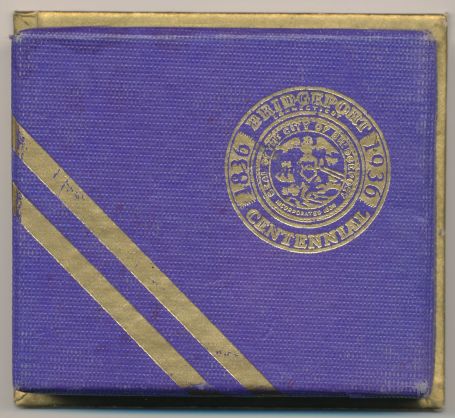
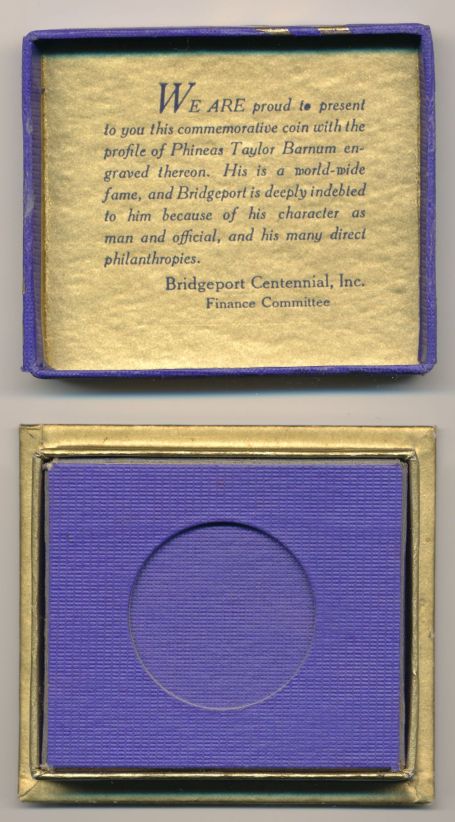
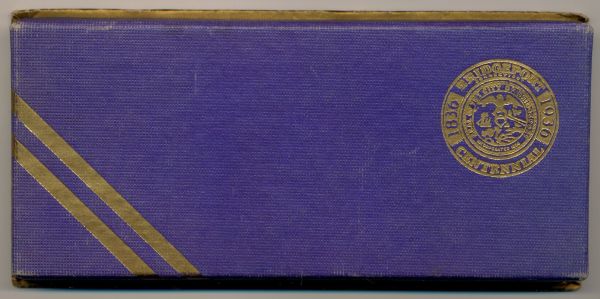
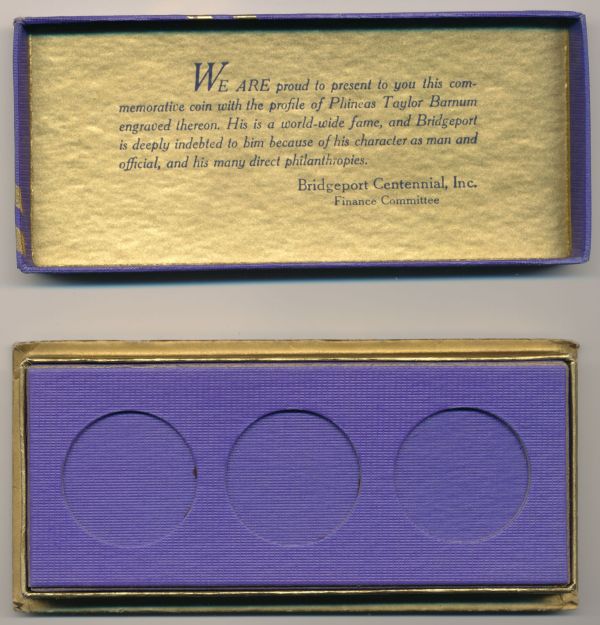
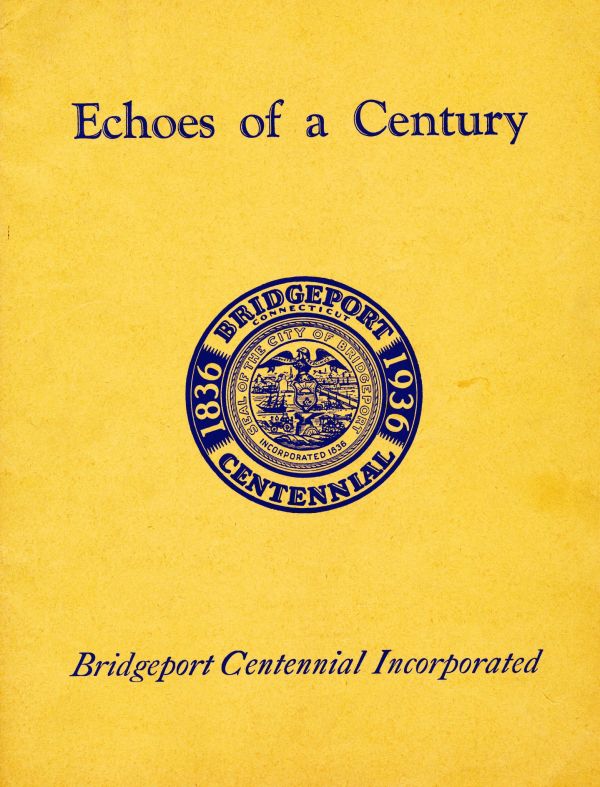
The coin was mailed to out-of-state collectors in either one-coin or three-coin blue and gold boxes; in-state folks could buy the coin (up to 5) at their local bank. I've included images of each box below. A pageant was held in Bridgeport as part of the centennial celebrations, it was titled "Echoes of a Century." I've included images of the cover and title page from the pageant's program.
Enjoy!
1936 Bridgeport Centennial -- Obverse 1936 Bridgeport Centennial -- Reverse
 1936 Bridgeport Centennial Original Mailing Box, One-Coin -- Cover
 1936 Bridgeport Centennial Original Mailing Box, One-Coin -- Interior
 1936 Bridgeport Centennial Original Mailing Box, Three-Coin -- Cover
 1936 Bridgeport Centennial Original Mailing Box, Three-Coin -- Interior
 "Echoes of a Century" Program -- Cover
 "Echoes of a Century" Program -- Title Page










 Posted 05/10/2012 12:09 am


