| Author |
 Replies: 22 / Views: 3,146 Replies: 22 / Views: 3,146 |
|
Pillar of the Community
United States
586 Posts |
|
|
|
|
Pillar of the Community
United States
740 Posts |
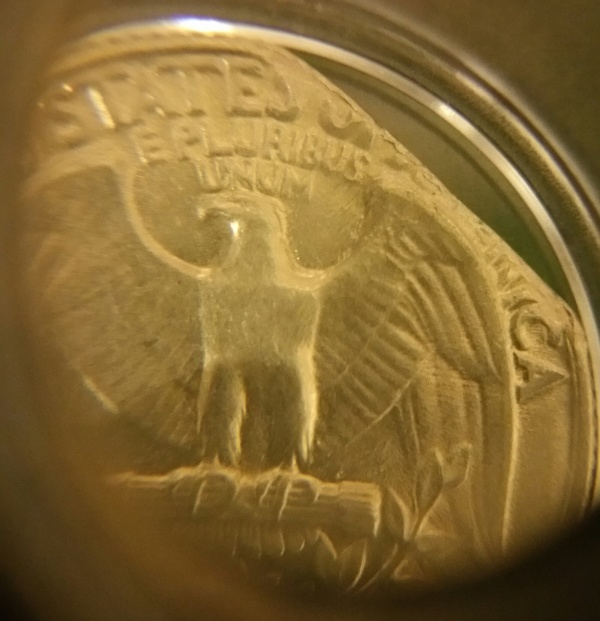
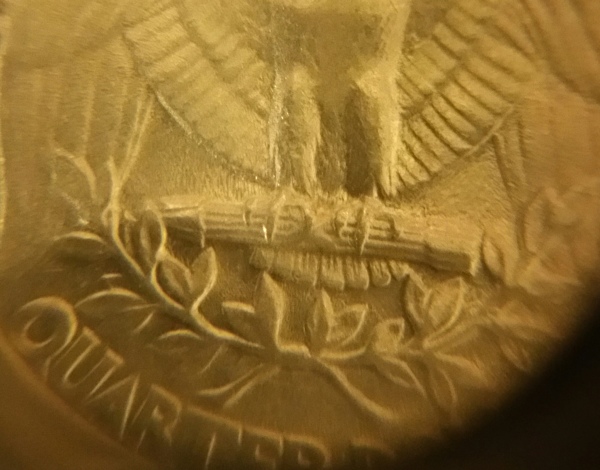
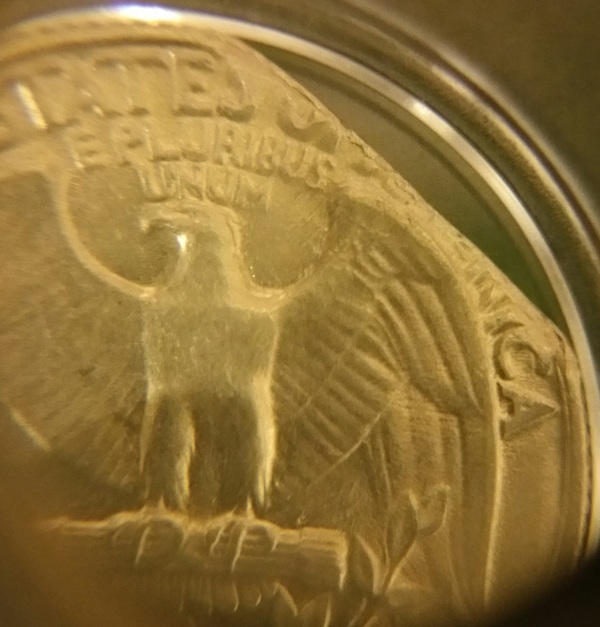
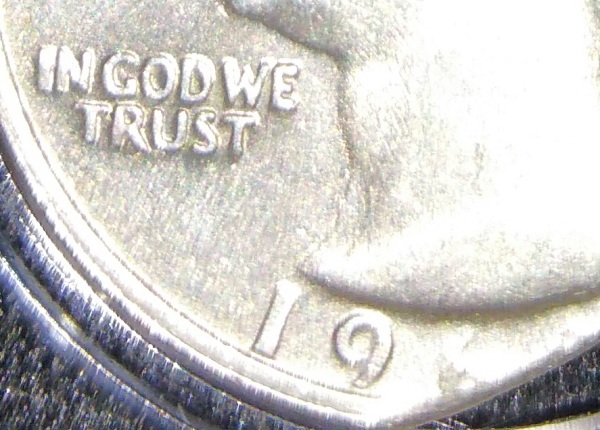
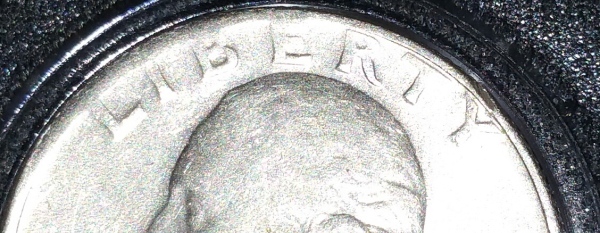
Cool coin! : ) In my opinion this is just a clipped planchet. The "Grease error" you are seeing on liberty is actually not caused by grease. This is called the Blakesley effect. During the rimming process the clipped planchet has a weight difference on the opposite side of the clip which causes this effect. This helps identify PMD over a real clipped planchet. As for the "doubling" you are seeing: when a clipped planchet is struck by the die, the metal around the clip flows towards the clip which is what you see. The design elements are flowing towards it. Edited by BlueSolo
04/08/2015 05:29 am
|
|
Pillar of the Community
 United States
586 Posts |
Thank you for this informative answer BlueSolo. My only question would be that if the doubling were associated with the impact that caused the clip, wouldn't it be either A.) seen on both sides of the coin or B.) resemble Machine Doubling? I am not saying you are wrong. I just am unfamiliar with this kind of error and am trying to think along the lines of other errors I am more familiar with. |
|
Pillar of the Community
United States
740 Posts |
The clip occurs before the strike of the die, when the planchet is cut. It is then rimmed, then struck. Looking at a clipped half dollar I have it shows the flow of letters on the reverse only as well. I'm thinking this might only happen on the anvil die and not the hammer? But that's just speculation on my part. Here is another clip recently posted here that exhibits the same reverse only flow of design elements: https://goccf.com/t/219010 |
|
Moderator
 United States
23522 Posts |
Quote:
In my opinion this is just a clipped planchet. Um, no. It's kind of relevant that clips are curved....occasionally the clip falls off the flat side of the strip, but not often. You can even see the angled cut where the pair of dykes (or maybe a siding cutter) used to cut the coin pinched the metal. A "clip" this large would completely obliterate the opposite side from Blakesley Effect. LIBE should be pretty much gone. |
|
Pillar of the Community
United States
586 Posts |
Ok I kind of suspected it may not be a clip with the raised metal along the line of the clip in question. So Super Dave what you are saying is the larger the clip the stronger the fading is opposite if the clip? I'm just going off what you said in regards to the fading on Liberty. So if it isn't a clip what are the chances on the DDR? Best 1 out of 2 haha! |
|
Pillar of the Community
United States
604 Posts |
I agree with Dave the clip doesn't look legit. As for the DDR, I'm not seeing it. |
|
Pillar of the Community
United States
740 Posts |
|
|
Moderator
United States
23522 Posts |
Quote:
So Super Dave what you are saying is the larger the clip the stronger the fading is opposite if the clip? Yes, exactly. This is caused by the clip preventing the coin from being held tightly in place by the collar, and the bigger the clip the looser the coin. Quote:Sorry, I knew I had seen some of these straight clipped planchets before. So the planchet was cut from the end of a sheet of metal. Looks a lot more like this: http://www.error-ref.com/_straight_clips_/ Except for the part where on this coin you can see how the cutting tool pinched the edge. |
|
Bedrock of the Community
United States
12437 Posts |
This is absolutely a genuine straight clip, nice find  All of the correct diagnostics are present- tapered rims at the edge of the clip and strong die flow on the devices at the edge of the clip. Quote:
This is caused by the clip preventing the coin from being held tightly in place by the collar, and the bigger the clip the looser the coin.
The Blakesley Effect is primarily created during the rim upsetting process, not during striking. The rim upsetting process involves force-spinning a coin through a narrowing channel which slightly reduces the diameter of the planchet and forms the initial proto-rim. If the diameter starts out smaller than it should be, then the force applied to the planchet is not as great and the proto-rim is either weak or nonexistent which results in noticeable weakness of the rim on a struck coin. The Blakesley Effect is also typically weaker on a straight clip than a curved clip. Given two clips of equal volume, one straight and one curved, the curved clip will have a stronger BE(weaker rim) because the diameter measured at the center of the clip will be smaller on a curve that it would be with a straight edge. Edited by biokemist6
04/08/2015 1:13 pm
|
|
Pillar of the Community
United States
586 Posts |
Well I would have to say this would be my first post that has two very knowledgeable veterans with contradicting theories. Kind of exciting haha! So would it be safe to say that straight and curved clip errors can at times display different characteristics?
|
|
Pillar of the Community
United States
740 Posts |
I think the "pinched edge" is a bit of an illusion with the lighting in the photos, sometimes I see it as pinched after SsuperDdave brought it up, but most of the time I see it as a partial rim. More pictures of the rim with colder lighting than the first images but warmer than the last ones would show this more clearly.
But then again, if it is pinched and not a legit straight clip, why does it have symptoms of a clipped planchet? You can't fake die flow can you?
Edited by BlueSolo
04/08/2015 1:04 pm
|
|
Bedrock of the Community
United States
62064 Posts |
Bio is correct. This is a genuine incomplete planchet. The devices fading before the clipped area. (which is not really a clip, but over edge of the stock leaving the raw edge in this area) The weakness on LIBERTY is the Blakesley affect leaving an unshaped setup edge in that area of the coin, leaving the rim not full looking as is common for larger incomplete planchets. 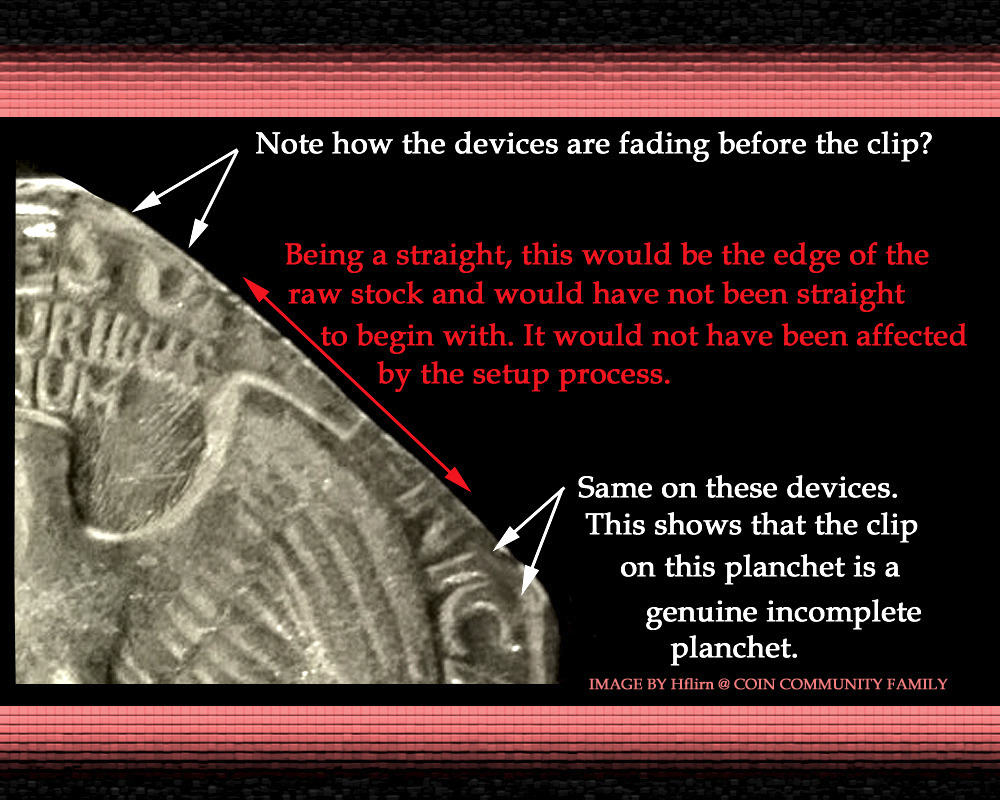 If this had been a PSD coin, the devices would not have faded near the clip in the areas of the arrows. Edited by coop
04/08/2015 1:12 pm
|
|
Moderator
United States
23522 Posts |
I am willing to come to your way of thinking, if you'll tell me that planchet strips have beveled edges, and straight clips can have a fully-formed rim to the edge of the clip. You can use this one as an example for me: https://goccf.com/t/179011I'm not afraid to be wrong, nor to admit it. I've learned more from you guys than you have from me. |
|
Bedrock of the Community
United States
62064 Posts |
The edges are raw edges. What every the stock material had altered the edge along the way would still be there in the clipped area, plus anything that would affect that edge during the striking process. (a straight edge in a curved world with contact from other planchets/coins.
|
|
Moderator
United States
23522 Posts |
Quote:
The edges are raw edges. What every the stock material had altered the edge along the way would still be there in the clipped area, plus anything that would affect that edge during the striking process. (a straight edge in a curved world with contact from other planchets/coins. I'll buy that; I'm not the world's foremost expert on planchets. But I *do* know my way around rolled sheet stock, and it ain't beveled from the factory. If it's a clip, that beveling somehow happened during the strike or the prep. |
| |
Replies: 22 / Views: 3,146 |










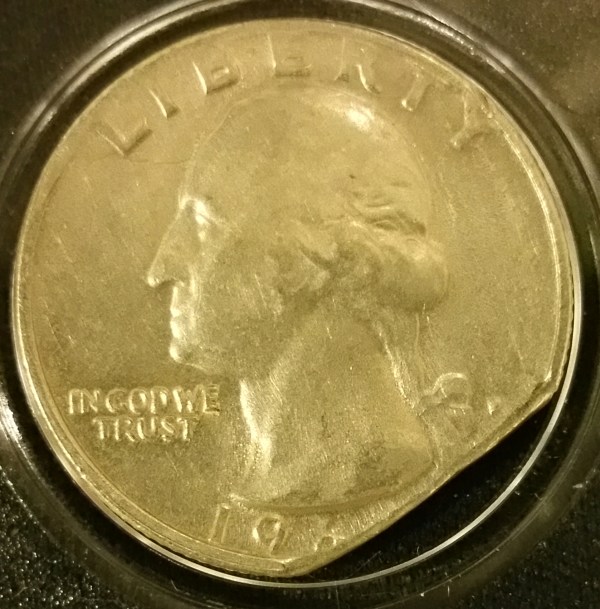
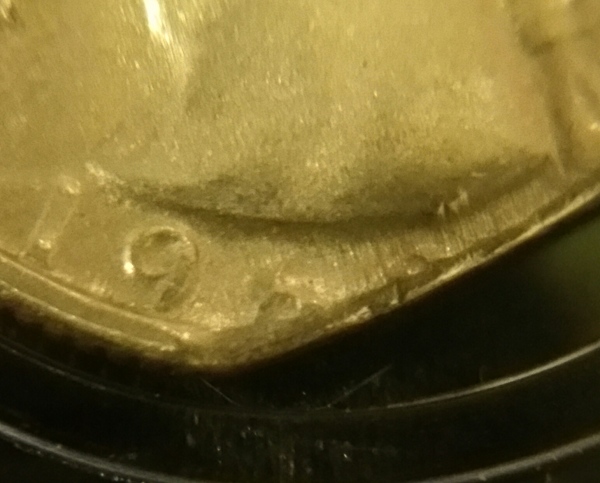
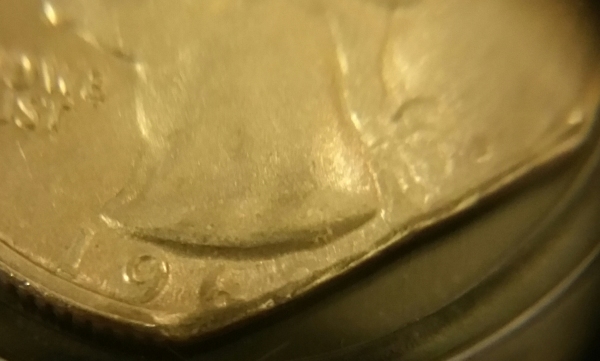




 Posted 04/08/2015 05:47 am


