| Author |
 Replies: 16 / Views: 3,688 Replies: 16 / Views: 3,688 |
|
Valued Member
United States
128 Posts |
|
|
|
|
Pillar of the Community
United States
6478 Posts |
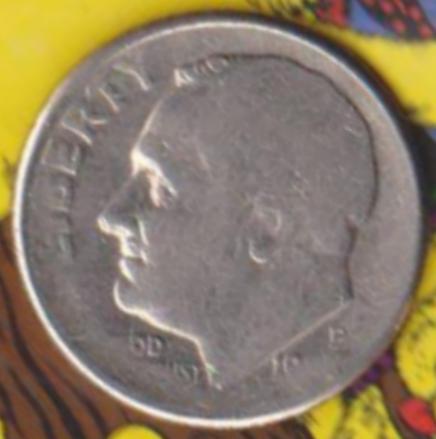
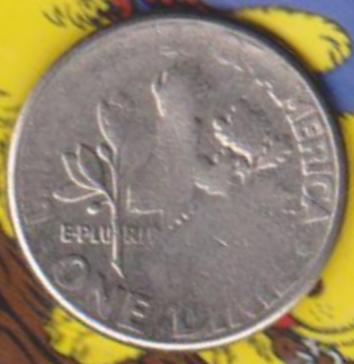
Could we get clearer pics? Hard to tell how upset the rims are. Because the rims are there I think it is a Greaser |
|
Valued Member
 United States
128 Posts |
I ordered a Celestron Pro digital microscope earlier today. When it arrives, I'll post that clearer pic. Until then, I appreciate those who might see enough to comment further based on whatever can now be seen. Cheers.
|
|
Moderator
 United States
56855 Posts |
|
|
Pillar of the Community
United States
946 Posts |
That looks like a Greaser,and a better one at that too |
|
Valued Member
United States
128 Posts |
I am curious, how likely is it that both sides of a coin would be Struck Through Grease? Of greasers I've seen, I've never seen both sides affected. It seems that if it is a Greaser on both sides, it would be a relatively rare occurrence. Am I wrong about that? Thanks again. |
|
Pillar of the Community
United States
5825 Posts |
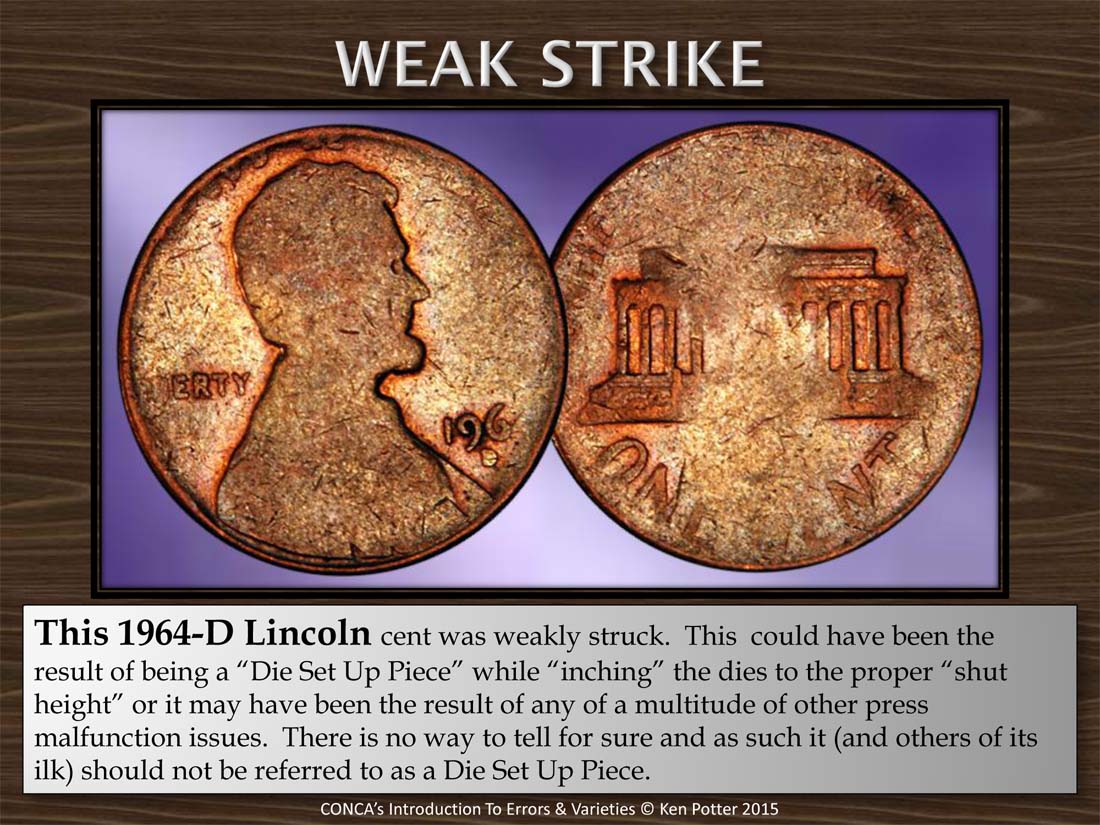
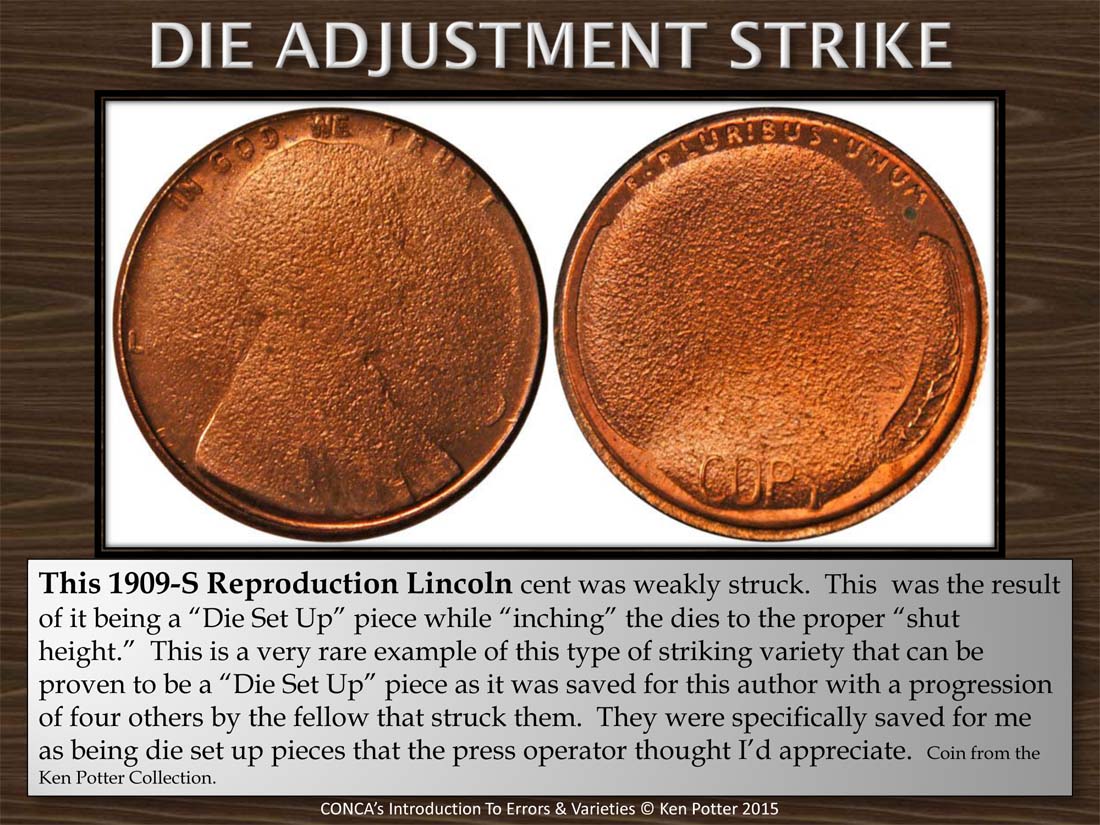
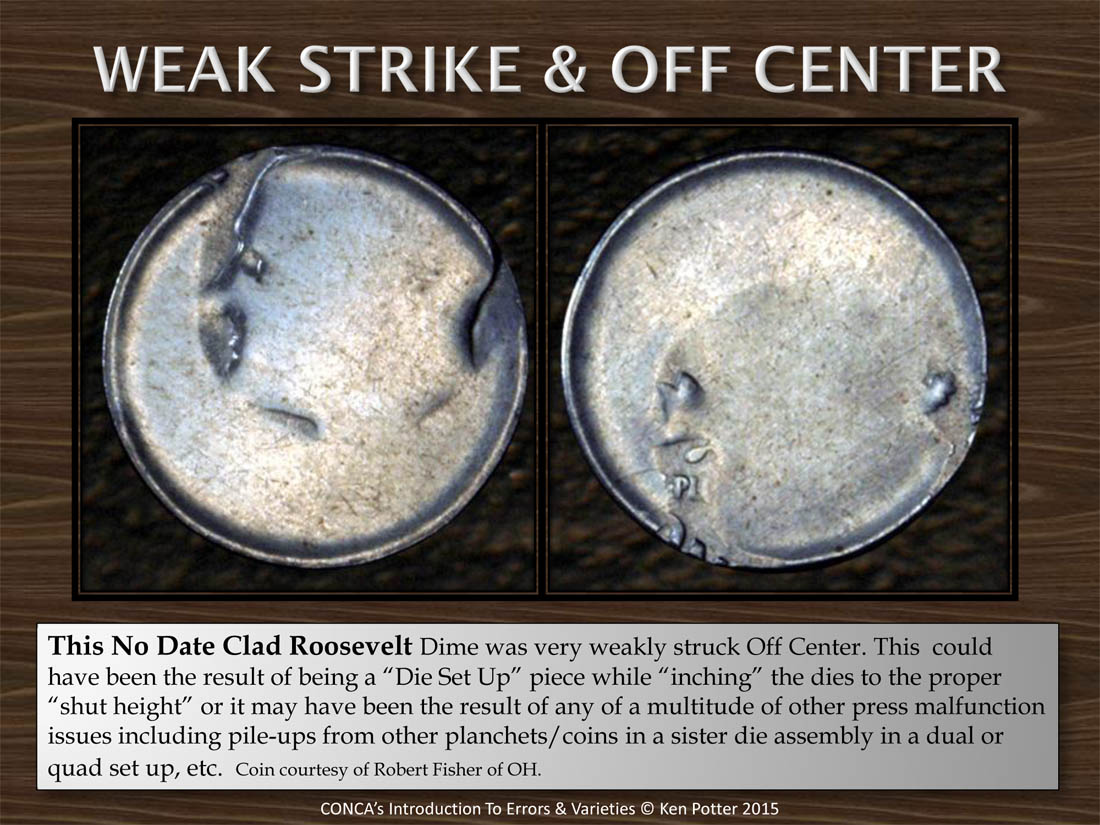
Tough call. It could be a test strike made during a press setup; trying to get the pressure and separation distance and the alignment of the dies correct. OR A Greaser. |
|
Bedrock of the Community
United States
62064 Posts |
Is the weight the same as a normal coin? It looks like a Struck through error, but the rims are weak. On a Struck Through Grease they can have both sides affected. (often) 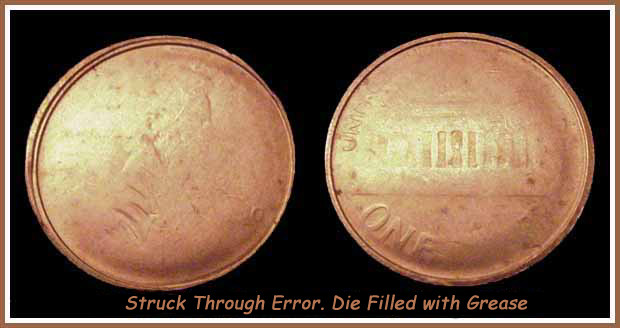 But note the rims on this example. They are strong and not weak. So it would be nice to see the weight of your coin. |
|
Pillar of the Community
United States
2752 Posts |
I am confident that this is a weak (low-pressure) strike. These errors are most common in dimes because the thin planchet requires a small minimum die clearance with very little room for error. It's the same reason why clash marks are most common in this denomination.
Error coin writer and researcher.
|
|
Bedrock of the Community
United States
62064 Posts |
Thanks Mike. That was my suspicion.
|
|
Moderator
United States
56855 Posts |
Dang,wrong again  John1  Edited by John1
05/20/2015 6:27 pm
|
|
Pillar of the Community
United States
1781 Posts |
|
|
Moderator
United States
56855 Posts |
Doesn't the die touch the center of the planchet first? John1 |
|
Valued Member
United States
128 Posts |
Thank you guys for that insight. I ought to know that including the coin's weight would be helpful information to include with such a query. I'll try remembering that in the future. And I'll hopefully be posting clearer pics by my next posting as well. Thanks for bearing with me through my learning curve. The coin weighs 2.31 grams. as an aside; speaking of weight; I once read of 1983 cents struck on the previous copper planchet, and weighing 3.09 grams. Is this a confirmed possibility or am I wasting time weighing 83s? Thanks again.
|
|
Pillar of the Community
United States
2752 Posts |
<<Doesn't the die touch the center of the planchet first?>> That is often, but not always the case. It depends on the degree of die convexity, which varies over the years. It also depends on the height of the planchet's proto-rim. If the proto-rim is tall, then the periphery of the die might make contact before, or at the same time, as the center of the die. I've seen weakly-struck State Quarters where the only design sits along the perimeter or where only the design rim appears. That's because the die face is almost completely flat in these recent issues. Error coin writer and researcher.
|
|
Moderator
United States
56855 Posts |
Thanks Mike. John1 |
| |
Replies: 16 / Views: 3,688 |












 Posted 05/20/2015 02:02 am