Coin Community Family of Web Sites Join Thousands of Coin, Bullion, & Money Collectors
Royal Estate Auctions - $1 Coin AuctionsJoin Thousands of Coin, Bullion, & Money Collectors 300,000 items to help build your collection! Coin, Banknote and Medal Collectors's Online Mall Royal Canadian Mint products, Canadian, Polish, American, and world coins and banknotes. Vancouvers #1 Coin and Paper Money Dealer Specializing in Modern Numismatics


Username:
Password:
Save Password
Forgot your Password?


This page may contain links that result in small commissions to keep this free site up and running.

Welcome Guest! Registering and/or logging in will remove the anchor (bottom) ads. It's Free!

Highlighting Parthian AR Fractions

To participate in the forum you must log in or register.
Author Previous TopicReplies: 10 / Views: 3,146Next Topic  
Pillar of the Community
Kamnaskires's Avatar
United States
7066 Posts
 Posted 05/01/2017  9:31 pm Show Profile   Bookmark this topic Add Kamnaskires to your friends list Get a Link to this Message Number of Subscribers
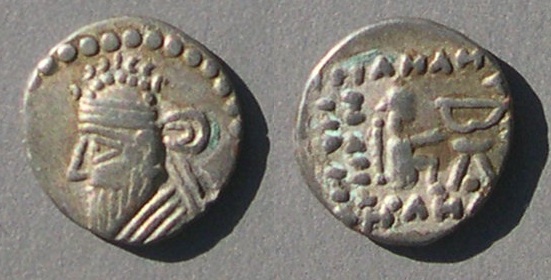
Drachms were the most important coins for the Parthians and they were thus the most commonly minted. For that very reason, the numbers of extant examples on the market, I have abandoned them. I hope to sell off most of my drachms in the next few years - and in fact have slowly begun that process. Where Parthians are concerned, I am currently only after the more challenging game of the silver and billon tets and the fractions. (I don't collect Parthian bronzes)

On the occasion of my picking up only my 10th Parthian fraction, I thought I'd provide some information about these issues, and post my group. Some of mine have been shown here before (but never as a group), so please forgive the unrequested encore. The few short paragraphs I've written, below, literally constitute more information about Parthian fractions than I've ever seen compiled online...there's a serious dearth of available information about them.

Parthian silver fractions consist of obols (typically around 11mm, approximately 0.6 gm, and equivalent to 1/6 of a drachm or 8 chalkoi, the base metal coins used for "small change"), diobols (around 12mm, approximately 1.4 gm), and hemidrachms or triobols (of which I own none; around 14mm, approximately 2 gm, equivalent to three obols or half a drachm). While the 0.6 gm standard for the obols seems to have been tightly monitored and respected (most seem to be within +/- 0.1 gm of that standard), there is considerable variance in the weights of the diobols, which can deviate as much as 0.5 gm from their 1.4 standard. Hemidrachms/triobols may vary as well, but typically no more than +/- 0.2 gm from their 2 gm standard.

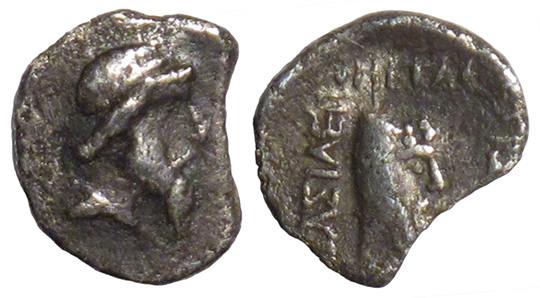
Parthian fractions carry on the iconographic tradition of the drachms. That is, obverses feature the bust of the current (issuing) king wearing a bashlyk or diadem (earlier issues) or tiara (later issues), with a seated archer reverse. The notable exception to the rule for reverses is the Mithradates I obol (Sellwood types 12.4 and 12.5), which features a bust of the king's brother Bagasis for the reverse.

While Parthian drachms are generally common and tetradrachms fairly common (depending on the type, of course), the fractional silver denominations are harder to come by since they were minted in significantly smaller quantities. Thus all Parthian silver fractions are considered scarce or rare - although exactly how rare depends on the particular issue.

The initial fractional issue was a hemidrachm/triobol of Parthia's first king, Arsakes I, 247 - 211 BC. After Arsakes' rule, fractions were only issued intermittently by some kings, and only up to the reign of Pakoros II (78 - 105 AD). During that span of intermittent minting of fractional denominations there was a period of more than a century, between the reigns of Orodes II (57 - 38 BC) and Vologases I (51 - 78 AD), that no obols, diobols, or hemidrachms were issued at all. For the remaining 120 or so years of the empire's existence after Pakoros II, no silver fractions seem to have been issued.

Many Parthian fractions are identified in David Sellwood's The Coinage of Parthia (2nd edition, 1980). However, nine years after the publication of the second (and last) edition of that book, Sellwood documented seven additional types based on a new (early 1980s) hoard from the Iranian province of Fars, an area that in antiquity had belonged to Persis. Persis was among the group of semi-autonomous kingdoms located in the territories controlled by Parthia. All of these newly discovered Parthian fractions were minted in Persis between the mid-first century and early second century AD. Sellwood's catalog of the new discoveries was published in 1989, in the Numismatic Chronicle #149.

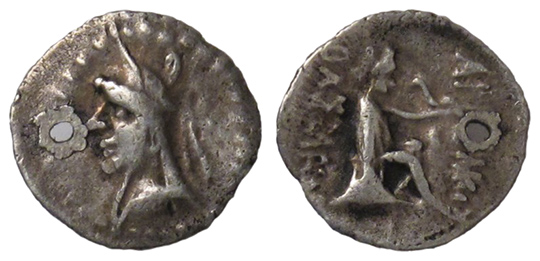
Prices for Parthian silver fractions vary greatly based on type, condition, degree of rarity and, of course, provenance, but many can be picked up for under $200 - and some significantly lower than that. I got my holed Mithradates I obol below, for example, for just $30. (One from the same set of dies, however, is currently included in CNG Sale 105 with an estimate of $300) My winning bid for the Orodes II obol, below, was $60 - pretty low considering its R1 rarity rating from Shore. The chipped Mithradates I obol with the right-facing bust - which was purchased directly from Pieter van't Haaff (author of the Catalogue of Elymaean Coinage) and is from his collection - was $70. Formerly this same coin was in the important Parthian collection of Robert Gonnella. It is documented at Parthia.com as PDC 39892. It's not a pretty coin, but the price was decent given both the rarity of that issue and the important provenance. Some of the other coins below were, unfortunately for me, much more expensive.

Due to the relatively low output of the fractions - and low numbers of extant examples - many are documented on study sites (ACSearch.info, Coinproject, Parthia.com, etc.). In addition, a number have passed through important Parthian collections at one point or another, such as the collections of Todd Ballen, David Sellwood, Robert Gonnella, Pieter van't Haaff, Bellaria, Nisa, etc. I'll add to this list Parthicus, a member of Cointalk, whose extensive Parthian collection was just auctioned off. So the chances of owning a provenanced coin - or of having the nice surprise of chancing upon your coin posted online somewhere - is pretty decent with these.
Highlighting-Parthian-AR-Fractions
Mithradates I (Sellwood and Shore); Phriapatius to Mithradates I (Assar)
obol, 171 - 138 BC
Hekatompylos mint
Sellwood 9.7

Highlighting-Parthian-AR-Fractions
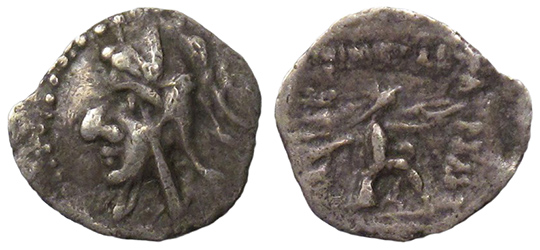
Mithradates I (Sellwood and Shore); Phriapatius to Mithradates I (Assar)
obol, 171 - 138 BC
(0.62 gm)
Hekatompylos mint
Sellwood 10.19
Ex-David Sellwood Collection
Gotta love the nose!

Highlighting-Parthian-AR-Fractions
Mithradates I
obol, 171 - 138 BC
(9 mm, 0.49 gm)
Ecbatana mint
Sellwood 12.4
(The reverse here depicts Mithradates' brother Bagasis)
Ex-Van't Haaff Collection; Ex-Dr. Robert Gonnella Collection

Highlighting-Parthian-AR-Fractions
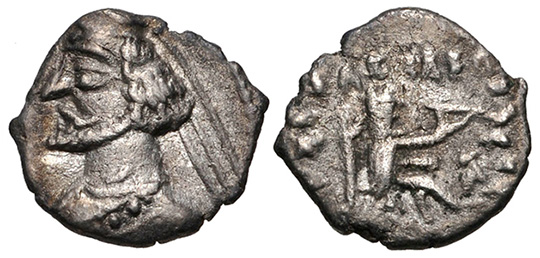
Orodes II
obol, 57 - 38 BC
(10 mm, 0.56 gm)
Ecbatana mint
Sellwood 48.15; Sunrise 385; Shore 265
Ex-Parthicus Collection


Highlighting-Parthian-AR-Fractions
Vologases I
diobol, 51 - 78 AD
(1.22 gm)
Probably minted in Persis, which at the time was a subject kingdom of Parthia
Sellwood "New Parthian Coin Types," Numismatic Chronicle 149, 1989, type 1; Shore 379
This coin also listed at Parthia.com as PDC 8262


Highlighting-Parthian-AR-Fractions
Vologases I
diobol, 51 - 78 AD
(13 mm, 1.19 gm)
Probably minted in Persis, which at the time was a subject kingdom of Parthia
Sellwood "New Parthian Coin Types," Numismatic Chronicle 149, 1989, type 2; Shore 381
Ex-David Sellwood Collection


Highlighting-Parthian-AR-Fractions
Vologases I
diobol, 51 - 78 AD
(13 mm, 1.23 gm)
Probably minted in Persis, which at the time was a subject kingdom of Parthia
Sellwood "New Parthian Coin Types," Numismatic Chronicle 149, 1989, type 2; Shore 381
Ex-Parthicus Collection

Highlighting-Parthian-AR-Fractions
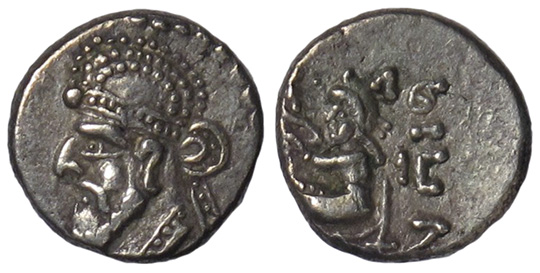
Vologases II
diobol, 77 - 80 AD
(1.44 gm)
Probably minted in Persis, which at the time was a subject kingdom of Parthia
Sellwood "New Parthian Coin Types," Numismatic Chronicle 149, 1989, type 3 variant (archer facing the wrong way! LOL!)
This coin listed at https://www.acsearch.info/search.html?id=1832576 and
https://www.acsearch.info/media/ima...832576.m.jpg


Highlighting-Parthian-AR-Fractions
Pakoros II
diobol, 78 - 105 AD
Despite the Ecbatana monogram, probably minted in Persis, which at the time was a subject kingdom of Parthia
Sellwood "New Parthian Coin Types," Numismatic Chronicle 149, 1989, type 6; Shore 402
This coin also listed at http://www.acsearch.info/record.html?id=560213 and http://www.acsearch.info/images/57/560213.jpg


Highlighting-Parthian-AR-Fractions
Pakoros II
diobol, 78 - 105 AD
Despite the Ecbatana monogram, probably minted in Persis, which at the time was a subject kingdom of Parthia
Sellwood "New Parthian Coin Types," Numismatic Chronicle 1989, type 6; Shore 402

Edited by Kamnaskires
05/01/2017 9:55 pm
Moderator
Learn More...
echizento's Avatar
United States
23731 Posts
 Posted 05/01/2017  10:34 pm  Show Profile   Bookmark this reply Add echizento to your friends list Get a Link to this Reply
Bob, what an great thread. I wish I had the ability to write like this. I will continue to refer to this thread in the future as I learn more about Parthian coinage. BTW, Any drachm you don't want, you know where you can send them.
Pillar of the Community
DavidUK's Avatar
United Kingdom
2624 Posts
 Posted 05/02/2017  05:38 am  Show Profile   Bookmark this reply Add DavidUK to your friends list Get a Link to this Reply
Bob what you don't know about this area of collecting isn't worth knowing. Its great to see such enthusiasm and I can see why because they seem gteat value for money, are interesting with their cool portraits and it seems reasonable that you could complete a set of them. A great combination I think ^^
Moderator
Learn More...
Spence's Avatar
United States
34423 Posts
 Posted 05/02/2017  06:26 am  Show Profile   Bookmark this reply Add Spence to your friends list Get a Link to this Reply
Nice work Bob. That was excellent.
"If you climb a good tree, you get a push."
-----Ghanaian proverb

"The danger we all now face is distinguishing between what is authentic and what is performed."
-----King Adz
Pillar of the Community
Kamnaskires's Avatar
United States
7066 Posts
 Posted 05/02/2017  07:21 am  Show Profile   Bookmark this reply Add Kamnaskires to your friends list Get a Link to this Reply
Thanks, guys. This is definitely an interesting sub area within the larger realm of Parthian coin collecting. Tets are still my main focus, though.
Pillar of the Community
Finn235's Avatar
United States
6130 Posts
 Posted 05/02/2017  12:02 pm  Show Profile   Bookmark this reply Add Finn235 to your friends list Get a Link to this Reply
Nice set of little coins there!

Has anyone theorized why these fractions are so much less common than the drachms? IIRC, most culture that used the "drachm" valued it at roughly 2-5 for a week's pay for the "working class". Did the Parthians just rely on the bronze denominations and others imported from India, Seleucia, and Rome?

Also, I can't help but notice the script. I see some fragments of the usual Greek at the start, maybe Persis script in the middle, and mostly degenerate pseudo-Greek at the end?
Pillar of the Community
United States
549 Posts
 Posted 05/02/2017  7:53 pm  Show Profile   Bookmark this reply Add augustus1 to your friends list Get a Link to this Reply
Bob, thank you very much for your interesting and informative post. I appreciate the work that went into it.

I have only one Parthian silver fraction:

Highlighting-Parthian-AR-Fractions
Paroros II, AD 78-105
diobol. 13 mm. 1.23 grams
Shore 403. Sellwood (NC 1989) type 6.8, plate 42.8.
Pillar of the Community
United States
549 Posts
 Posted 05/02/2017  7:55 pm  Show Profile   Bookmark this reply Add augustus1 to your friends list Get a Link to this Reply
Oops! I mistyped "Pakoros II" and I don't know how to edit the original.
Moderator
Learn More...
Spence's Avatar
United States
34423 Posts
 Posted 05/02/2017  8:46 pm  Show Profile   Bookmark this reply Add Spence to your friends list Get a Link to this Reply
Bob, I was thinking about your post some today and I have the exact same question as @finn. Why is the larger denomination more common than the smaller? I have been struggling to think of any other time in history when that was the case. I'm sure that has happened other times, but I just can't think of when. Thx.
"If you climb a good tree, you get a push."
-----Ghanaian proverb

"The danger we all now face is distinguishing between what is authentic and what is performed."
-----King Adz
Valued Member
United States
90 Posts
 Posted 05/03/2017  07:29 am  Show Profile   Bookmark this reply Add museumguy to your friends list Get a Link to this Reply
Great piece Bob. They are beautiful little coins.

Steve S.
Pillar of the Community
Kamnaskires's Avatar
United States
7066 Posts
 Posted 05/03/2017  9:11 pm  Show Profile   Bookmark this reply Add Kamnaskires to your friends list Get a Link to this Reply
Sorry about the delay in response. Very busy at work this week. Semester ends next week. Yay!

Good questions Steve (Finn) and Dave. Unfortunately I have seen no published research that provides an answer to the question about why there are so few issues of Parthian AR fractions. In a very early study on Parthian coinage, from the 19th century (John Lindsay's A View of the History and Coinage of the Parthians), the smaller AR denominations are not even mentioned...as he stated it, "with very few exceptions, the only sizes which occur are the tetradrachms and drachms...and small copper." I guess the AR fractional issues constitute the "few exceptions." Later authors make reference to the obols, diobols, and triobols, of course, but in a cursory way, it seems, since they are so greatly outnumbered by the other denominations. The bronzes - the chalkoi, that is - were minted in large numbers, and they seem to have been the preferred denomination for smaller, everyday transactions.

Reid Goldsborough has this paragraph on his website http://rg.ancients.info/alexander/fractions.html ), which I find interesting: "I've read, from David MacDonald in his 2005 book An Introduction to the History and Coinage of the Kingdom of the Bosporus, that small fractions were treated...as fiat currency whose value was artificially set by the ruling authority that issued them and whose money or face value was significantly higher than its bullion or intrinsic value. Others have discussed this as well, including Colin Kraay in his 1976 book Archaic and Classical Greek Coins, offering the view that fractions may have been accepted on trust in local retail commerce while larger denominations had to more consistently and closely adhere to their bullion value to be accepted in international trade." Perhaps Parthians' earthy sensibilities rejected this idea of "artificial" valuing of smaller denominations? Or perhaps they felt the silver fractional denominations were just not vital - that is, that the chalkoi sufficed as small change? I don't know.

I've never seen any literature that explains the buying power of the drachms and other denominations in Parthia either, but my assumption is that they are comparable to Greek states. An early issue of The Celator discusses the value of the Greek (Athenian) drachm: https://community.vcoins.com/celator-vol-02-no-05/ Perhaps one can extrapolate from there the buying power of the obol (1/6 drachm), diobol (1/3 drachm), and triobol (1/2 drachm)?

Finn, the script is Greek, transitioning from legible in early issues to sloppy for the Volo I issues to, as Sellwood states it in reference to the later issues minted in Persis, "much squarer series of 'letters' in the legend...imitating Greek...and thus deriving from the degenerate inscriptions of the Ecbatana drachms." I like the way the upper legend line of the last two coins seems to read "HAHAHA"...as if to say: so you thought this would be Greek?...hahahahahaha.

Nice little coin there, augustus1! Don't worry about misspelling Pacorus. I mean, who really knows how to spell it anyway? Pakoros? Pakaros? Pacarus? Pacorus? I've seen it every which way. (Okay, well, I've never seen it as "Paroros" before, but that just means you're to be commended for your originality!)

Thanks for the comment, Steve (museumguy), both here and at Forum. I appreciate it.
Edited by Kamnaskires
05/03/2017 9:15 pm
  Previous TopicReplies: 10 / Views: 3,146Next Topic  

To participate in the forum you must log in or register.


Disclaimer: While a tremendous amount of effort goes into ensuring the accuracy of the information contained in this site, Coin Community assumes no liability for errors. Copyright 2005 - 2026 Coin Community Family- all rights reserved worldwide. Use of any images or content on this website without prior written permission of Coin Community or the original lender is strictly prohibited.
Contact Us  |  Advertise Here  |  Privacy Policy / Terms of Use

Coin Community Forum © 2005 - 2026 Coin Community Forums
It took 0.44 seconds to rattle this change. Forums