| Author |
 Replies: 9 / Views: 2,548 Replies: 9 / Views: 2,548 |
|
|
Valued Member
United States
128 Posts |
Picked this up at a local coin dealer, It was in a coin flip labled "BRAZIL" with no other writing, took a little research to find out it was actually from Portugal. (It does say Brazil on the coin, but the SCOWC has it in the Portugal section.  ) Any guesses at the grade too? It has some sort of damage near the top, hoping that won't hurt the grade too much. Thank you! 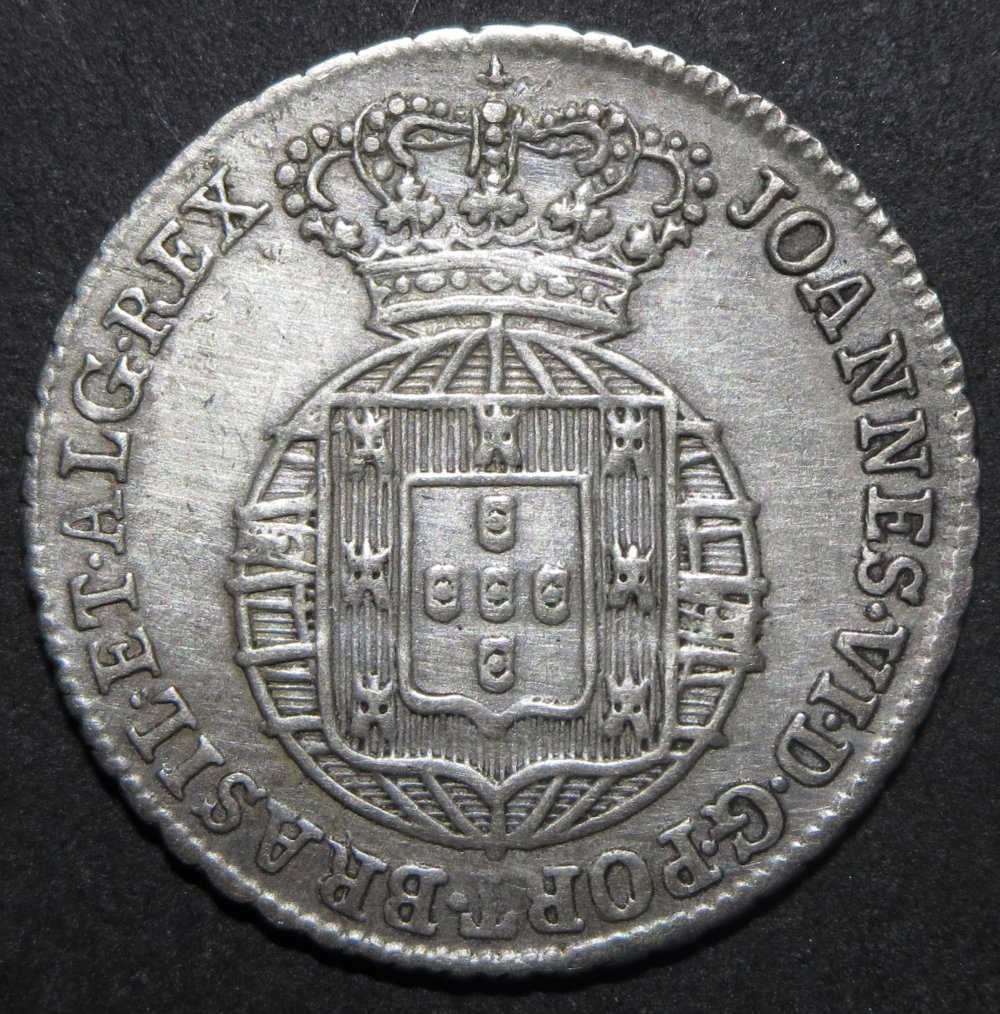 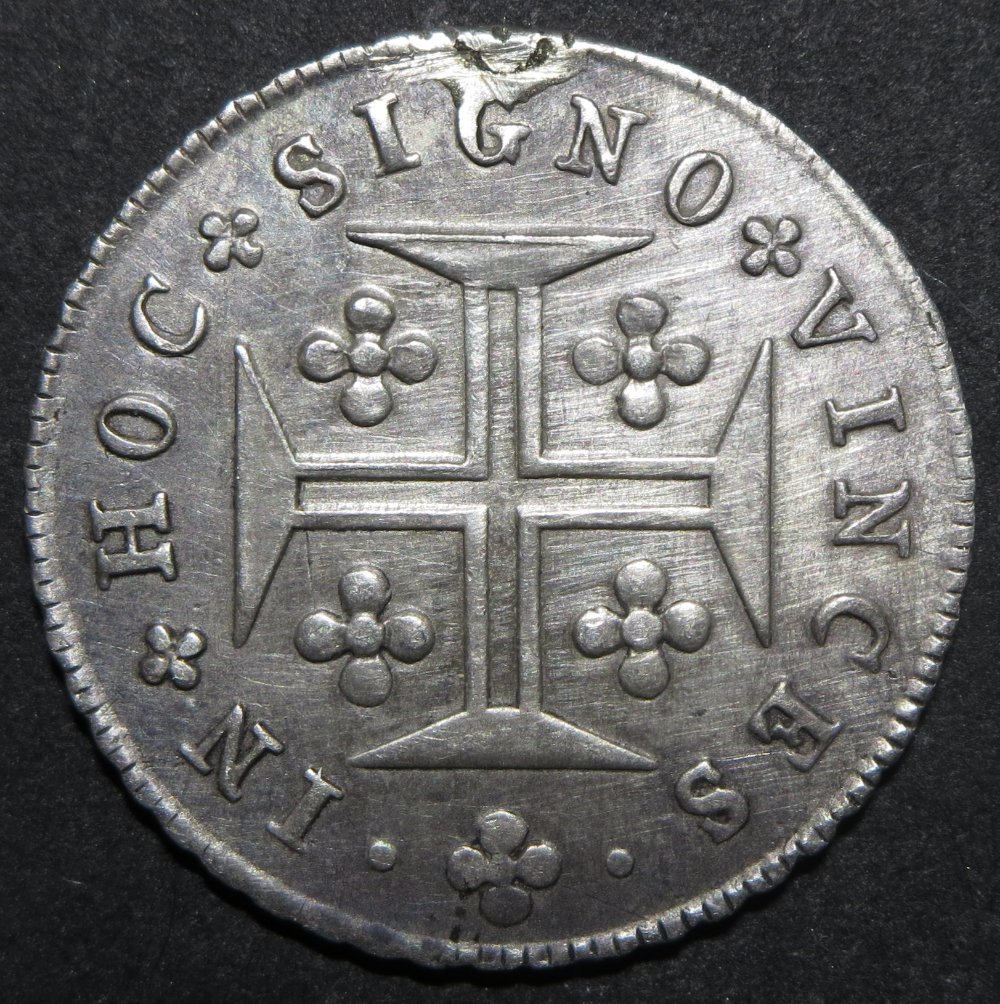 Edited by Johnathan55
10/25/2018 8:04 pm
|
|
|
|
Pillar of the Community
 United States
8005 Posts |
With neither date nor denomination, probably not a coin? Maybe a token or medal. Cannot tell from the image what type or metal, or size.
John VI reigned 1816-1826. The reverse design is similar to that seen on his 400 reis coin (and many other Portuguese coins of that era). But not likely that's what this is.
Edited by tdziemia
10/25/2018 8:19 pm
|
|
Valued Member
 United States
128 Posts |
A little more info on this mystery coin, it weighs 1.88g and is roughly 17mm in diameter. Did some more research, In the 1701-1800 Standard Catalog of world coins under Portugal, I've found some coins that look similar to this one. (KM#284, KM#237.2, many others on that page with this same design) I can't tell which one this is exactly though, the SCOWC has a habit of listing 20+ identical coin designs without saying what makes them different. (Thank goodness for these forums.  ) Edited by Johnathan55
10/25/2018 9:55 pm
|
|
Pillar of the Community
United States
8005 Posts |
It cannot be from before 1800 because of the reference to John VI. It looks like (edit) KM351, a 60 Reis coin. My KM does not give a size, nor does NGC. Numista, however, comes through: https://en.numista.com/catalogue/pieces35471.htmlAnd I learned something, as I thought a coin of such "recent" vintage would carry either a date or a denomination, and was wrong. Edited by tdziemia
10/25/2018 10:58 pm
|
|
Pillar of the Community
United States
1915 Posts |
It looks like a cast fake of 60 reis KM 351.
Not sure, but something to look at.
Just does not look like a struck coin with steel dies.
|
|
Valued Member
United States
128 Posts |
Thank you both for your prompt replies! tdziemia -- Thanks for that link! I checked the SCOWC 1801-1900 after your post and found its listing, but images for this coin in the book are missing. It baffled me too, This is the first post-1600's coin I've found with neither a date nor a denomination, must have had made purchases during its time really confusing! Albert -- Oh no, I hope it's not another fake. I just got burned by a fake German States coin recently and I've been trying to be more careful to avoid them. It was difficult but I grabbed some images of the edges, would these pictures help make a determination? 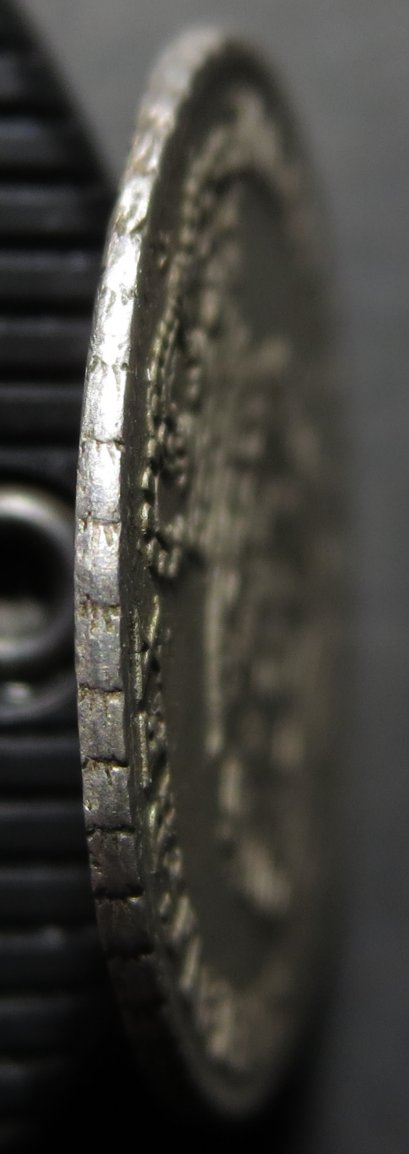 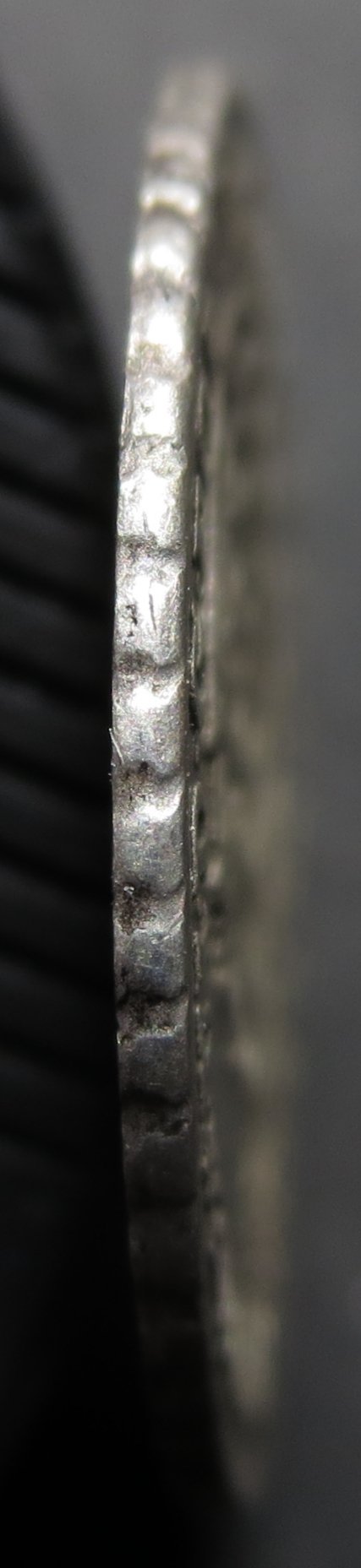 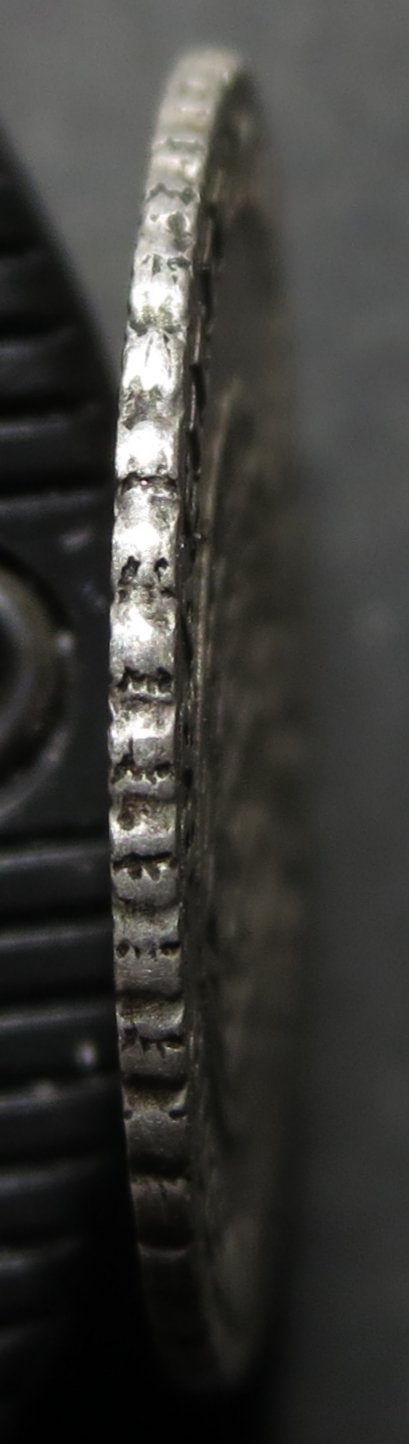 Edited by Johnathan55
10/26/2018 12:06 am
|
|
Pillar of the Community
United States
8005 Posts |
Quote:
Just does not look like a struck coin with steel dies. To me it looks like perhaps harshly cleaned at some time?. Abrasion marks(?) on both sides, perhaps done at same time the mount was removed? Hopefully the edge photos will help with any question on authenticity. Either way, very interesting coin, a good lesson that LCS are sometimes not well trained to know what they have in world coins (unless that was an intentional ploy to get someone to buy ) |
|
Pillar of the Community
United States
1915 Posts |
Edge photos are of no value to me. It's too bad we cannot in this forum do what really needs to be done in order to know what we have or don't have. First thing I would do if it was my coin was to determine if it is or is not silver and go from there. If by some magical way, a coin could be placed in a box at your end, and end up in a box at my end, I could be more helpful. Pictures alone are not good enough. And that is too bad. Owners want to believe they have a good coin, or they want to know one way or the other. Some members have shops or labs that can make that determination. We are poorly served by limiting exchanges among members to the photos and texts instead of having real and meaningful (and even some quite simple) tests to report valid results.
|
|
Valued Member
Brazil
67 Posts |
|
|
Moderator
 Australia
16934 Posts |
Just a historical note, to answer the OP's question as to why it says "BRAS" for Brazil on the coin, when it's actually from Portugal: In 1815, the colony-state of Brazil was elevated to Kingdom status, and then that kingdom was promptly amalgamated with the kingdom of Portugal, creating the United Kingdom of Portugal, Brazil and the Algarves, though the coinages remained separate. The United Kingdom was dissolved when Brazil declared independence in 1822, though this was not formally recognized by Portugal until 1825. So, just like British (and Canadian, Australian etc) coins pre-1948 name the British monarch as "Emperor of India", so Portuguese coins from 1815-1825 name the Portuguese monarch as "King of Brazil". Don't say "infinitely" when you mean "very"; otherwise, you'll have no word left when you want to talk about something really infinite. - C. S. Lewis
|
| |
Replies: 9 / Views: 2,548 |
|










 Posted 10/25/2018 9:54 pm


