| Author |
 Replies: 15 / Views: 4,625 Replies: 15 / Views: 4,625 |
|
|
Valued Member
France
334 Posts |
Hi,
To what extent do you think that a smoothed coin is acceptable in a collection? (Provided that the details of a portrait for example are preserved)
Thank you in advance for your answers.
|
|
|
|
Moderator
 United States
23731 Posts |
Anything other than a general cleaning is not acceptable IMO. A coin that has been tooled or smooth has been altered.
|
|
CCF Advertiser
United States
1318 Posts |
|
|
Pillar of the Community
United States
7067 Posts |
This is one of those topics that can prompt some intense debate. Some collectors distinguish between tooling and smoothing. Others consider smoothing to be just a subset or type of tooling. I have one tet that I knew, going in (to the transaction) has a smoothed obverse field. But it's a rarity, a type I had wanted for a long time. And, while the obverse field is smoothed, the devices - the portrait and legends - seem untouched as far as I can tell. I do wish the coin was free of smoothing, but I'm still happy to have it in my collection.
|
|
Pillar of the Community
United Kingdom
4208 Posts |
I personally do not mind it when done subtly by someone who knows what they are doing. It can really improve a coin. That being said, a smoothed field with porous surfaces left on the letters and the bust looks rubbish...and total retooling is just a fake made out of ancient metal.
|
|
Bedrock of the Community
Australia
21794 Posts |
Very interesting question for the collectors of ancient coins. Makes you think a bit.  I agree with echizento 100%. A tooled coin always sustains a loss in value. A tooled coin when up for sale, should be honestly described as such. Any experienced collector of ancient coins should easily see that if an ancient coin has been tooled or not. It is usually done to sharpen up the design detail, or to make lettering more identifiable. However such coins may be easier to sell, if it brings out the detail and facilitates easier identification and thus makes the coin more easily sold at a lower price. A professional may well consider the drop in value justified. I would never tool and ancient coin because I don't have the necessary skill. Interestingly, with modern coins, often master dies are tooled by the designer to sharpen them up, before working dies are hubbed off them. I have sat on the opposite side of a work bench of a coin die cutter ** employed by the Royal Australian Mint, and discussed his work as he proceeds with it. I was lucky enough to get a lot of insight into modern die cutting, and perhaps better understand why an ancient coin may be tooled. **Horst Hahne: He designed and prepared the master die for the Australian large scale circulation definitive Two dollar coin, featuring an Aborigine on the reverse. Edited by sel_69l
01/15/2019 7:38 pm
|
|
Pillar of the Community
United States
1122 Posts |
I really didn't know what tooling and smoothing was, but I found an awesome page with lots of info and examples. There some examples that I feel are justified (as below)- but I guess never for the purists.  About tooling smoothing repatination etc... http://www.fontanillecoins.com/tooling.htm |
|
Moderator
United States
23731 Posts |
I have no doubt that coins are being sold some for a great deal of money that have been tooled and smooth. In the case of the coin your refer to the work appears to have been done well. So some could argue was the coin restored or altered? My feeling is that the coin has been changed in modern times and differs even in the slightest way to the original coin struck 2000 years ago.
Most of the coins I see that have been tooled and smooth were not done as well as that coin and show all the signs of a poor attempt to enhance the coin to add a few extra bucks to a sale.
|
|
Moderator
United States
34570 Posts |
Interesting thought experiment. I agree with these two statements by @sel: Quote:
A tooled coin always sustains a loss in value.
A tooled coin when up for sale, should be honestly described as such. "If you climb a good tree, you get a push."
-----Ghanaian proverb
"The danger we all now face is distinguishing between what is authentic and what is performed."
-----King Adz
|
|
Bedrock of the Community
United States
12477 Posts |
Of the example that @travelcoin posted, I would much prefer the top, unaltered coin.  In Memory of Crazyb0 12-26-1951 to 7-27-2020
In Memory of Tootallious 3-31-1964 to 4-15-2020
In Memory of T-BOP 10-12-1949 to 1-19-2024
|
|
Pillar of the Community
United Kingdom
2121 Posts |
Here is another example:- This first coin was sold at auction in December 2013. 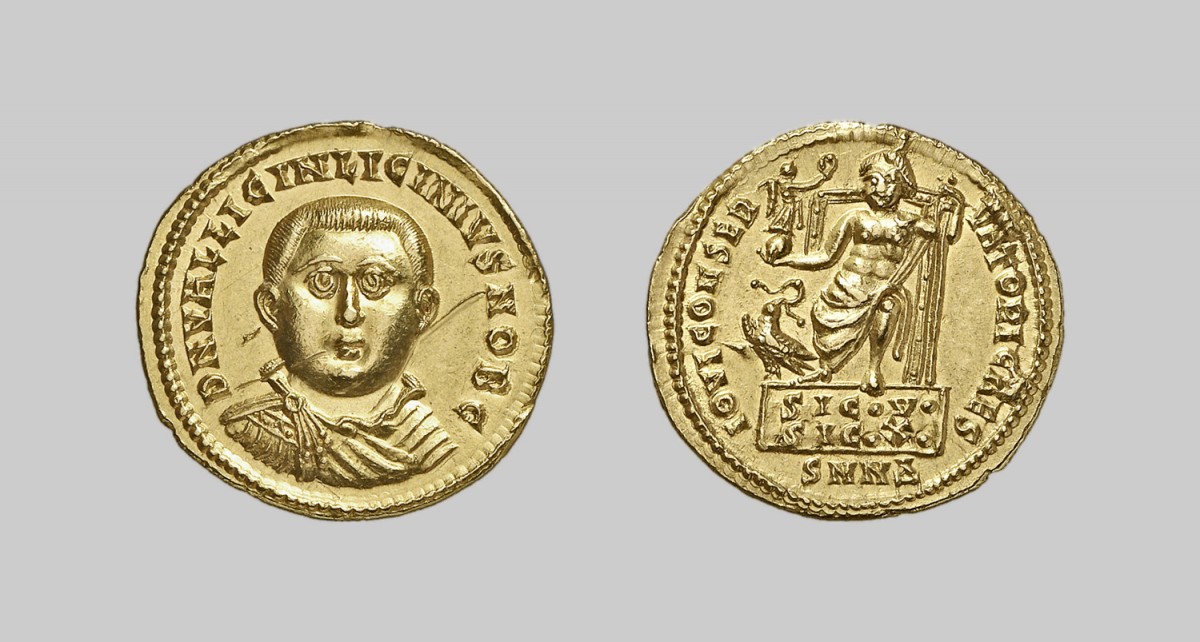 The same coin (January 2015) has had smoothing in the scratches and dirt then applied to the ears and letters to partly mask where work was done. The auction house failed to mention any smoothing at all. The following being the description at auction:- "Boldly struck with full legends on both sides on a full flan with margins, a few faint hairlines on the obverse, delicately toned, superb extremely fine." It went unsold. 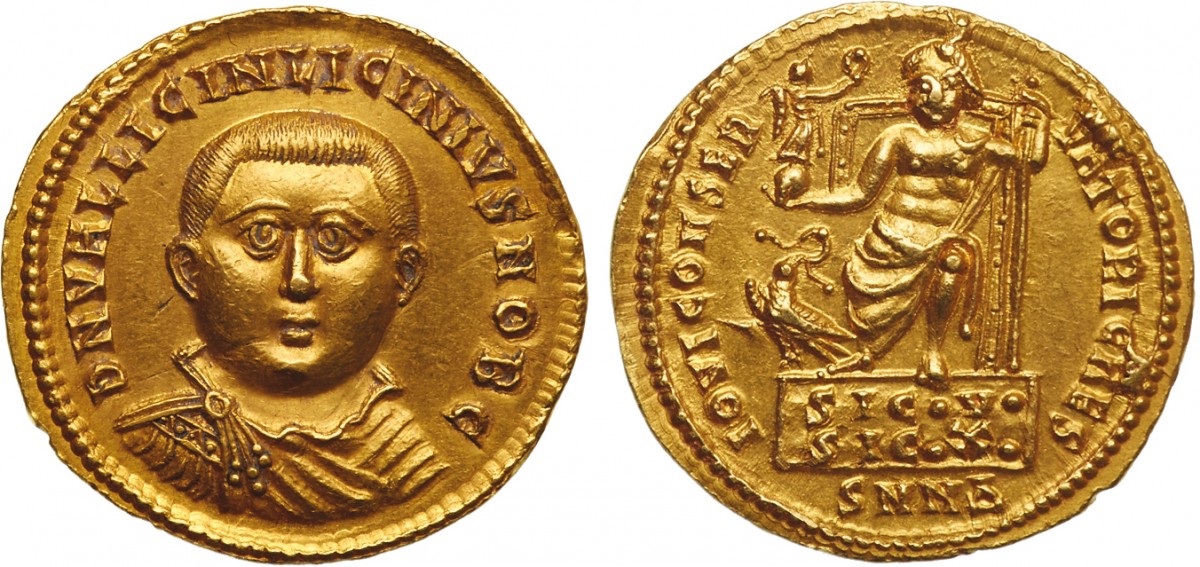 Opinions about this type of behaviour? I find this completely unacceptable from the modification of the coin through to the lack of mention by the auction house. |
|
Pillar of the Community
United States
3503 Posts |
In my (humble) opinion the line is drawn between the alloy the coin is made of and the oxidation or "patina"
that may be found laying on the surfaces of an ancient coin
In my searches I have found atrocious examples of bronze coins tooled by persons who obviously view themselves as great "artistes" !
Portraits of Trajan with hairdos that looks like his 'mater' did it with a cereal bowl and a pair of kiddy scissors !
And this is from reputable European auctions !
Until a few years ago I never rubbed or scrapped a bronze with anything more severe than a bamboo skewer
But I will give credit to Ben for giving me the courage to try using a steel pin in some circumstances
(veeeery carefully)
On occasion a bronze ancient coin can have some extraordinarily hard "concretions" that can obscure important details (eyes ears nose etc)
In these circumstances I have on rare occasions either broken the deposit or worn it down by rubbing it
Likewise I have found bronze coins with surface 'pimples' especially in the fields
I have carefully used the edge of an exacto knife to excise the "zits" while always taking care to restrict any amputations to the oxides
Of course no one is perfect and I have on rare occasion left a very tiny nick or scratch in the bronze
A month long bath in olive oil usually darkens the wound enough to make it all but invisible
But I would NEVER intentionally cut into the metal
That is a no no
|
|
Bedrock of the Community
Australia
21794 Posts |
On the tooled coin pictured, I prefer the 'fixed up coin', because I can buy it cheaper, provided that it has been described as tooled. With the Solidus of Licinius, the auctioneer is dishonest. Not the first time I have seen that!  I will readily admit that I have cleaned up some silver and bronze ancient coins with a toothpick, occasionally with the assistance of slightly acidic olive oil, used as a transport agent, similar to using soap. That is different to steel tooling to hide deep scratches, rough corroded fields, or to make legends look sharper. Edited by sel_69l
01/17/2019 07:08 am
|
|
CCF Advertiser
United States
1318 Posts |
OK last night I was listing 50 coins for sale, fine about a few vf, and I noticed I had just photographed a Caligula AS. It got me thinking: This might be the only coin I can see tooling was probably a good thing to do as it was never noticed in so many lots before, coming to me in a bulk lot that had been looked at. I imagine, remove the green corrosion, smooth over the rough spots without the letters and bust, tool the bust, VESTA seated etc letters, then repatina treatment as it was once over cleaned apparently. Because otherwise the coin was never anything to anyone and now at least you would have an actual talking point coin of Caligula, a sought after emperor. 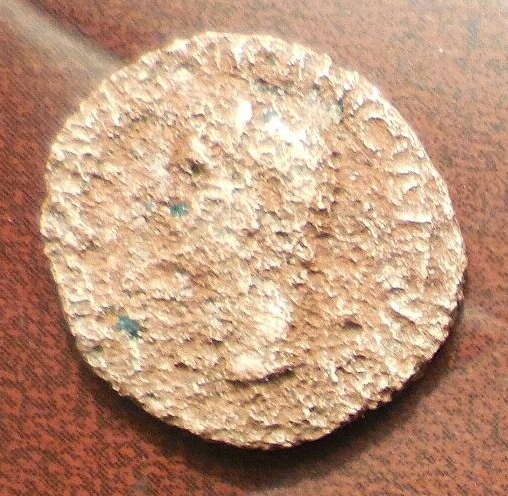 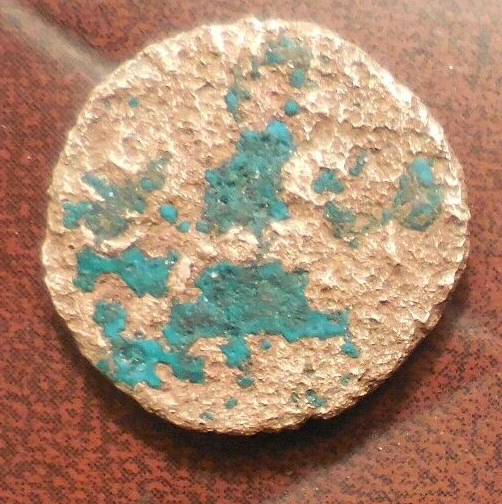 |
|
Pillar of the Community
United States
1554 Posts |
What's the harm in restoring a few missing details? 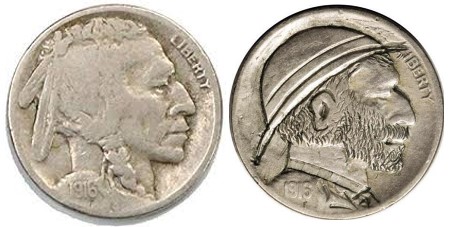 |
|
Bedrock of the Community
United States
12477 Posts |
 Exactly. Tooling and smoothing are negatives to me, no matter the subject coin. The more originality, the better. Edit: I realize @Kushanshah's point as it applies to this discussion, but those original hobo nickels are very pricey and I would love to have one.  In Memory of Crazyb0 12-26-1951 to 7-27-2020
In Memory of Tootallious 3-31-1964 to 4-15-2020
In Memory of T-BOP 10-12-1949 to 1-19-2024
Edited by spru
01/23/2019 02:00 am
|
| |
Replies: 15 / Views: 4,625 |
|







 Posted 01/15/2019 6:55 pm


