| Author |
 Replies: 8 / Views: 2,282 Replies: 8 / Views: 2,282 |
|
|
New Member
Netherlands
3 Posts |
I found a coin with metal detection. Found in the province of Noord-Brabant, the Netherlands. The coin is 13mm and 1.1 gram. This coin has 84% gold, turned out after measurements. You may have seen this coin somewhere else, but so far it is still an unknown type of coin. Experts abroad and in the Netherlands think it is an unknown and unpublished Tremissis. Perhaps someone here has parallels with this coin? Thanks in advance for your cooperation. It is certainly an interesting currency to think about and to show it. 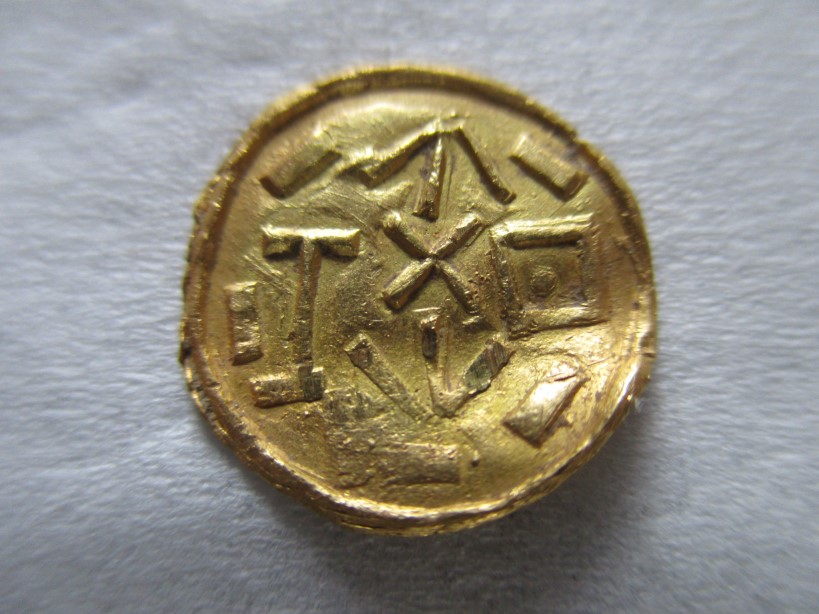 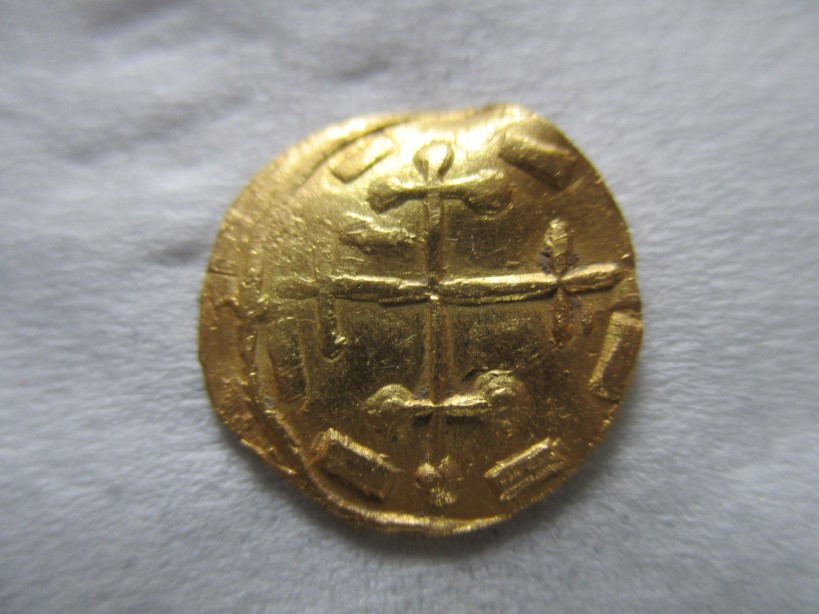 Edited by Kadan
01/21/2019 1:38 pm
|
|
|
|
Moderator
 United States
23731 Posts |
 to the community Interesting coin and one that I've not seen before. Hopefully others here will be able to help. |
|
Pillar of the Community
United Kingdom
4208 Posts |
Interesting, very reminiscent of the more abstract anglo-saxon sceattas or perhaps the crazier Merovingian issues. I took a look around, but couldn't find any similar issues. Isn't 1.1g a little light for a tremissis, though?
|
|
Moderator
United States
34472 Posts |
@Kadan, first welcome to CCF. Second, it sounds like you have done some sort of elemental analysis. Other than the gold, could you please state which elements make up the remaining 16%? Thx.
I'm no expert on the Low Countries, but I haven't seen this design before. I'll be interested to see if anyone here can help you. The cross on the second pic is interesting in that each arm is made to have its own cross.
"If you climb a good tree, you get a push."
-----Ghanaian proverb
"The danger we all now face is distinguishing between what is authentic and what is performed."
-----King Adz
|
|
Pillar of the Community
Canada
1269 Posts |
Possibly the Lombards? The crosses look similar though not the same as those on tremisses of the Lombards.
|
|
Bedrock of the Community
Australia
21789 Posts |
The nearest I can get to the coin pictured is a tremissis of the Franks of the Seventh Century, (not the same).
# 54, page 24 of Grierson's book:
The Coins of Medieval Europe.
My 2nd guess is that it may me a tremissis of the Visigoths.
My 3rd guess is that it may be a gold Thrysma from England.
The finding of an English gold Thrysma or a gold Tremissis of the Visigoths in Dutch soil would not surprise me.
Even so, almost all of my book picture references show at leas a crude representation of a head, with at least a vague reminiscent of their Roman prototype.
|
|
Pillar of the Community
United Kingdom
4208 Posts |
13mm and 1.1g is good for a thrysma, but the gold content is a bit too high. The shapes don't much resemble Anglo-saxon Futhorc either, but runes on Anglo-saxon coinage isn't standard.
The cross is a 'cross crosslet' in form, if the formal name helps with googling.
|
|
New Member
 Netherlands
3 Posts |
Thank you for your contributions so far. On other forums there are some suggestions made. I place a few suggestions here. But non of them are gold ones. I'm curious what you think. 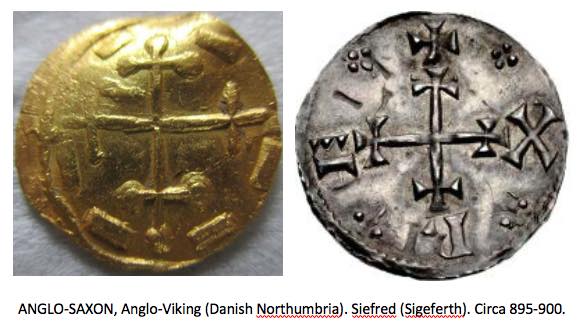 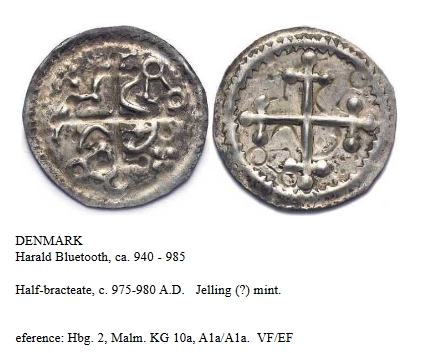 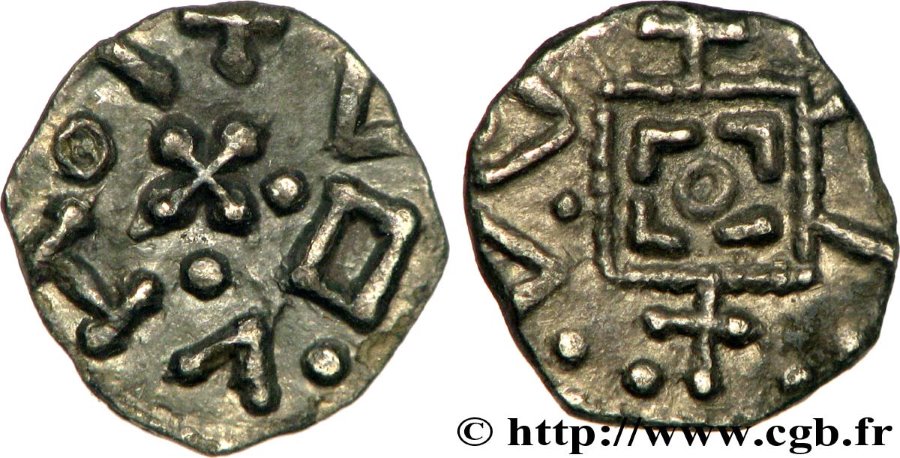 |
|
New Member
Netherlands
3 Posts |
Quote:
@Kadan, first welcome to CCF. Second, it sounds like you have done some sort of elemental analysis. Other than the gold, could you please state which elements make up the remaining 16%? Thx.
I did not have a elemtal analysis. Unfortunately. It's contents is estimated by its specific mass. An xrf scanner might indeed bring more clarification |
| |
Replies: 8 / Views: 2,282 |
|










 Posted 01/21/2019 3:00 pm


