Coin Community Family of Web Sites
Shop for APMEX Bullion on eBay!Coin, Banknote and Medal Collectors's Online Mall 300,000 items to help build your collection! Shop CCF Members on eBay! Specializing in Modern Numismatics Vancouvers #1 Coin and Paper Money Dealer Royal Canadian Mint products, Canadian, Polish, American, and world coins and banknotes.


Username:
Password:
Save Password
Forgot your Password?


This page may contain links that result in small commissions to keep this free site up and running.

Welcome Guest! Registering and/or logging in will remove the anchor (bottom) ads. It's Free!

1926-D Buffalo Nickel - A Fun Grading And Evaluation Exercise

To participate in the forum you must log in or register.
Author Previous TopicReplies: 14 / Views: 571Next Topic  
Pillar of the Community
fortcollins's Avatar
United States
3622 Posts
 Posted 04/03/2026  1:21 pm Show Profile   Bookmark this topic Add fortcollins to your friends list Get a Link to this Message Number of Subscribers
This is NOT my coin. These are NOT my photos. If you recognize this coin, please don't comment on it until others have had their opportunity.

This may be a fun exercise in evaluating one of the more challenging dates in the Buffalo nickel series. Here are the questions:
(1) The easiest question first: What is the technical grade?
(2) What are the obverse and reverse die states?
(3) How do you assess the strike quality, both the overall strike for the date and specific things you notice about the strike?
(4) What is the level of die clashing on this coin? Do the die clashes suggest that these particular obverse and reverse dies clashed only with themselves, or were there clashes before involving different dies?
(5) What is the level of die clash polishing on this coin?
(6) If you were going to evaluate this coin based on a grade and eye appeal scale, how would you rate the following elements on a 1-5 scale, 1 being the lowest (least desirable) and 5 being the best (most desirable) for the date and mint:
(a) Die State and Obverse-Reverse Die State Match
(b) Strike Quality and Consistency
(c) Clash and Clash Polishing
Then add your points for these three categories for an eye appeal rating for the date and mint.

Enjoy!

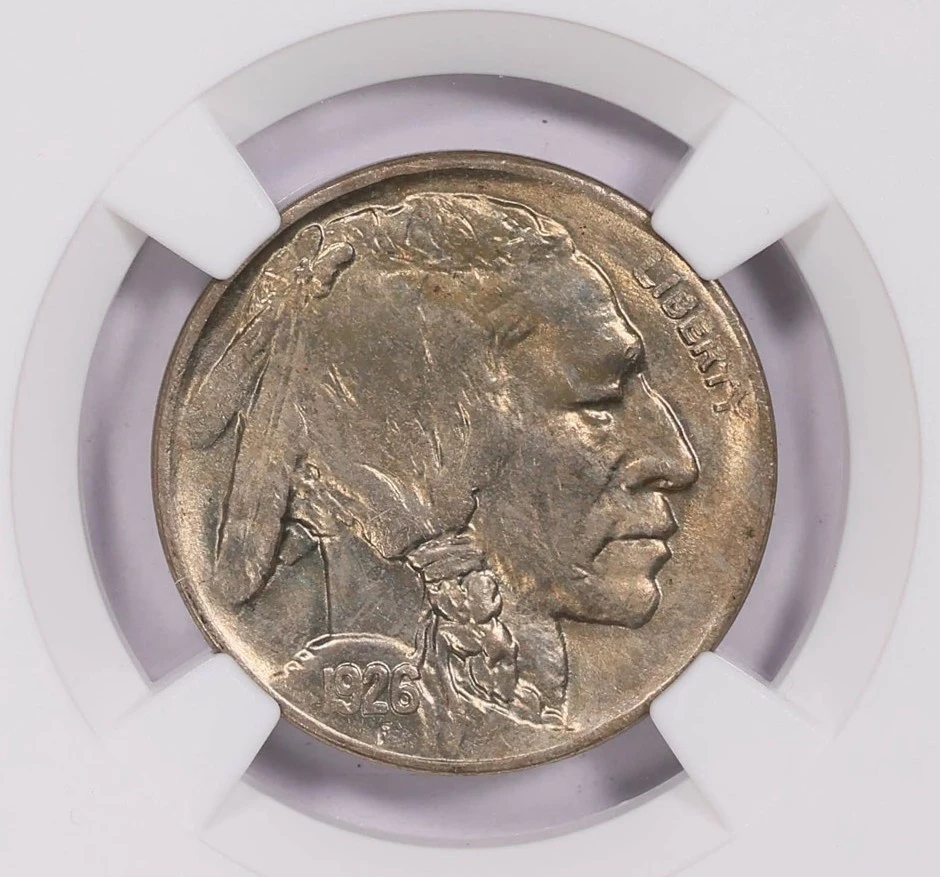
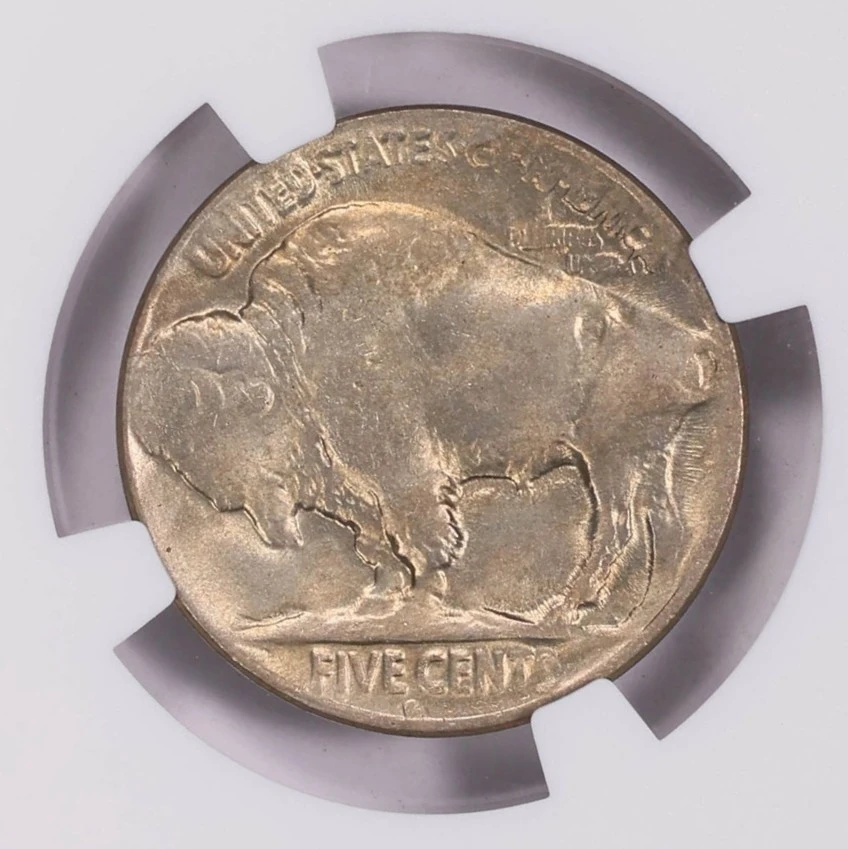
Here are the two borrowed photos:

1926-D-Buffalo-Nickel---A-Fun-Grading-And-Evaluation-Exercise
Pillar of the Community
United States
877 Posts
 Posted 04/04/2026  02:22 am  Show Profile   Bookmark this reply Add adam126402 to your friends list Get a Link to this Reply
Ok, these are my wild guesses as I don't know Jack about Buffalo nickels.

1) technical grade - MS65
2) die states - VLDS, both sides
3) strike quality is poor. Not knowing anything about the '26-D, I'll say that die wear and heavy polishing has compromised and washed out the finer details on all devices
4) I don't see obvious clashing.
5) heavy polishing has wiped out what might otherwise be obvious clash marks
6a) die state match - 2
b) strike quality/consistency - 2 (obv & rev equally bad)
c) clash/clash polishing - 0

This maybe a super buff, but if I was looking for a high grade type coin, this one would be at the bottom.

As said, I know nothing about buffs, but look forward to learning when you share your observations, FC!


Bedrock of the Community
Learn More...
panzaldi's Avatar
United States
18630 Posts
 Posted 04/04/2026  10:37 am  Show Profile   Bookmark this reply Add panzaldi to your friends list Get a Link to this Reply
this is quite a challenge even for those who have a basic understanding of assessing these. i'll give it a shot but dont laugh. I still have not figured out how they handle these different anomalies.

(1) The easiest question first: What is the technical grade? MS63

(2) What are the obverse and reverse die states? obv MDS, rev VLDS

(3) How do you assess the strike quality, both the overall strike for the date and specific things you notice about the strike? the 26D are known for poor strikes this one fits right in with that assessment especially the reverse

(4) What is the level of die clashing on this coin? Do the die clashes suggest that these particular obverse and reverse dies clashed only with themselves, or were there clashes before involving different dies? this is one area I'm not at that level to assess yet to assess mismatched dies, however, the reverse die appears to not really match the obv die

(5) What is the level of die clash polishing on this coin? I'm not sure if feather 1 is from polishing or strike, I'm going with heavy polishing. on feather 1, the rachis and tip. heavy die polishing reverse die, the details on the head is almost completely polished out as well as the rear leg and heavy polishing on the back. possible die abrading behind the neck and under the chin and under the beard and in front of the rear leg. Not sure what caused the lines to the right of the rear leg but it may be from clashing maybe even from a different obv die/red]

(6) If you were going to evaluate this coin based on a grade and eye appeal scale, how would you rate the following elements on a 1-5 scale, 1 being the lowest (least desirable) and 5 being the best (most desirable) for the date and mint:

(a) Die State and Obverse-Reverse Die State Match - 2
(b) Strike Quality and Consistency obv 3, rev 1
(c) Clash and Clash Polishing obv 3, rev 1

Eye appeal rating for the date and mint. [red]The eye appeal is on lower end of the scale mainly due to the strike issues and amount of polishing however, one must consider that this is very typical for 26 buffs minted in Denver. the reverse die was at the end of its life


looking forward to your comments to see where I'm off. grasshopper is still learning. this will be a great exercise for those folks just starting with one of the most challenging series ever minted. there should be a warning on raw buffs over say $50 to do your homework, look at graded examples for the year and mint and be careful
Edited by panzaldi
04/04/2026 10:41 am
Pillar of the Community
Mrhakfbacon's Avatar
United States
556 Posts
 Posted 04/04/2026  11:04 am  Show Profile   Bookmark this reply Add Mrhakfbacon to your friends list Get a Link to this Reply
I'll try this

1) MS62
2) Obverse maybe MDS, reverse VLDS.
3) Poor strike quality, late reverse die stage and especially on the reverse you can see lots of polishing marks
4) I don't see clashing, I'm not very good at noticing them though.
5) Lots of polishing appears to have removed the clashing marks but at the cost of quality?
6a) 1, observe die appears to be MDS but reverse is a very late stage. Obverse also has well defined lettering but reverse is so washed out in lettering quality.
6b) Obverse 3.5, reverse 1
6c) Obverse 3 reverse 2?
Final rating (1 + (3.5+1)/2 + (3+2)/2)/15 =
5.75/15

This coin has very low eye appeal with the mismatched die states, and very late stage for the reverse die. It feels like the reverse was made of the consistency of a flattened piece of play dough.
Bedrock of the Community
Learn More...
panzaldi's Avatar
United States
18630 Posts
 Posted 04/05/2026  10:49 am  Show Profile   Bookmark this reply Add panzaldi to your friends list Get a Link to this Reply
i keep coming back to this. I'm wondering if the marks to the right of the rear leg could come from die scraping from the feeders. just a thought
Pillar of the Community
Learn More...
Zurie's Avatar
United States
5661 Posts
 Posted 04/05/2026  11:50 am  Show Profile   Check Zurie's eBay Listings Bookmark this reply Add Zurie to your friends list Get a Link to this Reply
Your questions are way beyond my grading skills for this series, so I'll just spitball some of my thoughts. It looks mint state with excellent luster and very few surface marks, so I'd say MS-64, perhaps even 65. The die states are extremely mismatched, with severe die wear and polishing on the reverse, and much less so on the obverse. The obverse strike actually looks pretty strong for this date at a branch mint. Overall eye appeal is not very good due to the mismatched dies and Die Deterioration and polishing on the reverse. That's all I got!
Bedrock of the Community
Learn More...
panzaldi's Avatar
United States
18630 Posts
 Posted 04/07/2026  08:27 am  Show Profile   Bookmark this reply Add panzaldi to your friends list Get a Link to this Reply
FC you are probably not getting anymore responses. lets see your assessment in the same format you requested
Pillar of the Community
fortcollins's Avatar
United States
3622 Posts
 Posted 04/07/2026  3:19 pm  Show Profile   Bookmark this reply Add fortcollins to your friends list Get a Link to this Reply
Everyone did very well with this coin. Give yourself a pat on the back!

Ron Pope believed that the 1926-D was the most poorly struck Buffalo. He (correctly) attributed the poor quality to die wear, rather than strike. Here's what he wrote:


Quote:
"The bad reputation this date has in regard to strike is much more the result of worn, badly eroded, late state dies than an actual deficiency of the strike, unlike the situation seen for the 1918-S and some other earlier dates. Some actual Mint State coins will show no better than Good to VG detailing on the reverse, much like the 1924-S, and some will show a blob of a Mint mark that is nearly impossible to verify as either a "D" or an "S." Mint mark position must then be used to verify the proper Mint on such coins. Living up to it's [sic] bad reputation for poorly produced coins, the '26-D is number one in the series, percentage wise, for incomplete detailing."


Pope, Ronald. Buffalo Nickels: The Abraded Die Varieties, Pub. By Author, 2006, 33rd Printing Nov. 2016, M-15.

This is a known 1926-D die pair. There is some question whether this reverse die was used in 1925, and continued service into 1926. If it wasn't a known pair, attributing the mint mark could come down to position. The 1926 Denver mint marks tend to be closer to the "E" of FIVE and the 1926 San Francisco mint marks tend to be centered or slightly closer to the "C" of CENTS.

(1) Technical grade: I land on MS-63 here because of the number of small dings throughout the central devices and the heavier knock on the Indian's cheek. I could be arm-twisted to MS-63+. The TPG sees this as MS-64.
(2) The obverse die is earlier than the reverse die. The difference in die polishing is one clue that can be helpful to watch for. The reverse die is extensively polished. The obverse die is also well polished, but not as extensively. IMHO the obverse is MDS, maybe LMDS. The reverse is terminal, VLDS.
(3) Strike quality is tricky here. Notice some of the obverse detail that is intact: the bottoms of the ribbons, hair knot, hair braid detail, nostril, and the crease in the cheek behind the nostril. That suggests at least an average strike, and possibly a slightly better than average strike for this date and mint. With only average clashing on the obverse, maybe average or a little more die polishing, and not a particularly bad strike, the only things left to focus on for the blob-like reverse are die state and the planchet, and nothing here suggests a deficient planchet.
(4) Clashing has already been addressed a bit. On the obverse, there are clear clash marks for the chin/EPU clash and the right rear hoof / "LI" of LIBERTY clash. The second feather / "U" of UNITED clash hasn't been polished, and the Indian's neck / buffalo's hump clash is minimal. The reverse is a different story. There is clear evidence of a second feather clash to the left of the "U" in UNITED. That doesn't match the clash alignment on the obverse. The chin/EPU clash is also slightly angled, and that doesn't match the clash squarely below the Indian's chin on the obverse. These factors suggest that the reverse die was mated with a different obverse before this obverse die, and had already clashed quite a bit before these two dies clashed.
(5) Unlike the modest polishing on the obverse, the reverse has been abraded in at least four different directions, SW-to-NE across the buffalo's back, N-to-S at the buffalo's belly, SE-to-NW at the rear legs, and E-to-W at the tail. No wonder the poor former buffalo looks like a pancake!
(6) Overall eye appeal evaluation:
(a) Die state and match. The dies are mismatched, but not as badly as some of the die pair from the two previous years in Denver. LMDS/VLDS is an eye appeal mismatch, but is pretty common for the branch mint buffs. The die state is the issue here, and any VLDS dies produce ugly pancakes. I hate to beat a dead buffalo, but in the context of a brutally poor date and mint fir quality, this is a 2. Barely.
(b) Strike quality and consistency. The strike isn't completely awful, and it's fairly consistent. I'd go 3 here.
(c) Clashing and clash polishing. The reverse is awful. It significantly hurts eye appeal. This is a known die pair, and almost all of the coins from this pair lack eye appeal. This coin is so late in the life span and the reverse die has been tortured by this point. I'm at a 1 here.
These three categories land at a 6 out of a possible 15 points, placing this coin low in the middle third of desirability for the date and mint.

Overall, it's an UNC, and a mid-UNC. It has nice luster. It hasn't been abused and doesn't have anything that screams "details." It just lacks eye appeal. Even in the context of a very tough date for quality, there are better examples available.

The branch mints deserve a little bit of love here. Remember that their first experience with cupro-nickel coinage was the 1912 Liberty nickel, and that coin had shallow relief, struck more easily, and didn't wear out the dies as much. The cluttered higher relief Buffalo nickel design was an experimental nightmare for the branch mints. In contrast, Philadelphia had more than a half century of experience with cupro-nickel coinage. The branch mints were entirely dependent on Philadelphia for their dies and coining presses. Philadelphia could make an unlimited supply of dies for its own use, and didn't always share its toys equally with its playmates. Philadelphia was closer to the manufacturers and had an easier time obtaining coining presses. The western mints, in particular, had to have the presses shipped by rail if Philadelphia allowed them to acquire new presses. The branch mints were created to strike gold and silver coinage, which required much less striking pressure. To meet production quotas and keep the Mint Director happy, the branch mints had a Hobson's Choice: reduce striking pressure to extend die life or maintain pressure and work dies long past shelf life. Either choice produced poorer quality coins than Philadelphia.

Again, kudos to all. Everyone did very well decoding this pancake!
Pillar of the Community
United States
877 Posts
 Posted 04/08/2026  01:59 am  Show Profile   Bookmark this reply Add adam126402 to your friends list Get a Link to this Reply
Good stuff, FC! As always, thanks for sharing your knowledge.
Bedrock of the Community
Learn More...
panzaldi's Avatar
United States
18630 Posts
 Posted 04/08/2026  09:52 am  Show Profile   Bookmark this reply Add panzaldi to your friends list Get a Link to this Reply
I must say that my assessment is very similar to yours hitting almost all points. a tribute to several years of knowledge being passed on.

I feel more comfortable now than ever with this series. the area I need the most work on is clashing. I find that the minute clashes are still extremely difficult to uncover. once they are pointed out I can see most of them. some not so much like your note regarding the second feather clash to the left of the "U" in UNITED. cant see that for the life of me.

this was a great exercise and I hope new folks at least took some time to look at this so that they have at least a general understanding that what you see may not actually be what you see backing up my previous comments that this is one the most challenging series to assess.

thanks FC for taking the time to pass these on
Pillar of the Community
fortcollins's Avatar
United States
3622 Posts
 Posted 04/08/2026  12:24 pm  Show Profile   Bookmark this reply Add fortcollins to your friends list Get a Link to this Reply
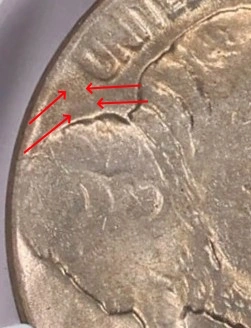
Here's the older buffalo's head / "U" of UNITED clash just to the left of the "U." It is heavily worn from continued die use after the clash.

1926-D-Buffalo-Nickel---A-Fun-Grading-And-Evaluation-Exercise

I'll add one more thought here. Regardless of date and mint, the rarest Buffalo is any date or mint that meets all of the following criteria:
(1) Matching VEDS/EDS obverse and reverse dies
(2) No or very minimal die clashing
(3) No or very minimal die polishing
(4) Strong strike
(5) High grade (EF-45 or better)
(6) Strong eye appeal

When you see it, you will know it. When you see it, buy it. Once you acquire the first coin meeting those criteria, you will understand what James Earl Fraser intended the Buffalo nickel to be and what it could have been if left uncluttered by legislative mandates and if struck on modern equipment.

From experience, a few dates have a decent supply of such coins. Most dates have examples that can be located with patient searching. A few dates may require decades of searching to find one example.

I know of two Buffalo collections in private hands that are entirely or almost entirely composed of such coins. Last year, I assisted one of those collectors in acquiring an elusive date and mint combo that we have hunted together since the 1990s. The particular coin took 18 years to talk the previous owner into selling. That collection is one coin away from completion, and is unquestionably the finest Buffalo collection in existence.

If you ever have a chance to visit Wisconsin, stop in Waupun, WI. Shaler Park is the home of Fraser's incredible bronze sculpture, "The End of the Trail." When you stand there, mesmerized, you will see the incredible attention to detail that Fraser captured. It's an experience you will never forget.

Go get 'em.
Bedrock of the Community
Learn More...
panzaldi's Avatar
United States
18630 Posts
 Posted 04/09/2026  09:14 am  Show Profile   Bookmark this reply Add panzaldi to your friends list Get a Link to this Reply
jeez that clash looks like a shadow from lighting. I can see it now since you pointed it out

one last question on the reverse under the beard there appears to be a raised area of metal. abraded?
Pillar of the Community
fortcollins's Avatar
United States
3622 Posts
 Posted 04/09/2026  10:13 am  Show Profile   Bookmark this reply Add fortcollins to your friends list Get a Link to this Reply
That may be the beginning of die subsidence.

The only thing that would ordinarily clash near the lower part of the beard is the fairly smooth area of the Indian's hair SE of the feather tie. There do appear to be some polishing lines in that area, but when they polished the Buffalo dies at the branch mints, they weren't particularly concerned with precision. The dies are relatively small surfaces in relation to the brushes and the coining presses lacked safety guards, so the press operators wanted to get the job done quickly and avoid losing a hand or an arm. This reverse die is nearly terminal, so die subsidence wouldn't be a surprise. Just my best guess here.
Pillar of the Community
Learn More...
Zurie's Avatar
United States
5661 Posts
 Posted 04/09/2026  4:28 pm  Show Profile   Check Zurie's eBay Listings Bookmark this reply Add Zurie to your friends list Get a Link to this Reply
@fortcollins, thank you for sharing your tremendous knowledge about this series. Your analyses are always so educational.
Pillar of the Community
psuman08's Avatar
United States
1751 Posts
 Posted 04/13/2026  3:45 pm  Show Profile   Bookmark this reply Add psuman08 to your friends list Get a Link to this Reply
Thanks for sharing FC. I was much closer on this one than I used to be.
  Previous TopicReplies: 14 / Views: 571Next Topic  

To participate in the forum you must log in or register.


Disclaimer: While a tremendous amount of effort goes into ensuring the accuracy of the information contained in this site, Coin Community assumes no liability for errors. Copyright 2005 - 2026 Coin Community Family- all rights reserved worldwide. Use of any images or content on this website without prior written permission of Coin Community or the original lender is strictly prohibited.
Contact Us  |  Advertise Here  |  Privacy Policy / Terms of Use

Coin Community Forum © 2005 - 2026 Coin Community Forums
It took 0.38 seconds to rattle this change. Forums