| Author |
 Replies: 12 / Views: 1,597 Replies: 12 / Views: 1,597 |
|
|
Moderator
 United States
54287 Posts |
I would guess most people want non-defective products.
But it seems, a lot of coin collectors WANT defective coins.
I find myself drawn to coins with die cracks, but don't care for struck through coins, or laminations or other planchet defects.
Do people collect, say baseballs, that have defective stitching? Do people specifically collect cracked pottery or pottery that was made improperly? Do people collect analog watches because they came with bent minute hands, or a laminated (peeling) leather band?
So, a couple of questions:
What makes you want to collect defective coins?
What draws you to a damaged coin?
What draws you to one that is almost worn flat? Show your financial support of the Coin Community Family (click here)See my topic on Mexican Numismatic Medals (click here) |
|
|
|
Pillar of the Community
United States
1911 Posts |
The only thing for me (and I don't collect errors at all) is the lower price that can fit in my budget. Overall I want to be able to enjoy the designs of the coins and if that means getting a better grade details coin that doesn't have anything TOO distracting to me at a lower price I would prefer that over a lower grade "natural" coin.
|
|
Pillar of the Community
United States
4422 Posts |
Defective coins, those with counterstamps in particular, often have a story to tell, and I love a good mystery. Then too, coins having more defects than I possess tend to raise my self esteem ... Case in point: 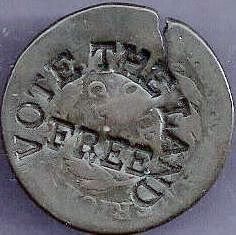 |
|
Pillar of the Community
United States
6370 Posts |
As a type collector, I like being able to see the details of the coin representing that type. I would prefer to get a damaged coin with high-grade details than a problem-free coin at the same price with crappy details.
However, for ancient Chinese coins, buying damaged coins is a security thing. Damaged coins are 300-500% more likely to be genuine than pristine coins. Damaged in this context means small cracks or holes, not completely destroyed.
|
|
Bedrock of the Community
United States
12057 Posts |
With regards to early copper & colonials, sometimes the only way to acquire very scarce to rare varieties (R6 or higher) without being a millionaire is to settle for very worn, damaged, or otherwise low grade examples. In addition, with early copper, being net graded, defects are accounted for while maintaining an actual grade, instead of the TPG's method of just labelling such coins "DETAILS." Certain damage, such as cleaning or heavy rim bangs, that would make coins "DETAILS" can still look attractive in Dansco albums & these coins provide a less expensive way to get high wear grade examples of type coins into holes. For instance, I'd rather have a wiped/cleaned AU details Seated Liberty dollar in such an album than a problem-free VG. Mint errors such as die cracks, clashed dies, etc. are okay with me, they are interesting and historical. That being said, I avoid PMD - post mint damage - on coins whenever possible. Member ANA - EAC - TNA - SSDC - CCT #890 "Most of the things worth doing in the world had been declared impossible before they were done." -- Louis D. Brandeis |
|
Pillar of the Community
United States
1911 Posts |
Nice I feel like TypeCoin and I are on the same page in our collecting just abouts :D
|
|
Pillar of the Community
United States
1316 Posts |
Just to clarify, by "Defective" are you referring to mint defects like die variety "errors" such as a doubled die and manufacturing errors life double strikes, or post mint damage like cleanings, scratches, and smashed on the railroad tracks? There are avid collectors or the die varieties and manufacturing mint errors. For damaged coins, collectors often don't really seek these out and take these when it is the only financially feasible option or unique situations like the ancient Chinese coins that TypeCoin971793 referenced or counterstamps ./ chopmarks that notate a certain history for the coin.
Chinese chop marks are one of my favorite coins to add to my collection because I lived in China for a couple years and that these also circulated there makes them more personal to me. For me, I enjoy the nuances that make a die variety different than the average coin of the date/type and the errors because they can be rather unique in their own way. I avoid other damaged coins; its not worth the money to me.
|
|
Pillar of the Community
 United States
3058 Posts |
Because they are cheaper  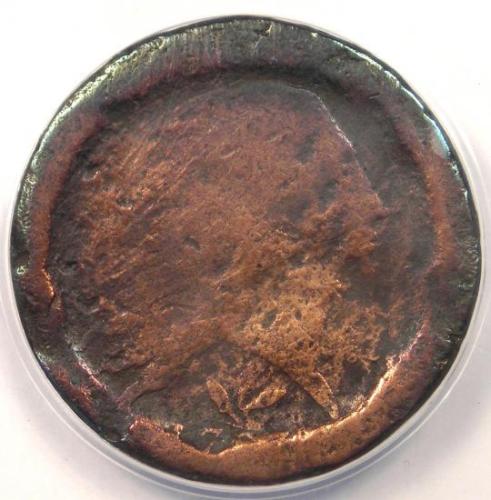 |
|
Pillar of the Community
United States
5828 Posts |
 I have to agree, actually. |
|
Pillar of the Community
United States
7375 Posts |
Yes, if one knows how to price a defect, a good deal can be made.
Edited by edweather
04/14/2016 8:55 pm
|
|
Pillar of the Community
United States
3347 Posts |
I collect coins that were used as money. Coins that someone actually carried in their pocket and spent to buy something. Circulation flaws like scratches and rim dings are just fine.
I think VF is the ultimate grade. They still have most of the details but saw a lot of use.
"Two minutes ago I would have sold my chances for a tired dime." Fred Astaire
Edited by thq
04/15/2016 3:02 pm
|
|
Pillar of the Community
United States
937 Posts |
So, a couple of questions: What makes you want to collect defective coins? What draws you to a damaged coin? What draws you to one that is almost worn flat Well I don't collect errors or variants so I guess this answer is not much. I am not drawn to damage other than one of my interests lately has been older French copper (1500-1900), and most of that is damaged by many people's standards. Also my budget does not allow me to buy top quality pieces. Almost worn flat and I are not good friends. I do like to see circulation wear as it shows the coin did what it was minted to do. But if we are to include as defective all non perfect coins then I guess that would be everything that is not MS70, now I have no MS70 coins so it could be said that I am drawn to defective coins  |
|
Moderator
 United States
54287 Posts |
To answer a question... I am not talking about major die errors (i.e., 1955 DDO - that is not a defect, just a major screw up by mint employees)), I am talking about coins with defects, like laminations (defective planchets), or struck through (faulty cleaning of the die before striking coins). Those coins are just faulty. I can see the interest in an off-metal coin or an off-center strike. Although I like coins with die cracks, that too is the result of overworking the die and not stopping using it. I don't consider that a defective coin. I appreciate the answers received so far, and it seems to come down to price, rather than the desire to have a worn or "bad" coin. Show your financial support of the Coin Community Family (click here)See my topic on Mexican Numismatic Medals (click here) |
| |
Replies: 12 / Views: 1,597 |
|










 Posted 04/14/2016 11:44 am


