| Author |
 Replies: 12 / Views: 2,130 Replies: 12 / Views: 2,130 |
|
|
Valued Member
United States
424 Posts |
|
|
|
|
Pillar of the Community
United States
3345 Posts |
Not a Cud, its a die chip I think. A Cud is on the edge from die break-but let the experts chime in. |
|
Rest in Peace
United States
1943 Posts |
As rachums pointed out, Cuds are a special die break that involves the rim of a coin. This is just a die chip. Die chips are common in the numerals of the date on wheat cents. |
|
Pillar of the Community
United States
7629 Posts |
While die chips are common on wheat cents, this particular one has some value of which the seller is apparently unaware. This is a very late die state example of a repunched mintmark (RPM), 1955S-1MM-002. It's quite common (a lot of them were struck as is evidenced by the age of the die when this coin was struck), but still worth a premium over the 'normal' 1955-S cent (which, by the way would include the die chips - because those are normal). Interestingly enough, this coin is worth a $10 spot, but not for the reason the seller believes. (added:) The others are correct in that this is NOT a Cud - it is simply die chips, which are common on wheat cents from the 1950s. Additionally, the presence of die chips, cracks, and gouges do NOT make any coin an error coin. This coin is not an error, but it is a die variety. Edited by coppercoins
10/15/2011 11:10 pm
|
|
Pillar of the Community
United States
2624 Posts |
I was just about to ask about the RPM, always nice to have a question before it's asked. Thanks
|
|
Pillar of the Community
United States
4132 Posts |
Quote:
Additionally, the presence of die chips, cracks, and gouges do NOT make any coin an error coin. So this is not an error coin? 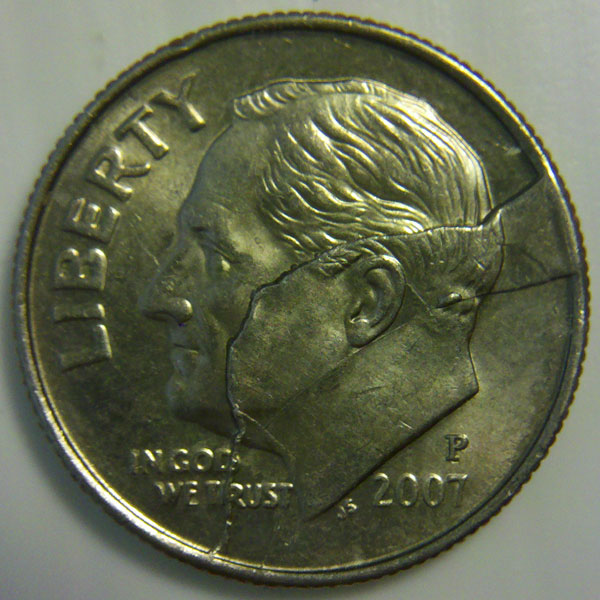 |
|
Pillar of the Community
United States
7629 Posts |
There's a difference between a die crack and a shattered die.
|
|
Pillar of the Community
United States
4132 Posts |
Is there a clear criteria of where to draw the line? I get that small die cracks and chips are quite normal and not really collectible, but is there a specific point where a large die crack becomes officially an "error"? Is going rim-to-rim enough? Does it have to be multiple cracks? Some specific number? When a die chip grows into a large, free-standing die break, at what point is it considered an "error"?
|
|
Valued Member
United States
213 Posts |
This is considered the "King of Cuds - the 1920-? Buffalo nickel Major Reverse Cud (BNC-20-1R). David Lange calls it a "Variety" in his Complete Guide to Buffalo nickels - "This Variety also displays die clash marks above the bison" Technically a Cud is not a Die Variety, which involve flaws in die manufacture (usually doubling): repunched mintmark, over mintmark, inverted mintmark, doubled die, overdate, repunched date. Cuds, die chip, die gouges, die cracks, broken and shattered dies, and clash marks, have long been classified as an Error(Die, Planchet and Strike) - being a Die Error part of the Error Grouping. Many, including Lange and myself, consider the Die Error as a form of "Production Die Variety" and refer to them as just a "Variety" I notice there are two 1920-? Buffalo nickel Major Reverse Cud (BNC-20-1R) for sale on ebay now. I've seen them sell in the range of $200 - $500 in the past. 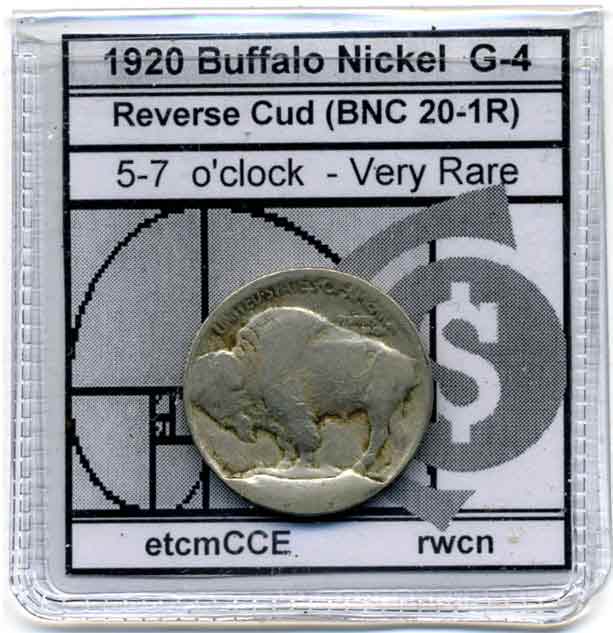 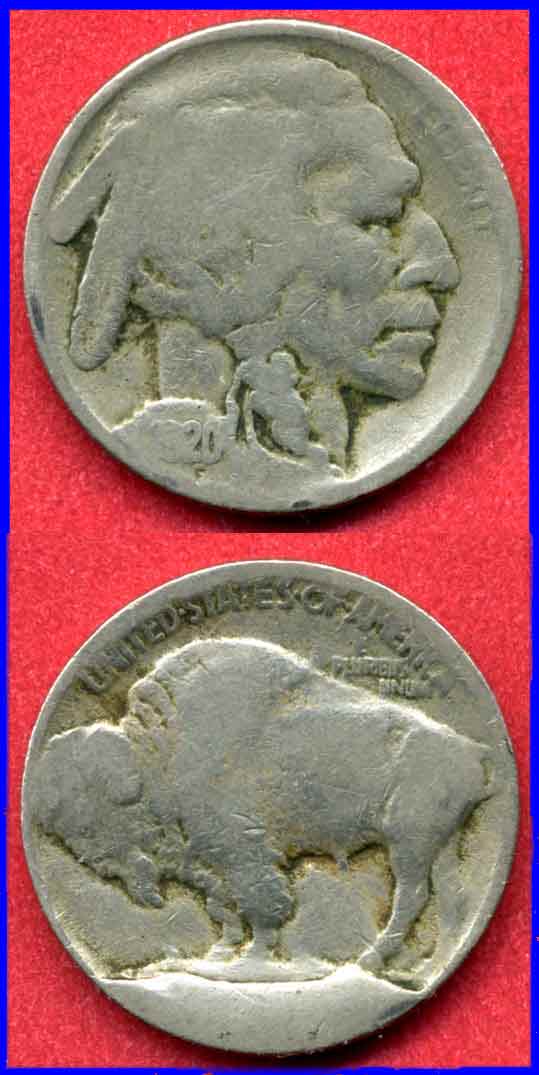 |
|
Bedrock of the Community
United States
17884 Posts |
Quote:
There's a difference between a die crack and a shattered die. Not in my opinion, it is just a matter of degree. Neither one is a variety, nor are they an error. They are die stages. And if they both come from the same die then the shattered die is just a later stage than the one with the die crack. Edited by Conder101
10/16/2011 03:34 am
|
|
Pillar of the Community
United States
7629 Posts |
A shattered die or broken die involve a die that has broken - not just cracked. They are very far more scarce than die cracks, and are errors because the die was used beyond where it should have been replaced. They are no less or more errors than Cuds are. |
|
Bedrock of the Community
United States
17884 Posts |
Once the die cracks it is being used beyond where it should have been replaced. I don't consider Cuds to be errors either, once again just a die stage. |
|
Bedrock of the Community
United States
12437 Posts |
Quote:
Is there a clear criteria of where to draw the line? For me, it is a matter of displacement. Minor die cracks are just surface imperfections that do not disrupt the design whereas major die breaks, like your dime, have significant displacement. Notice that the die shifted at IGWT and the back of the head, similar displacement can be seen with Retained Cuds as well. |
| |
Replies: 12 / Views: 2,130 |
|







 Posted 10/15/2011 9:52 pm





