First Page


 ) while lumps would be

 Posted 06/14/2012 03:01 am


I don't hit people!  Everyone is entitled to their own opinion.
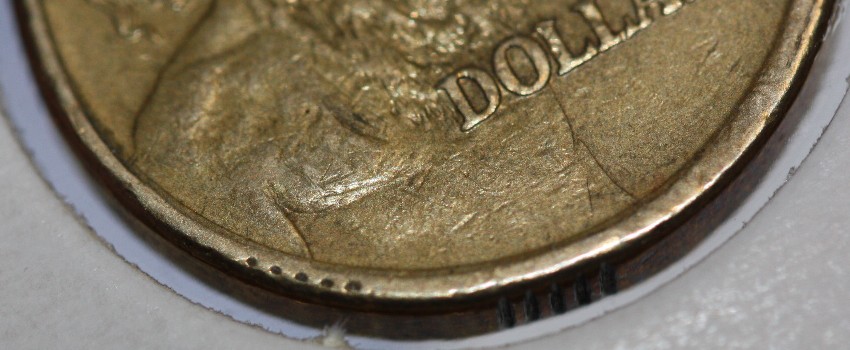
From my experience these dots are always 'innies', and I believe they are caused by impact with maybe part of the collar, or something that is related to the interrupted reeding.
I also believe that this impact happens at some stage of the minting process. It only ever occurs on the rim of the coin, if it was just general 'impact', it would occur anywhere on the coins surface. Also look at the picture on P1, the indentations are lined up very neatly along the outside edge of the rim, how likely is that general impact is always going to be this neat?
There are usually five of them (which is the number of grooves in the reeding), and as concerned said in his 1st post, they aren't necessarily in line with the reeding on the coin, but their existence is definitely connected to the reeding. I firmly believe that it's not PMD. JMHO.
I used to keep them all, but I culled them so I'm not sure that I kept any. I'll have to check. If I find any, I'll post some more images, but don't hold your breath waiting for them.
Everyone is entitled to their own opinion. From my experience these dots are always 'innies', and I believe they are caused by impact with maybe part of the collar, or something that is related to the interrupted reeding.
I also believe that this impact happens at some stage of the minting process. It only ever occurs on the rim of the coin, if it was just general 'impact', it would occur anywhere on the coins surface. Also look at the picture on P1, the indentations are lined up very neatly along the outside edge of the rim, how likely is that general impact is always going to be this neat?
There are usually five of them (which is the number of grooves in the reeding), and as concerned said in his 1st post, they aren't necessarily in line with the reeding on the coin, but their existence is definitely connected to the reeding. I firmly believe that it's not PMD. JMHO.
I used to keep them all, but I culled them so I'm not sure that I kept any. I'll have to check. If I find any, I'll post some more images, but don't hold your breath waiting for them.
life is a mystery to be lived not a problem to be solved