quote:
Originally posted by newdavid
I seen on VAMworld tey will attribute coins for a $5 fee, which doesn't seem bad. I have not been able to attribute, I'm still pretty green. Is sending it in something I should do?
That's probably John Baumgart, with his VAMSlabs. He's a great guy, and one of the very most knowledgeable VAMmers out there. VAMSlabs are great containers, very professionally executed, and John is someone you can absolutely trust to get any Morgan attributed right the first time. Here's one of my coins in a VAMSlab:
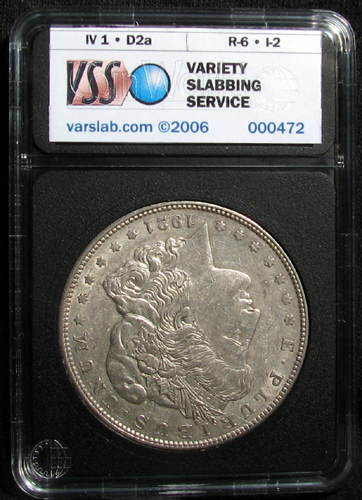
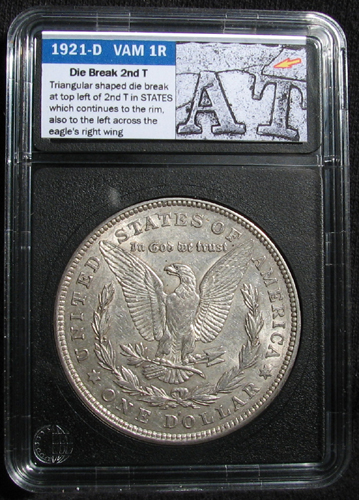
Note that the coin is "upside down" in this slab because the defining feature of the
VAM is at the top of the reverse.
That said, I encourage you to attribute your coins yourself, with our help here. You have the ability to take pics of your coins which are plenty good enough for attribution purposes.
1878-S's are rather tough to attribute, as there are over 100 different
VAM's associated with that issue, and some of the differences are rather minute. Bear with us; we'll keep this thread alive and get it figured out. The area at the bottom of the eagle's right wing, as shown in the top left picture of what Bryan posted, is an important feature, as there are quite a few different types of engraving in this area. "Engraving" describes the mint's process of adding feather detail to the area by hand, because the reverse used with this year tended to lose detail in that area during the basining process. Since they were done by hand, they're all different. The best pic you can get of that detail would be very helpful.
Can I see from the reverse pic that the "r" in "trust" is broken, like the star on the obverse? That's another feature that will help narrow down the attribution.
I've seen those raised dots on other Morgans, but haven't heard an explanation that satisfies me yet. They could be imperfections in the planchet - bubbles which came up after the strike - or possibly pitting of the die caused by rust. There are one or two pitted-die
VAM's for 1878-S, but not on the obverse.





 First Page


 Posted 01/05/2007 7:31 pm


