











 Posted 12/24/2011 4:54 pm


A lesson:
There is no such thing as a 'punch error'
A 'die error' is something that happens to the die after it is hung on the press to start making coins. Damage to the die, a large crack, pieces breaking off, etc.
What you are probably asking is whether your coin is Machine Doubling or whether it is a doubled die.
A doubled die is something that occurs to the die as it is being made. The design is actually doubled on the die by the hubbing press - the machine that 'hubs' the die, creating the negative relief design on the die that is imparted on coins when they are struck. Given that the doubling is on the die, it transfers to every single coin the die strikes.
Machine Doubling happens most frequently as the result of a loose die in the coining chamber. The coin is struck, and the die moves or bounces and causes the design on the coin to 'shift over' a little causing the impression of doubling. These are extremely common, are not doubled dies, and have no premium value.
The main characteristic differences are:
1. Doubled dies actually strike the coin with a doubled design. None of the doubling appears mechanically struck onto the coin that way. It has character, roundness, and actually 'interacts' with the rest of the design. Machine Doubling is flattened, down, shelf-like, and has no 'character'.
2. Doubled dies often have 'notching' at the corners of the letters and numbers where they overlap. Machine Doubling NEVER has notching.
3. Doubled dies - because of their nature - have elements that are thicker or wider than a normal design - because it is doubled. Machine Doubling is the act of flattening the edges of normal letters, thus it will take-away from the normal thickness of letters.
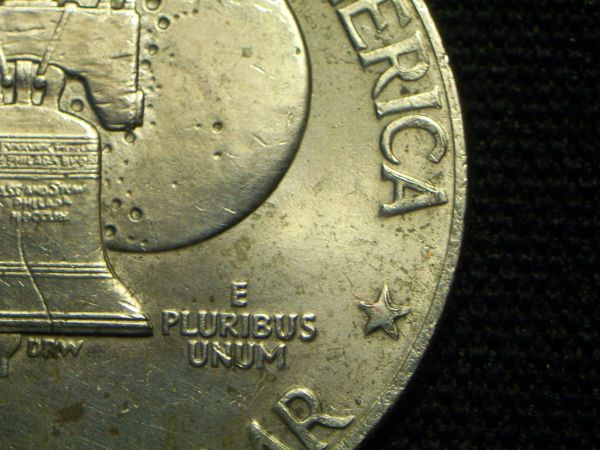
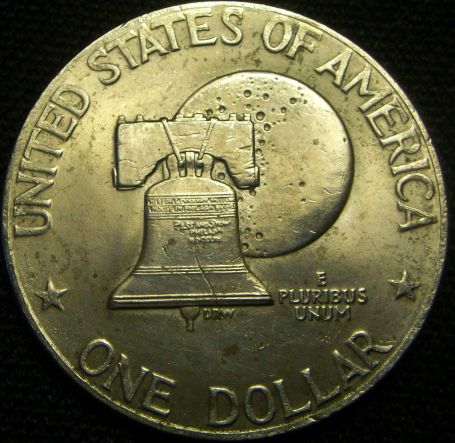
If you haven't figured it out by now, your coin is Machine Doubling - basically not worth any premium value. But alas, you should keep it anyway, mark the flip as Machine Doubling, and dig this coin back out and look at it whenever you have a question about hub doubling versus Machine Doubling.
There is no such thing as a 'punch error'
A 'die error' is something that happens to the die after it is hung on the press to start making coins. Damage to the die, a large crack, pieces breaking off, etc.
What you are probably asking is whether your coin is Machine Doubling or whether it is a doubled die.
A doubled die is something that occurs to the die as it is being made. The design is actually doubled on the die by the hubbing press - the machine that 'hubs' the die, creating the negative relief design on the die that is imparted on coins when they are struck. Given that the doubling is on the die, it transfers to every single coin the die strikes.
Machine Doubling happens most frequently as the result of a loose die in the coining chamber. The coin is struck, and the die moves or bounces and causes the design on the coin to 'shift over' a little causing the impression of doubling. These are extremely common, are not doubled dies, and have no premium value.
The main characteristic differences are:
1. Doubled dies actually strike the coin with a doubled design. None of the doubling appears mechanically struck onto the coin that way. It has character, roundness, and actually 'interacts' with the rest of the design. Machine Doubling is flattened, down, shelf-like, and has no 'character'.
2. Doubled dies often have 'notching' at the corners of the letters and numbers where they overlap. Machine Doubling NEVER has notching.
3. Doubled dies - because of their nature - have elements that are thicker or wider than a normal design - because it is doubled. Machine Doubling is the act of flattening the edges of normal letters, thus it will take-away from the normal thickness of letters.
If you haven't figured it out by now, your coin is Machine Doubling - basically not worth any premium value. But alas, you should keep it anyway, mark the flip as Machine Doubling, and dig this coin back out and look at it whenever you have a question about hub doubling versus Machine Doubling.

 , mj11!


