| Author |
 Replies: 13 / Views: 6,151 Replies: 13 / Views: 6,151 |
|
|
New Member
Canada
5 Posts |
I have a curious 1971 yellow-goldish Canadian penny. I never saw something like that. It does not seem to be made of copper, nor does it seem to be "painted" over, as is still shinning as if it is in mint condition. It also seem a bit lighter that ordinary 1971 pennies. I wonder if it is a test penny, as they were changing pennies in 1971.
I cannot find any information about this. Is there anyone who would know about this kind of coin, and if so, does it have any special value?
Thank you in advance.
|
|
|
|
Pillar of the Community
Canada
1733 Posts |
Hi Eric, welcome to the forum.
It's quite common for people to gold plate cents, it's also common for heated cents to take on a yellowy greeny hue as a layer of brass is formed on the surface when they are heated hot (like on a stove etc). Further, I've seen them pickled in zinc powder and then heated to form a heavy brass coating. Given all the options on how to make a cent yellow;
A picture would be most appreciated in making a diagnosis.
|
|
New Member
 Canada
5 Posts |
OK. Here are 2 pictures, one for each side, of the coin with a regular 1971 penny. Thanks Eric 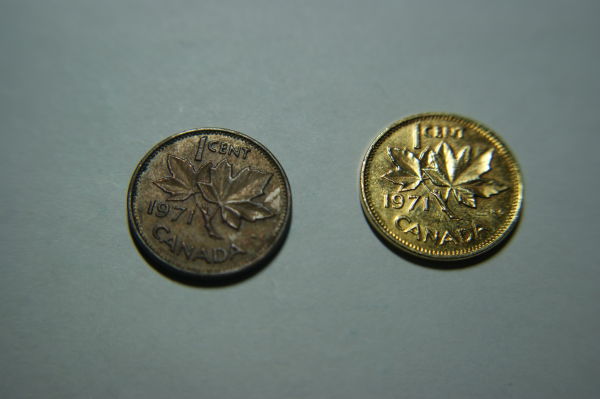 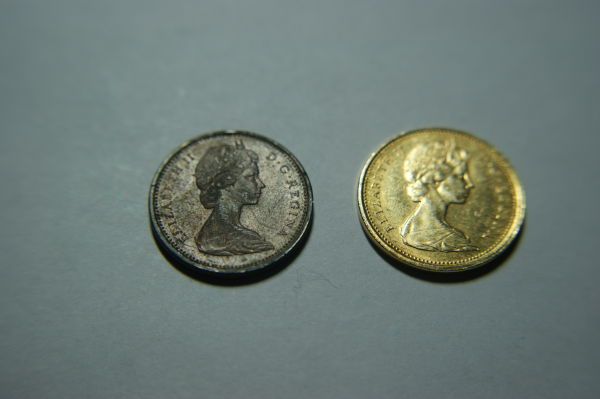 |
|
Pillar of the Community
Canada
1984 Posts |
An accurate weight would also be helpful...perhaps you could try to access a jeweller\s scale.
|
|
New Member
Canada
5 Posts |
OK. I will try a jeweller tomorrow.
|
|
Pillar of the Community
Canada
1733 Posts |
Based on that colour (and it can be off because photo colours do lie) I believe you have a genuine gold plated cent. They are usually the result of high school chemistry demos or if it is gold plate it could very easily be one of mine I've thrown back into the wild. I'm not 100% sure it's gold plate, but I'm pretty sure it's plating. The sharpest edges of the rims show a darker shade of copper underneath and the overall toning and shading has that look and feel I've seen a lot of. As always, this is just my opinion. Thanks for sharing it. Picture of cent, blown up to show rim edges 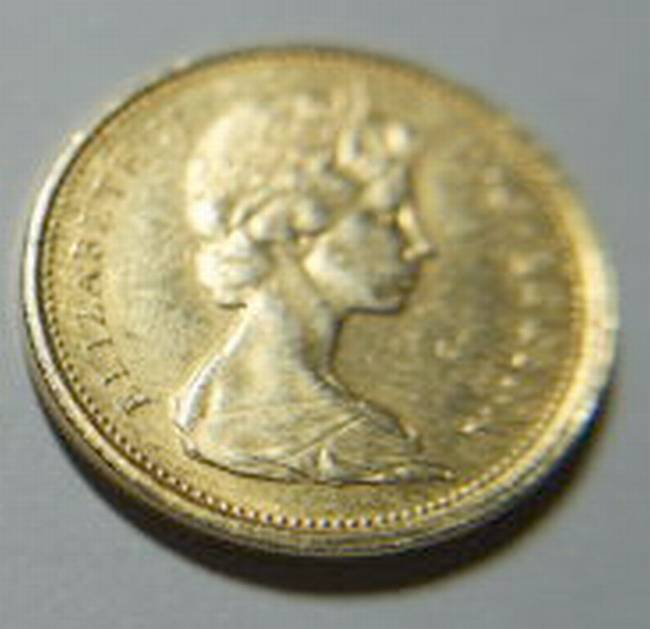 Edited by Ugly
01/13/2012 11:43 pm
|
|
New Member
Canada
5 Posts |
It is the shadow from the light I used. The edge is the same yellow-goldish color. Unfortunately, I had to reduce the picture size to fit the forum max of 100K per picture. Also, I could not use a flash because it illuminates the coin too much. As well, I had to take the picture from an angle to show the the relief, but by doing so the top part of the picture is a bit blurry. The coin itself is sharp, as if it was new.
|
|
Pillar of the Community
Canada
1733 Posts |
OK, I'm not afraid of being wrong at all.
The next steps in diagnosis are accurate weight with a good scale as Smallcentguy recommended. It wouldn't be the first Canadian coin struck on a foreign planchet or the first alloy problem with a Canadian coin (big joke here). I'm hanging with my initial diagnosis for now though, if I'm wrong I'm wrong.
Let us know how it goes.
|
|
Bedrock of the Community
Australia
21792 Posts |
I have seen Unc copper nickel coins tone to about this color.
Ugly: There is a chance that you are NOT wrong. I have had coins gold plated myself.
Edited by sel_69l
01/14/2012 01:03 am
|
|
Pillar of the Community
Canada
610 Posts |
This is the only gold plated coin I have.Try a comparison 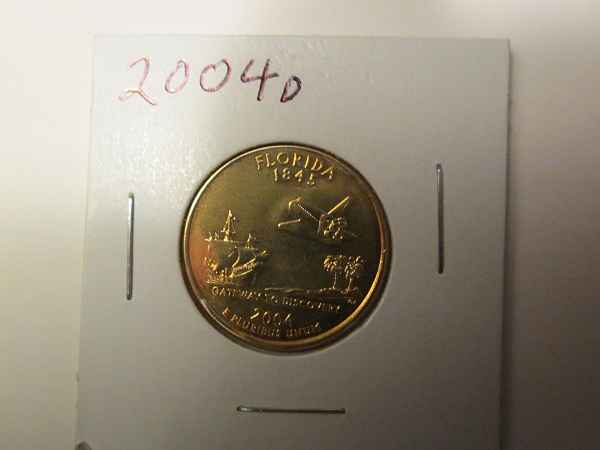 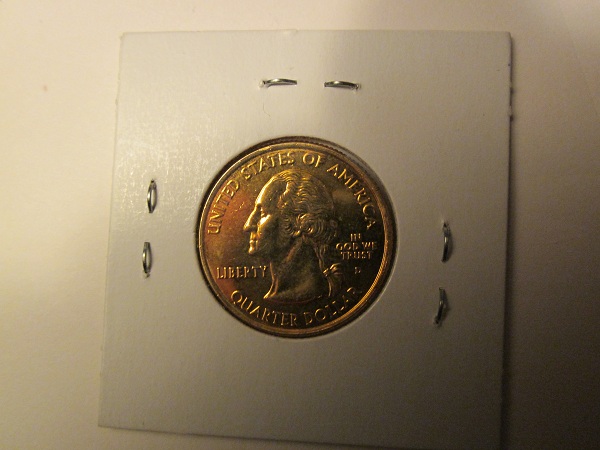 |
|
New Member
Canada
5 Posts |
Alright, I went to a jeweler, and they confirmed that it is a gold plated coin, but it is a nicely done.
Thanks to all.
|
|
Pillar of the Community
Canada
1733 Posts |
Thanks for getting back to us Eric.
|
|
Valued Member
Canada
306 Posts |
|
|
Pillar of the Community
Canada
1733 Posts |
Zinc is the easy one and is very fun, I mention this method in another thread on gold coloured cents. It looks very yellow when compared to gold side by side, more pale. With gold plate you get flashes of red and shadows in the fields because that is the nature of the hurry up quick electro plating they do in demonstrations.
I figured this one is gold because I have been plating things for the past quarter century in nickel, silver, gold, copper and zinc among others. The jeweler would not have mistaken the brass layer for gold either and brass formed this way would not have left the plating signs I see in the photo. Brass made like this literally "runs" over the surface of the cent and mixes with the under- layer of molten copper. This kind of plating shown in the video is extremely durable BUT it leaves the underlying copper annealed and soft, therefore easily bent and damaged.
Anyone trying this stick to real copper cents, zinc cents will melt into a puddle if you do this and steel plated cents can actually "pop" apart under heat if this is attempted. Besides the copper layer isn't thick enough on plated cents and they just get destroyed.
Notice in the video that they start they demo with plated cents but the final product is an old copper cent.
|
| |
Replies: 13 / Views: 6,151 |
|







 Posted 01/13/2012 11:24 pm





