| Author |
 Replies: 13 / Views: 2,969 Replies: 13 / Views: 2,969 |
|
|
Valued Member
279 Posts |
Hi,I'd like to discusswith you about this coin,very interesting about justinian I,the big follis for nicomedia, .weight 16.96g,diameter 34mm.
Justinian I, AE Follis. Nicomedia. 527-565 AD. DN IVSTINIANVS PP AVG, helmeted, cuirassed bust facing, holding cross on globe and shield with horseman motif, cross to right / Large M, ANNO to left, cross above, regnal year to right, officina letter below, mintmark NIKM, NIKO, +NIKO or NIK. (180 combinations of regnal year, mintmark, and officina letters known.)
I think that(maybe) even pure roman collectors will like this coin,or who don't like this coniage....usually byzantine coins aren't well preserved but in this case I think it's a bit better....
p.s. there are a lot of fakes of this coin around,(take a look on FAC)but as usually if you have a good eye you can stay away and notice how particulars are different in the original die.
Edited by giano
01/17/2012 02:34 am
|
|
|
|
Pillar of the Community
United States
2596 Posts |
wow thats a very nice coin, and HUGE with lots of details.
|
|
Moderator
 United States
23731 Posts |
Very well struck. Nice coin.
|
|
Bedrock of the Community
United States
10045 Posts |
Very nice, impressive coin! That's a hefty piece to carry around--I wonder what it represented in purchasing power in its day?  Earlier we were talking about contrapposto and classical Greek style lingering into the Roman empire. I f you can bear with me, here's another observation.  By Justinian I, Greek influence on coin design was largely gone, replaced by a "Byzantine" style that reversed much of the naturalistic aesthetics of the Greeks. I believe the earlier style was looked upon as representing "pagan" times, and explains the sad defacing of so many earlier Greco-Roman statuary, and why many priceless Greek bronzes were melted down. This style basically pervaded Europe, unchallenged for nearly 800 years, until artists like Giotto of Florence pioneered (re-discovered) perspective and naturalism in art. The Renaissance largely represents Europe's rediscovery of Greek mathematics, science, and art--much of which was persevered by monks and Islamic scholars, the literate of retrograde Europe. Below is a mosaic portrait of Justinian I. He is the one with the halo, and done while Justinian was alive. Saints in the Middle Ages were posthumously given halos. But I suspect these early halos have more to do with "divine authority" like a radiate "Divus augustus", than denoting sainthood. A lot of conventions of Christendom are actually appropriated from Rome's "pagan" culture and religion. In a way, the Roman Empire did not die, but put on a new mantle as The Church. The figure on Justinian's right looks a bit like a priest, but he's believed to be a general.  Edited by DVCollector
01/16/2012 1:28 pm
|
|
Valued Member
Malta
64 Posts |
|
|
Valued Member
 279 Posts |
thanks to all and to dv collector,for the interesting and true things written.
true, the Byzantine style is another thing than the Greek canons, lovers of beauty and aesthetics, and the Roman considered more practical but equally pagans .
Furthermore, it is equally correct interpenetration between the Byzantine Empire and the Church , which gradually takes the place of the died roman Empire.
thanks for having put the Justinian mosaic, I have seen it in person because it is located in Ravenna(Saint Vitale church), and as an Italian I can go there easily.
I assure you that the mosaics are impressive, and the basileus, so represented, it seems, in a church, some of the supernatural, its cohesion with God is very strong, and sends you a message as to say that is very close to god and emperor, for his will,remember that no one can touch the basileus(byzantine emperor) with his skin(hands must be covered with dress!)
I think the charm of Byzantine coins, is also in the fact of the interpretation of these things, and the transition from pagan to Christian culture.
I hope many of you can begin to feed some interest to the Byzantine, I always say, interesting as Roman coins, though less popular, perhaps continuing his collection of Roman coins with these coins.
other opinions are welcome even from pure roman collectors or from person that don't like these coins.....I'm interested....
|
|
Bedrock of the Community
United States
10045 Posts |
Quote:
I assure you that the mosaics are impressive, and the basileus, so represented, it seems, in a church, some of the supernatural, its cohesion with God is very strong, and sends you a message as to say that is very close to god and emperor Giano, I agree--the mosaics of San Vitale are probably the most impressive masterpieces of their kind, which I hope someday to visit. I can only imagine they have a strong impact on the viewer, both today and during the reign of Justinian--as a symbol of power just like busts were during earlier Imperial Rome. Byzantine art has its own distinct and beautiful legacy in mosaics, architecture, and icons. Thanks for helping me remember that. |
|
Pillar of the Community
United States
2596 Posts |
here is mine not as nice and only 15.8gms and 31mm 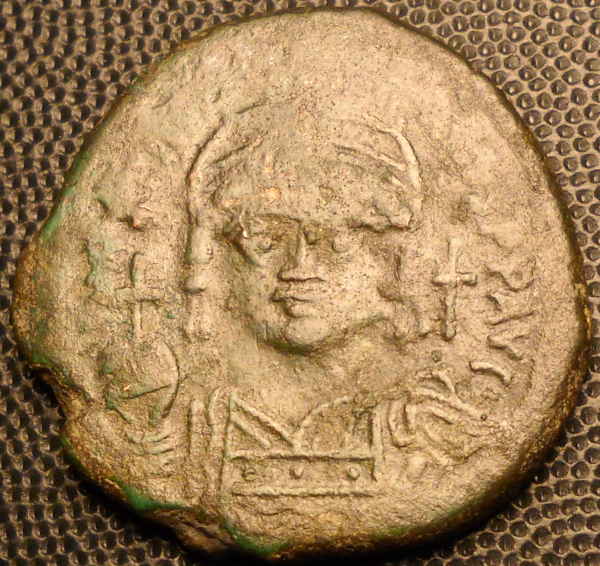 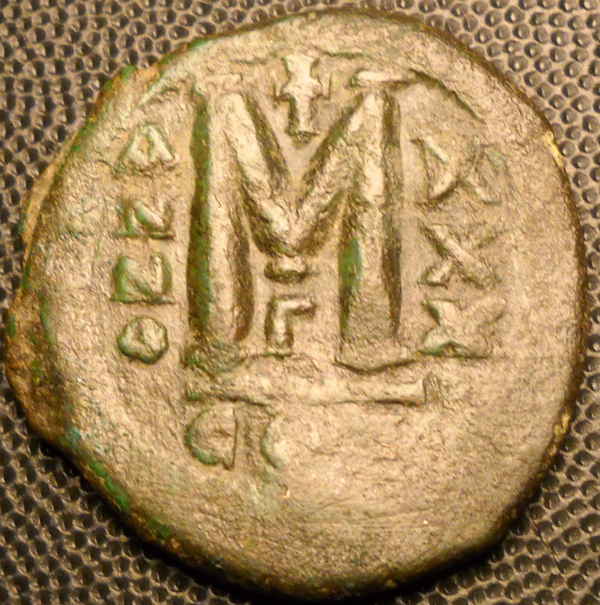 Edited by jessvc1
01/16/2012 4:12 pm
|
|
Pillar of the Community
United States
4778 Posts |
Awesome coin giano! Thanks for posting it.
|
|
Valued Member
279 Posts |
thanks again.
jessuc,is it yours from constantinopolis mint?we can see there's a different style between nicomedia and constantinopoli's follis....however a nice coin.
p.s. I love byzantine coins so I'd like always to remember all how important are these conis and their history....
|
|
Pillar of the Community
United States
1549 Posts |
Both of the coins shown are year 30 which is after the peak of the largest facing bust coins. I have posted this one on CC before but do not recall the thread. It weighs 23.4g (my largest). Watch for coins between years 12 and 15. I did not know the 180 variations figure but it is easy to believe. 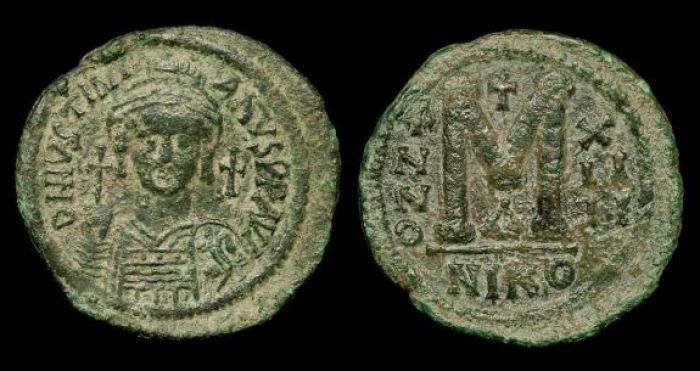 |
|
Pillar of the Community
United States
1315 Posts |
I intend to get a couple of nice Byzantine coins eventually. Perhaps one from the beginning of the period and one from the end, maybe one from the middle.
In this case who would be the first emperor to look for and who would be the last? If the lines are drawn that clearly.
Thanks
Doucet
|
|
Pillar of the Community
United States
4778 Posts |
First would be Anastasius I, since his coinage reform for us helps to mark where byzantine coinage starts, and a coin from the end would be one of Constantine XI (last Byzantine emperor - but I have a feeling his coins would be tough to find though, but I don't know for sure). Or maybe getting a coin of the Byzantine emperor who was the last to have plentiful coinage minted? Just an idea.
|
|
Pillar of the Community
United States
1549 Posts |
Last emperor that is even slightly reasonable is John VIII:  John was the next to last emperor and none of us can afford a Constantine XI. I'd suggest a huge/early Justinian Follis and a middle period coin with a text reverse but after the end on the denominational marked coins. Leo VI is not hard to find. Last I'd get a Christ portrait coin either flat and Anonymous from around 1000 AD or a cup shaped coin of Manual or Alexius (c.1200). Three coins is pretty limiting. |
| |
Replies: 13 / Views: 2,969 |
|







 Posted 01/16/2012 12:16 pm





