Quote:
...for some of the more common varieties, do any high-quality examples exist? (AU for example or MS-55 for those that prefer the newer grading system...or even AU and MS-60?) Are they also in the same realm of affordability also? Just wondering, my wife loves Byzantine art and history as so little art exists from that time.
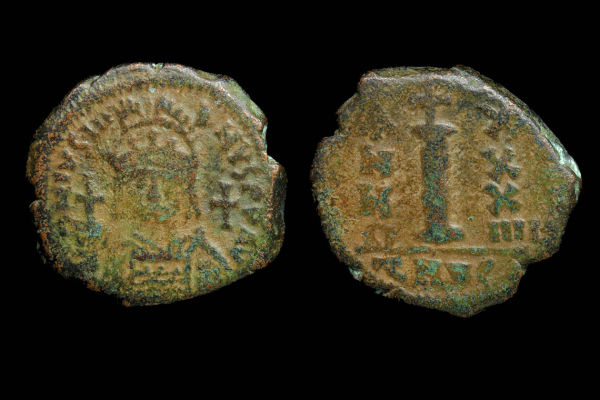
Byzantine copper coins are notorious for being typically found in terrible condition, far worse than Late Roman bronzes that are a couple hundred years older. I don't know why, whether it's the different alloys used, the different soil types in the "Byzantine" part of the Empire they were buried in, or different attitudes to money making them less-well-preserved when buried.
What you never get with any ancient bronzes is anything close to MS/uncirculated. All ancient and Byzantine coins that are still around today are still around because somebody buried them and someone else dug them up again relatively recently. Bronze and other copper alloys are simply far too prone to corrosion when buried; they've all been too harshly cleaned to deserve the "uncirculated" tag. Ancient silver coins can sometimes be found in near-mint-state (though these too will have been cleaned), but Byzantine silver coins, in any condition, are almost as hard to find as hen's teeth or dragon scales; they're typically worth more than the gold ones.
You can, however, get near-pristine Byzantine gold coins, for not too much above bullion value. Byzantine gold is by far the cheapest ancient or early mediaeval gold coinage you can buy.
This solidus on Wildwinds of Justinian I, the same emperor that's on dougsmit's coin, went unsold at a CNG auction in 2002 with a $400 estimate. So if you want a lovely piece of "Byzantine art" in your collection, a gold solidus is the best way to go.
Caveat: buy from reputable dealers. There's been quite a few fake Byzantine gold coins around in the past few years.
Don't say "infinitely" when you mean "very"; otherwise, you'll have no word left when you want to talk about something really infinite. - C. S. Lewis









 Posted 01/18/2012 12:31 pm


 Great bit of research--I'm impressed how these legends get interpreted; I'm very much a learner here.


