| Author |
 Replies: 41 / Views: 5,782 Replies: 41 / Views: 5,782 |
|
|
|
Bedrock of the Community
United States
14454 Posts |
I always shoot around ISO400 with my T1i, I haven't even taken any shots with the new jansjo lights yet because I have had so much going on around here and haven't had time to do so
|
|
Moderator
  United States
23522 Posts |
Quote:
I'm just curious, but why are you guys shooting at anything but ISO 100 in a studio setting? Chroma noise is basically non existent at ISO 100 in all shots I have seen. Early on, my learning process taught me to shoot the fastest exposures possible with my camera/lens combination. Aperture was necessarily stopped down for DOF, so it was more light, more ISO, or both. The improvement in contrast was noticeable with faster exposures. It's a habit I've kept to this day. Note, this is the first time in my coin-shooting career I've ever had trouble with chroma. A Rebel dSLR doesn't introduce noticeable noise at ISO400 - heck, I've done well at 800 with previous lenses. Ray, I am currently using the Jansjos bare. Using the halogens bare, as well. Diffusion will be part of the experimentation process, though I am not comfortable with it being required to get acceptable noise results from a lens. |
|
Pillar of the Community
United States
627 Posts |
Quote:
Early on, my learning process taught me to shoot the fastest exposures possible with my camera/lens combination. Aperture was necessarily stopped down for DOF, so it was more light, more ISO, or both. The improvement in contrast was noticeable with faster exposures. It's a habit I've kept to this day. In digital photography, my understanding of the ISO is that it's somewhat artificial. By that I mean, your sensor is able to "count" a certain number of photons per unit time per pixel. At a high ISO, it counts fewer of these photons and (in silico) predicts the expected number it would have counted at a lower ISO (e.g., ISO 100). I believe that, as your ISO increases, the more in silico prediction (or amplification) that occurs by the processor to "guess" how many photons the sensor would have detected at the proper exposure time. When this "prediction" occurs at extremely high ISO values, the noise observed in dark areas is caused by the imprecision in the boosting of these photon counts. I think of it as, if I count 1 photon (very dark area) at ISO1600, when I "boost" that to an equivalent lower ISO, it happens in integer increments. Thus, the difference between 1 photon in a dark area, and 2 photons in a dark area at ISO1600 is magnified when boosted to give proper exposure. I hope that makes sense. In the "studio" setting, with continuous lighting and with a stable rig, I only use ISO100 settings. If I understand it correctly, any improvement in contrast at ISO400 would be achieved at the loss of dynamic range. Again, I'm relatively new at coin photography, so I'm more asking if I'm understanding this correctly...? Thoughts? Is my thought process flawed? |
|
Pillar of the Community
United States
4051 Posts |
Quote:
Ray, I am currently using the Jansjos bare. Using the halogens bare, as well. Diffusion will be part of the experimentation process, though I am not comfortable with it being required to get acceptable noise results from a lens. SuperDave...keep in mind the halogens are 360-deg (approx) emitters, and the light emitted from the back and sides of the bulb is reflected by a shaped reflector toward the front, resulting in the source appearing to be the ENTIRE reflector. The Jansjos don't utilize a reflector, but instead take the light from the LED phosphor and spread it using a divergent lens. If you take a photo of a Jansjo "on", you will see the LED emitting light, and it is extremely small, nearly a point source compared with the large radiating area of the halogen reflector. Thus the halogen is already diffused by action of the reflector. Why have an issue with diffusing the LEDs? I expect that the contrast created by the point source is so high that it pushes the local shadows virtually to black, and this is why the sensor has such a problem with it. If you don't want to diffuse the main LEDs, add an overall diffused source to bring up the level of the local shadows so they are well above the noise floor...Ray Contact me for photographic equipment or visit my home page at: http://macrocoins.com |
|
Moderator
United States
23522 Posts |
Quote:
I expect that the contrast created by the point source is so high that it pushes the local shadows virtually to black, and this is why the sensor has such a problem with it. If you don't want to diffuse the main LEDs, add an overall diffused source to bring up the level of the local shadows so they are well above the noise floor...Ray
Gotcha. Keep in mind, you're a much more linear thinker than I am - I have to force myself into unfamiliar patterns to approach anything logically. The Componon will be arriving today, so we'll see what's going on here. |
|
Moderator
United States
23522 Posts |
Wow, what a nice looking lens. Looks unused.  |
|
Moderator
United States
23522 Posts |
OK. First impressions of the Schneider Componon-S 100/5.6: 1) This lens is incapable of focusing on a Morgan-sized coin at below 1:1, at any distance. I handheld the whole rig, backing it away from the coin and simply cannot achieve focus fullsize on the sensor. It's an order of magnitude better than the Spiratone in terms of sharpness, though - I can't wait to do some mag shots with it. It just doesn't have the image circle to encompass a Morgan unless I'm missing something. 2) It has a much more forgiving focus range than the 75ARD when presented with a coin it can show appropriately, in my case the Mercury dime which has been posted here. The "sweet spot" at a mechanical f/8 setting is a range, rather than a "fiddle and try to get it perfect" like the Rodenstock. 3) It cannot achieve the ultimate resolution of the Rodenstock. It's still in a different league than any "standard" lens I've used before. 4) The chroma noise is unchanged; the images I'm posting here are relieved of chroma to the same degree as my 75ARD shots. It's not the lens. 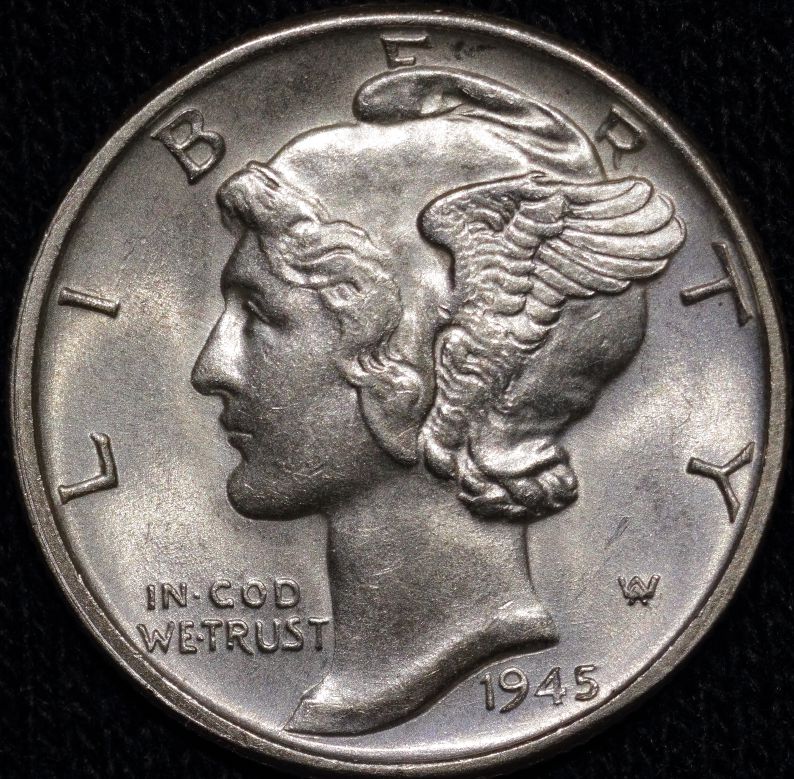 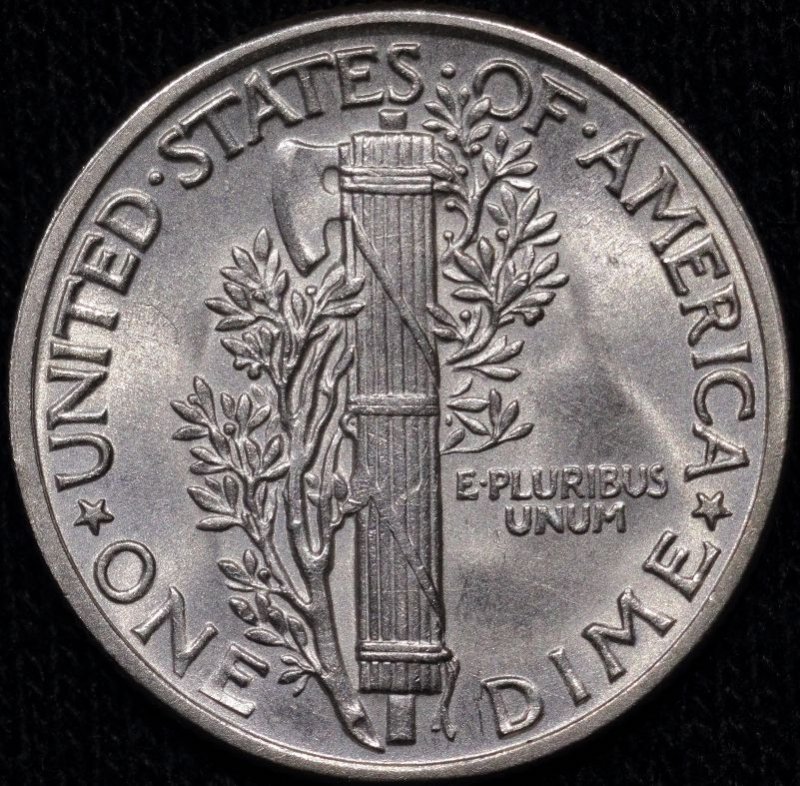 I couldn't be happier that I bought it. |
|
Pillar of the Community
United States
4051 Posts |
Quote:OK. First impressions of the Schneider Componon-S 100/5.6: 1) This lens is incapable of focusing on a Morgan-sized coin at below 1:1, at any distance. I handheld the whole rig, backing it away from the coin and simply cannot achieve focus fullsize on the sensor. It's an order of magnitude better than the Spiratone in terms of sharpness, though - I can't wait to do some mag shots with it. It just doesn't have the image circle to encompass a Morgan unless I'm missing something. 2) It has a much more forgiving focus range than the 75ARD when presented with a coin it can show appropriately, in my case the Mercury dime which has been posted here. The "sweet spot" at a mechanical f/8 setting is a range, rather than a "fiddle and try to get it perfect" like the Rodenstock. 3) It cannot achieve the ultimate resolution of the Rodenstock. It's still in a different league than any "standard" lens I've used before. 4) The chroma noise is unchanged; the images I'm posting here are relieved of chroma to the same degree as my 75ARD shots. It's not the lens. Nice Dime images. Very happy to hear the chroma noise conclusion is not blaming the 75ARD1. I still think the problem is the LED is too "small" and needs diffusion. I don't understand why you can't get a focused full-frame shot of a Dollar with the 100/5.6. That's the perfect lens for imaging Dollars. I'm 100% sure you can find a combination of bellows extension and working distance that will work. If you want I can throw a 100mm on my bellows and shoot you some extension and WD numbers to try. Ray Contact me for photographic equipment or visit my home page at: http://macrocoins.com |
|
Moderator
United States
23522 Posts |
Heck, the only way I could achieve focus on the dime was to remove the plate from the base and set the coin on the table. At that, both the bellows and vertical adjustment were fully extended.
|
|
Pillar of the Community
United States
4051 Posts |
Ahh, makes sense now. Santoku is really optimized for 80mm or shorter lenses. Simplest way to make longer lenses work is to add 42mm extensions between bellows and camera adapter. This raises the max camera height and simultaneously extends the effective bellows extension. I included a couple of these extensions when I shipped Santoku to you. You may need more but I think I verified the setup using a 105mm lens and it worked for Dollars. Try adding the extensions and see if that makes it possible to focus the Dollar full frame, and to simplify the Dime photos...Ray
Contact me for photographic equipment or visit my home page at: http://macrocoins.com |
|
Pillar of the Community
United States
627 Posts |
Dave, maybe you have already read this write-up for the T2i, but I found it useful. I just stumbled upon it this morning. It's very informative. http://www.imaging-resource.com/PRO...IIMATEST.HTMOne small piece from the article: "The Canon T2i offers four high ISO NR settings: Disable, Low, Standard and Strong. Although it's called high ISO NR, it is applied at all ISOs."Have you experimented with the High ISO Noise Reduction settings at all in your shots? Worth at least a look if not. Edited by brg5658
02/28/2012 09:26 am
|
| |
Replies: 41 / Views: 5,782 |








 First Page
 Previous Page


 Posted 02/21/2012 12:05 pm


