| Author |
 Replies: 7 / Views: 1,681 Replies: 7 / Views: 1,681 |
|
|
New Member
United Kingdom
44 Posts |
Hear is the other coin. jacqueline. 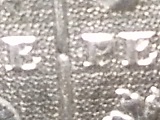 |
|
|
|
Bedrock of the Community
United States
14454 Posts |
Not sure what the question is
|
|
New Member
 United Kingdom
44 Posts |
Sorry Brian. this was part of my first post. I havent got the hang of posting more than one picture at a time. I am trying to show the new 2011 British 5 pence coin. The letter P in penny has no hole in the middle. it seems to be filled in with a thick blobb.. I will post better pictures of the full coin. jacqueline
|
|
Pillar of the Community
United States
9806 Posts |
That is what is known as a filled die or die chip, sometimes a small bit of stuff (grease, metal filling can get caught in the die causing the metal to not flow into the die evenly. Fairly common, now as to your other coin with the misformed E in pence, that is interesting, probably not worth much, but I'm no expert on UK coins, so I'll leave the comments to others.
"Buy the Book Before You Buy the Coin" - Aaron R. Feldman - "And read it" - Me 2013! ANA Life Member #3288 in good standing since 1981, ANS, Early American Coppers Member (EAC), Colonial Coin Collectors Club member (C4), Conder Token Collector Club member (CTCC), Civil War Token Society (CWTS) member, Liberty Seated Collectors Club (LSCC) & Numismatic Bibliomania Society member (NBS), USMex, Member in good standing, 2¢ variety collector. See my want page: http://goccf.com/t/140440 |
|
Bedrock of the Community
United States
17884 Posts |
Westcoin is trying but he is actually describing two different types of error and then attributing your coin to the wrong one.
The letter P in the die was sunk into the die with a post inside the loop of the P. That post is what forms the "hole" in the loop of the P on the struck coin. On the die that created your coin that "post" has chipped off allowing metal from the planchet to fill the center of the loop and give it that blob appearance.
If the hole in the die had filled with grease, metal filings etc like Westcoin sugggested then the metal would not have flowed into the hole in the die and the P itself would have disappeared.
The problem comes from poor use of language when we are describing the coins. When a letter disappears from grease filling the letter we say it was a filled die, but when a die chip like yours causes that blob appearance people tend to call it a filled letter when actually the letter has not "filled" at all. There is actually MORE empty space in the die than there should be.
|
|
New Member
United Kingdom
44 Posts |
Thank you conder for that information. must say its all rather technical stuff. did you ever work at the mint ? jackie.
|
|
Bedrock of the Community
United States
17884 Posts |
No never worked at the mint (Which is good because they have a completely different set of terms to describe some things than we do. Even worse is they use some of the same terms but with a completely different meanings.) I have just been doing this a long long time. Studying coins for over 45 years, and next week marks the end of my fortieth year as a collector.
|
|
Pillar of the Community
United States
9806 Posts |
Thanks for the clarification Conder101! I was wrong in trying to describe the flow of the metal into voids on the die. Conder101 has a decade on me in collecting!
"Buy the Book Before You Buy the Coin" - Aaron R. Feldman - "And read it" - Me 2013! ANA Life Member #3288 in good standing since 1981, ANS, Early American Coppers Member (EAC), Colonial Coin Collectors Club member (C4), Conder Token Collector Club member (CTCC), Civil War Token Society (CWTS) member, Liberty Seated Collectors Club (LSCC) & Numismatic Bibliomania Society member (NBS), USMex, Member in good standing, 2¢ variety collector. See my want page: http://goccf.com/t/140440 |
| |
Replies: 7 / Views: 1,681 |
|








 Posted 01/21/2012 5:28 pm


