Quote:
We need someone who can read Chinese on to help with this topic...
The inscriptions on the slabs translate as "China Mint Company" and "Made at the Shenyang Mint".
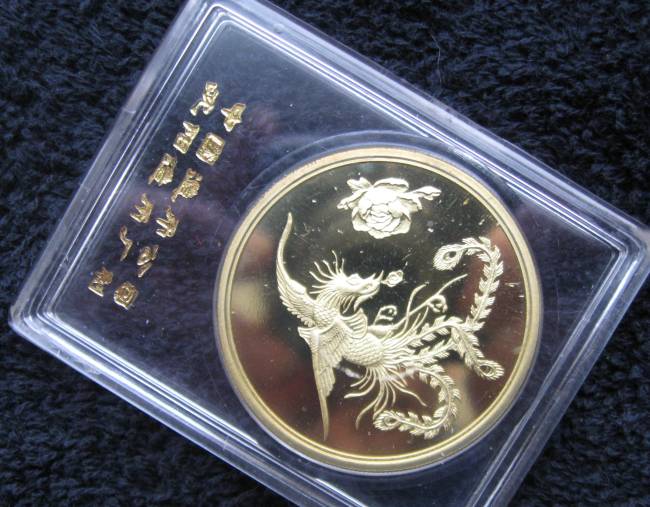
I'm assuming that image #1 and image #3 are one medal. Image #1 shows a mythical beast that appears to be a combination
dragon (upper body) and
phoenix (lower body) symbolizing male and female.
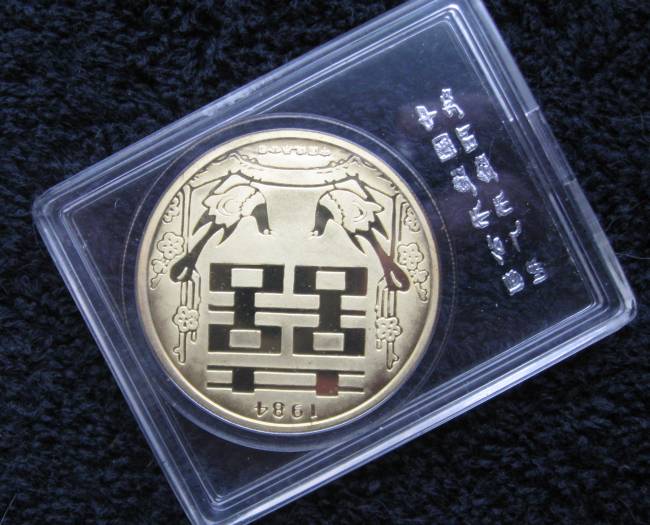
Image #3, below the date 1984, displays the Chinese character "double happiness" (
shuang xi). This is frequently used for marriages. Also, the two birds facing each other are
magpies which has the implied meaning of "double happiness".
This "coin" expresses good wishes for a
marriage.
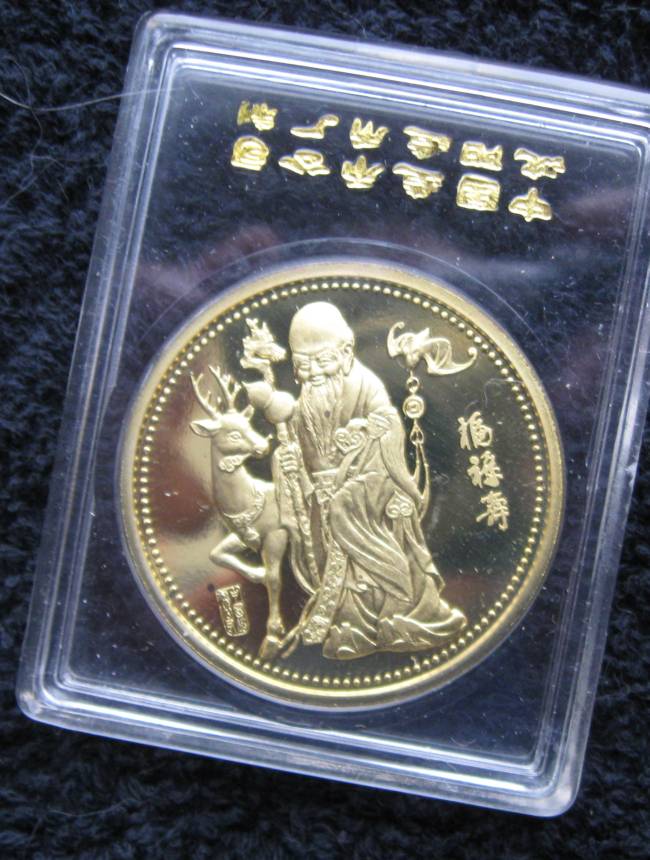
The inscription on image #2 is
fu lu shou which translates as "happiness (
fu), emolument (the salary paid an official) (
lu), and longevity" (
shou).
The Chinese like "visual puns" or rebuses.
There is a
bat at the upper right. The Chinese word for "bat" (
fu) is pronounced the same as the word for "happiness" (
fu).
Also, the bat is holding in its mouth what appears to be a Chinese cash coin thus representing "wealth".
The old man represents "Shou" who is the "
God of Longevity". On his walking stick is a
gourd. In his belt is a
ruyi sceptre.
The Chinese word for "
deer" (
lu) has the same pronunciation as the word for an official's salary (
lu) in imperial China. In the deer's mouth is the "
lingzhi" or "
fungus of immortality".
The bat, deer and old man together are
fu lu shou which is the same as the Chinese inscription.
Fu lu shou can also refer to the three Chinese gods known as the God of Happiness (
fu), God of Prosperity (
lu) and God of Longevity (
shou).
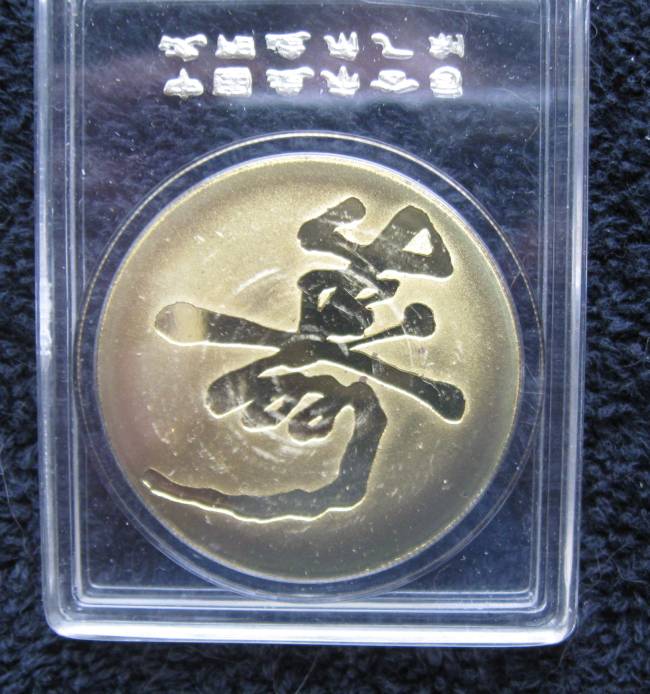
Image #4 displays the Chinese character
shou, meaning longevity, written in a very cursive style.
This "coin" expresses the wish that a person will enjoy happiness, prosperity and a long life.
Since I am not familiar with these "coins", I cannot help you with information concerning present value, mintage, composition, etc.
Gary









 Posted 01/29/2012 1:32 pm





