











 Posted 01/21/2007 10:12 pm


We had a great day with scoutjim and his family and it was nice to see his collection.
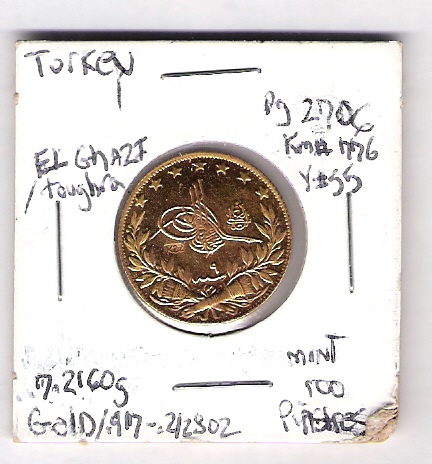
The coin in question here may well be gold as Jim says. It is a cast copy that was reeded by forcing it through a tapered ring die. The reeds have very clear split tops and a few are quite incomplete in that regard.
The fact that there is a cast in place 22 K countermark makes me wonder if this was in fact one of those coins made as bullion during the 1950s and early 1960s when gold could not be easily imported into the US. At that time, it was legal to own coins older than 1933 - but not those dated after 1933. The need for raw gold caused foreign gold suppliers to cast common coins for shipment to the US. I really can't see the purpose of the 22k counterstamp otherwise.
I would suggest that an SG test could tell rather quickly.
The coin in question here may well be gold as Jim says. It is a cast copy that was reeded by forcing it through a tapered ring die. The reeds have very clear split tops and a few are quite incomplete in that regard.
The fact that there is a cast in place 22 K countermark makes me wonder if this was in fact one of those coins made as bullion during the 1950s and early 1960s when gold could not be easily imported into the US. At that time, it was legal to own coins older than 1933 - but not those dated after 1933. The need for raw gold caused foreign gold suppliers to cast common coins for shipment to the US. I really can't see the purpose of the 22k counterstamp otherwise.
I would suggest that an SG test could tell rather quickly.
Edited by swamperbob
01/21/2007 10:16 pm
01/21/2007 10:16 pm


