| Author |
 Replies: 19 / Views: 7,682 Replies: 19 / Views: 7,682 |
|
New Member
Bulgaria
19 Posts |
ALEXIUS I, COMNENUS PRE-REFORM COINAGE (1081 -- 1092) 1. 4. 6 AE Follis Mint of Thessalonica Struck 1085 -- 1092 Weight 3.80 -- 6.42 g Diameter 24 -- 32 mm Avg diameter 28 mm Die diameter 25 mm Die axis -- 180˚ Rarity 1 OBVERSE: Cross on two steps, flanked by IC XC above, NI KA below. Globules at each extremity of the cross. REVERSE: + / CERCVN / EP�"EIBA / CIЛEIAЛ / ЕZIW in four lines. References: Hendy, p. 76, and Pl. 3, 3. DOC IV, Pl. II, AE 19. Grierson 1030; Sear 1911. Notes: DOC IV, p. 723: "Soter synergei Basilei Alexio". CEP is a standard abbreviation for sōter which means Saviour. Sunergei has the literal meaning of "work together with", but is generally used to mean "help" or "assist". The whole legend translates as "Saviour, help Alexius the King". The fabric of the coins is usually thinner than other folles from Thessalonica, which might indicate that the coins were struck at an unknown provincial mint. 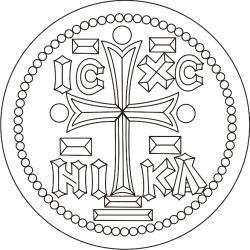 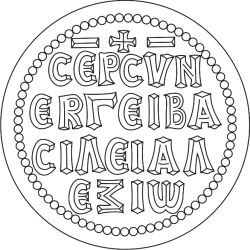 Edited by latebyzcollect
02/11/2012 10:54 am
|
|
|
|
New Member
 Bulgaria
19 Posts |
ALEXIUS I, COMNENUS PRE-REFORM COINAGE (1081 -- 1092) 1. 4. 5 AE Follis Mint of Thessalonica(?) Struck 1085 -- 1092 Weight 4.46 -- 8.80 g Diameter 25 -- 31 mm Avg diameter 29 mm Die diameter 25 mm Die axis -- 180˚ Rarity 3 OBVERSE: MP (theta)V in field. Bust of Virgin nimbate, wearing tunic and maphorion, holds bust of beardless and nimbate infant Christ on breast. REVERSE: Circular legend +AЛEZI/W to left, and Ð"ECПOTTWK to right. Full-length figure of emperor on dais, wearing stemma, divitision, collar-piece and paneled loros of simplified type; holds in right hand labarum on long shaft, and in left, globus cruciger. References: Hendy, p. 75, and Pl. 3, 1. DOC IV, Pl. II, AE 18. Grierson 1024; Sear 1909. Notes: Many of these coins - at least half of the coins known to the authors - were struck on Type 1.4.2 specimens, which raises serious doubts about the attribution to the Thessalonica mint. 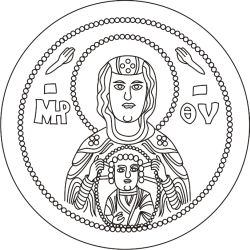 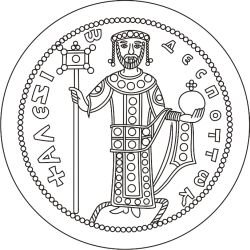 |
|
Pillar of the Community
United States
2044 Posts |
Are these coins that you possess? If so, would like to see some real photos. Although, those drawings are well done.
|
|
New Member
Bulgaria
19 Posts |
No, friend! I do not possess ANY COINS!:)))) In my country it is almost criminal and illegal! The law is mad here.... all of the billions ancient coins are "national wealth"! 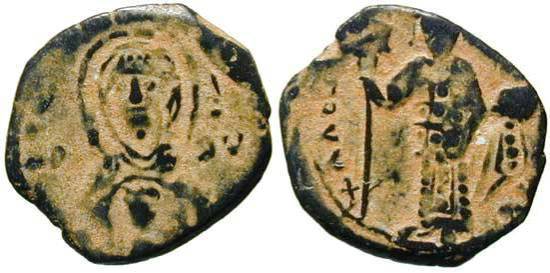 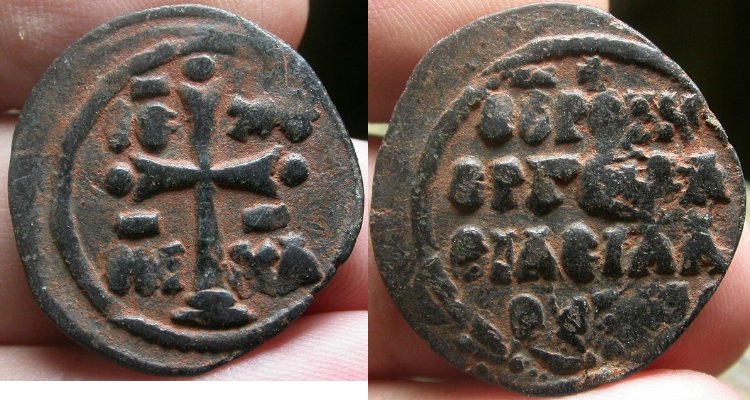 |
|
Pillar of the Community
Bulgaria
843 Posts |
 to CCF! |
|
Bedrock of the Community
United States
10045 Posts |
The drawings are good--they help me visualize what is present on actual coins. |
|
Moderator
 United States
23731 Posts |
If they only looked as good as the drawings, I think more people would be inclined to collect them.
|
|
Pillar of the Community
United States
3229 Posts |
The more I see Byzantines the more I consider acquiring a few. I agree with DV! The drawing really help! I really like the the desert patina one! |
|
Pillar of the Community
Canada
1610 Posts |
, a close family friend of ours is from Bulgaria, it is true that the laws there are insane according to her. |
|
Pillar of the Community
United States
4778 Posts |
Not entirely sure about Bulgaria, but I know that some European countries generally have laws that regulate the ownership and transport of ancient coins.
|
|
New Member
Bulgaria
19 Posts |
ALEXIUS I , COMNENUS POST-REFORM COINAGE / 1092 -- 1118 / 2. 3. 7. A Billon Aspron Trachy Mint of Const.(Philippopolis ?) Struck 1092 -- 1118 Weight 3.80 -- 3.90 g Diameter 25-31 mm Avg diameter 28 mm Die diameter 21 mm Die axis -- 180 ˚ Rarity 1 References: Hendy, p.87, Pl. 7. ---; DOC IV, Part II, Pl. VI, B. (31) . Grierson ---; Sear 1936. Notes: This type has high silver content, or has substantial silver plating. The top of the labarum always has a pellet in the middle. In most specimens, the labarum and the emperor's head are proportional to the body, but in other specimens the labarum and head are slightly oversized. There is no concrete evidence to support the suggestions in older numismatic literature that this issue is from the Philippopolis mint -- or that there ever was a mint in Philippopolis. The assumption that these were struck in Philippopolis is primarily based on the major stylistic similarity between this type and the rare hyperpyron numisma, originally found near Plovdiv (2. 1. 5), Sear 1935. It is highly probable some of the dies of both denominations were made by a single die-cutter. But surely the specimens of 2. 3. 6. Ð'. circulated widely in all Bulgaria and cannot be localized only near Plovdiv. For the time being, the question for the mint for both A and B variants remains open. The authors suggest these two variants of 2. 3. 6. type to be separated, as based on stylistic and metric features, we determine variant A (with a standard labarum) as a possible issue of the Constantinople mint. 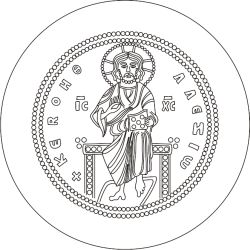 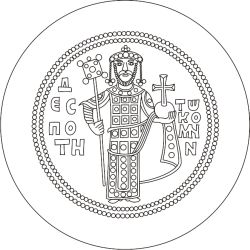 |
|
New Member
Bulgaria
19 Posts |
ALEXIUS I , COMNENUS POST-REFORM COINAGE / 1092 -- 1118 / 2. 4. 7 AE Tetarteron Mint of Thessalonica Struck 1092 -- 1118 Weight 2.90 -- 3.90 g Diameter 20-21 mm Avg diameter 20 mm Die diameter 18 mm Die axis -- 180 ˚ Rarity 1 References: Hendy, p.88, Pl. 8. 10 - 12; DOC IV, Part II, Pl. VII, AE 40. Grierson 1057; Sear 1931. 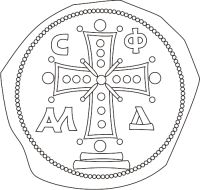 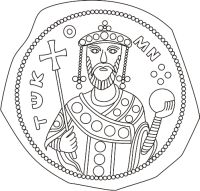 |
|
New Member
Bulgaria
19 Posts |
JOHN II, COMNENUS / 1118 -- 1143 / 3. 3. 2. Billon Aspron Trachy. Mint of Constantinople. Struck 1118 -- 1143. Weight 3.20 -- 5.00 g. Diameter 25-29 mm, average diameter 26 mm. Die diameter 18 mm Die axis -- 180 ˚. Rarity 1. OBVERSE: IC XC in field. Bust of Christ, bearded and nimbate, wearing tunic and kolobion, blesses with right hand in front of chest, and holds Gospels in left hand. REVERSE: circular legend +IWÐ"ECПOTT on left, ПФVPOÐ"NHT or var. on right. Bust of emperor, wearing stemma, divitision, collar-piece and loros; holds in right hand scepter cruciger, and in left, globus cruciger. References: Hendy, p.105, Pl. 10. 9 -- 11, Pl. 11. 1, 2; DOC IV, Part II, Pl. IX, B. 10; Grierson 1070; Sear 1944. 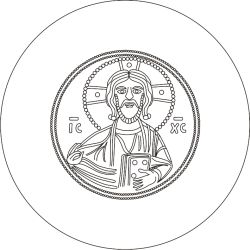 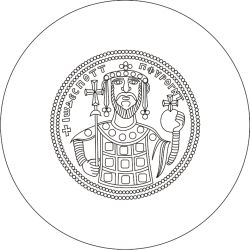 |
|
New Member
Bulgaria
19 Posts |
JOHN II, COMNENUS / 1118 -- 1143 / 3. 4. 6. AE Half-tetarteron. Mint of Thessalonica. Struck 1118 -- 1143. Weight 1.50 -- 2.90 g. Diameter 16 - 17 mm; Die diameter 15 - 16 mm Die axis -- 180 ˚. Rarity 1. OBVERSE: columnar legend O/DI/MI (or H) on left, T/PI/O/s. Bust of Saint Demetrius, beardless and nimbate, wearing lamellar body armour with pteryges, and mantle; holds in right hand sword, and in left, shield. REVERSE: circular legend (+)IW on left, D(E)C on right. Bust of emperor, wearing stemma, divitision, collar-piece, and panelled loros of simplified type; holds in right hand labarum-headed scepter, and in left, globus cruciger. References: Hendy, p. 107, Pl. 11. 15 - 17; DOC IV, Part II, Pl. X, AE 17; Grierson 1078; Sear 1955. 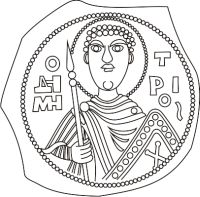 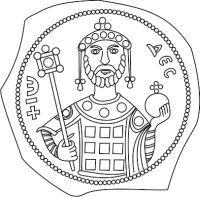 |
|
New Member
United Kingdom
1 Posts |
Lovely drawings....
Wonder what other countries have it illegal to collect ancient coins....?
|
|
New Member
Bulgaria
19 Posts |
Catalogue of the Late Byzantine Coins, vol. 1 (2011) MANUEL I, COMNENUS (1143 -- 1180) 4. 2. 3 Electrum Aspron Trachy Mint of Constantinople Struck 1150 -- 1180 Weight 4.10 -- 4.50 g Diameter 29-32 mm Avg diameter 30 mm Die diameter 21 mm Die axis -- 180 ˚ Rarity 1 OBVERSE: IC XC in field. Full-length figure of Christ, bearded and nimbate, wearing tunic and kolobion; blesses with right hand in front of chest, holds Gospels in left. Two eight-pointed stars in field. REVERSE: circular legend MANOVHL on left, columnar legend O/TE/O/D/O/P/(O/S) or var. on right. Full-length figure of emperor, bearded, on left, and of St. Theodore, bearded and nimbate, holding between them patriarchal cross on long shaft at the base of which a large globe. Emperor wears stemma, divitision, collar-piece, and jewelled loros of simplified type; holds sheathed sword in his right hand. Saint wears chiton, lamellar body armour with pteryges, and mantle; holds sheathed sword in his left hand. References: Hendy, p. 113-114, Pl. 13. 5 - 9; DOC IV, Part II, Pl. XII, El. 4. Grierson 1083, 1084; Sear 1959. 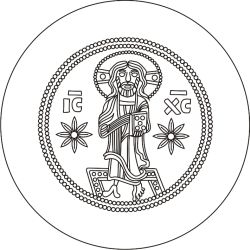 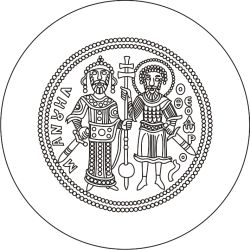 |
| |
Replies: 19 / Views: 7,682 |




 Posted 02/11/2012 11:13 am





