| Author |
 Replies: 8 / Views: 2,731 Replies: 8 / Views: 2,731 |
|
|
New Member
United States
3 Posts |
I have been trying to ID this coin, and have found several close matches but not the exact. If anyone knows more about this coin, I would love to hear your thoughts. Thanks for the help! 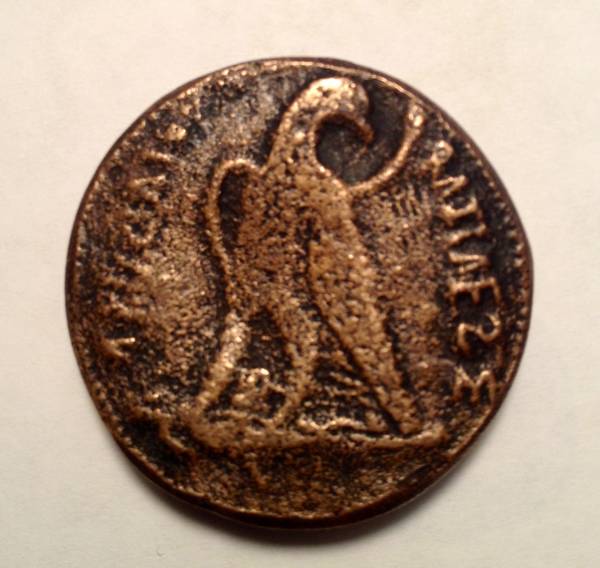 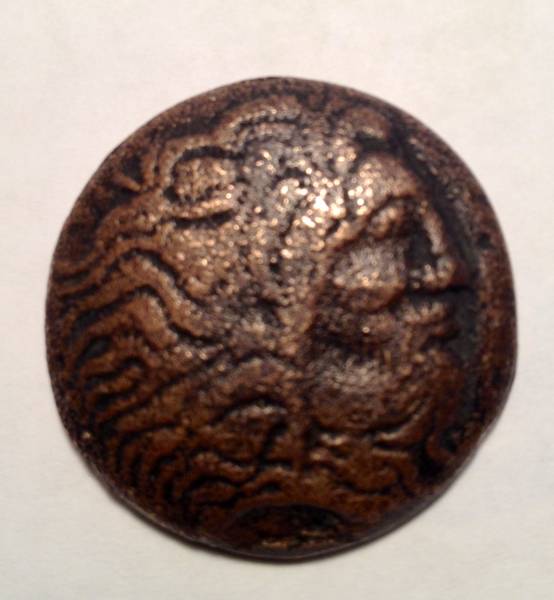 |
|
|
|
Bedrock of the Community
United States
10045 Posts |
 The is similar to the bronze coins of Ptolemaic Egypt. To my eyes, the style of the eagle and other details of the coin aren't quite right. The precise centering of the beads along the rim and the raised edge aren't found on ancient, hammer-struck coins--compare to a real Ptolemy bronze coin below. I suspect this one is a cast copy.   |
|
Bedrock of the Community
Australia
21792 Posts |
My thoughts as well, probably meant for tourists.
|
|
New Member
 United States
3 Posts |
Thank you both for your input! I am brand new to the Coin World and am having fun learning. Here are a couple more photos. The edges really aren't raised as they appear in the first photo. It appears to have been filed. I found this on a website about coin forgeries: "One thing to keep in mind is that there are a few types of genuine ancient bronze coins with filed edges, due to how the blank flans on which the coins are struck were made. This is especially true for some bronze coins from Phoenicia (around Tyre) and most Ptolemaic bronzes after Ptolemy I."Basically, I am hoping that this isn't a fake. Why would someone fake a coin that is not identical to a real coin? Thanks again for your help! 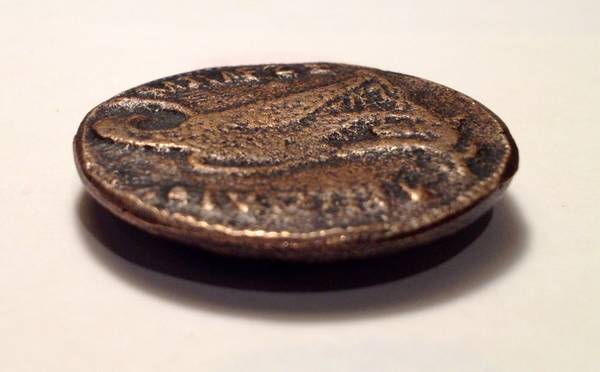 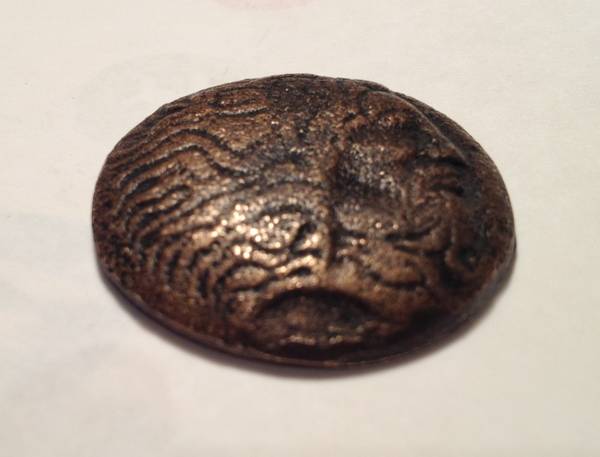 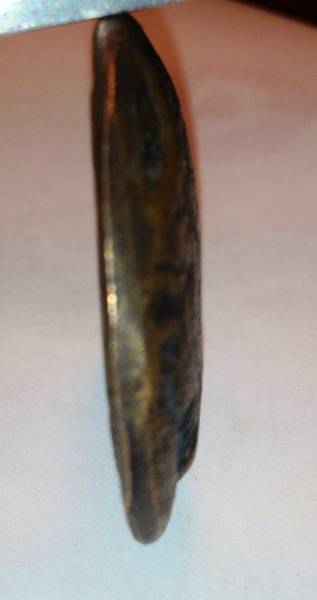 |
|
Pillar of the Community
United Kingdom
2121 Posts |
I am afraid that this is an entirely modern creation. These are made to be able to mass produce at low cost to be able to seel them to tourists.
The style and manufacture are wrong in just about every respect.
Regards,
Martin
|
|
Bedrock of the Community
United States
10045 Posts |
Quote:
Why would someone fake a coin that is not identical to a real coin? As Martin noted, the manufacturing process used to make a coin becomes inseperable with its appearance. This is why it's very difficult, if not impossible, for a cast coin to appear struck like the original; each manufacturing process leaves specific clues. For example, the edge view of your coin shows what is probably a seam where the two halves of the mold were joined. Another difference I see is how your coin was cast as missing detail such as relief and definition on the eagle. This looks much different than a coin that is struck with good detail, then worn down with use. --just my .02 from comparing original coins to copies--I'm learning too!  |
|
New Member
United States
3 Posts |
Bummer... thanks all for your input!
|
|
Pillar of the Community
United States
4778 Posts |
|
|
Valued Member
United States
422 Posts |
kparr! Great place to learn about ancients! |
| |
Replies: 8 / Views: 2,731 |
|







 Posted 02/26/2012 5:18 pm





