











 Posted 03/07/2012 07:03 am


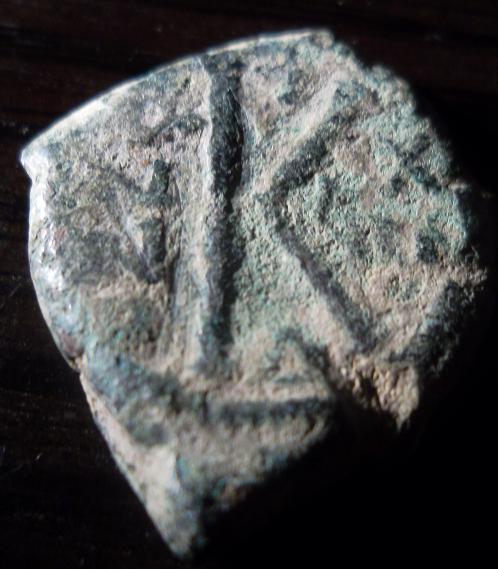
The "K" is the denomination; kappa is the Greek numeral "20". It's a half-follis.
"ANNO XGII" is quasi-Roman numerals for "Year 18" (the "G" is the Greek numeral 6).
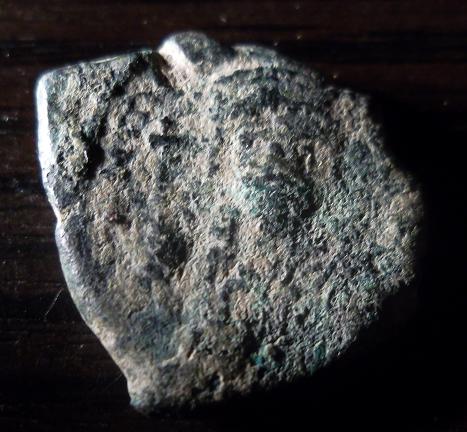
The emperor's titles has an "M" in it. That pretty much restricts the options to Maurice Tiberius, I believe. Sear #497. Year 18 of his reign would be AD 599-600.
Officina delta. My old Sear Byzantine book only lists officina beta for year 18, so it might actually be Year XGIII (AD 600-601).
For the mint, Sear notes it is impossible to distinguish the half-follis of Constantinople, Nicomedia and Cyzicus mints.
"ANNO XGII" is quasi-Roman numerals for "Year 18" (the "G" is the Greek numeral 6).
The emperor's titles has an "M" in it. That pretty much restricts the options to Maurice Tiberius, I believe. Sear #497. Year 18 of his reign would be AD 599-600.
Officina delta. My old Sear Byzantine book only lists officina beta for year 18, so it might actually be Year XGIII (AD 600-601).
For the mint, Sear notes it is impossible to distinguish the half-follis of Constantinople, Nicomedia and Cyzicus mints.
Don't say "infinitely" when you mean "very"; otherwise, you'll have no word left when you want to talk about something really infinite. - C. S. Lewis


