| Author |
 Replies: 12 / Views: 4,050 Replies: 12 / Views: 4,050 |
|
|
Pillar of the Community
Sweden
729 Posts |
I have this beautiful coin, sadly affected by verdigris over time... 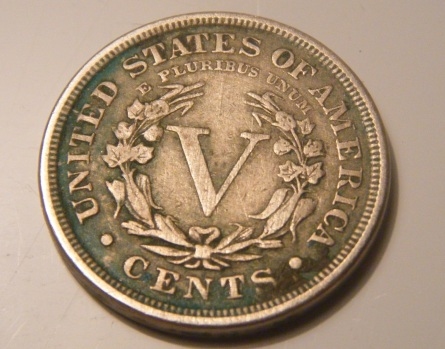 I thought about getting some verdigone. But decided not to use it for one simple reason; The verdigris is oxidized copper from the actual coin, and thus, by removing the verdigris, you are removing matter originating from the coin itself. I looked through the Verdigone thread in here, and find it hard to see that it can actually reduce the copper oxide back to copper again. And if it would do so, the copper wouldn't be a part of the alloy, but sit on the surface as pure copper metal. So my conclusion is that verdicare only removes the copper, which I see as equivalent as removing part of the coin. what are your thoughts on the subject? Do you use it freely on all sorts of coins, or is it more of an "last resort" type of product? |
|
|
|
Pillar of the Community
United States
3284 Posts |
I've used it on a bunch of my IHC's and am pleased with the results. |
|
Pillar of the Community
 Sweden
729 Posts |
yeah, I've seen some great results with verdicare. But I'm not comfortable with what it does to the coin. The verdigris is oxidized copper from the coin itself, and thus by removing the verdigris, you are removing part of the copper content of the coin.
To be blunt, I don't see a difference in using verdicare and cutting a piece of the coin off with a metal cutter.
|
|
Valued Member
United States
333 Posts |
There is a difference, because verdigris spreads and keeps eating at the coin. The specific removal of just the oxidized copper is much better than scuffing up the coin with a cutter or letting it spread. True there is some damage to the coin, but no more damage than was already present on the coin.
|
|
Pillar of the Community
United States
863 Posts |
try using it on a worthless coin first. see how you feel about the results
|
|
Moderator
 United States
23522 Posts |
Quote:
To be blunt, I don't see a difference in using verdicare and cutting a piece of the coin off with a metal cutter. Then just let the verdigris stay and allow it to finish eating the coin away. I understand your concern, but what other solution is there? You may have noted the Verdicare thread you read was probably started by BadThad, a chemist by trade who is the inventor of Verdicare and a long-time member of CCF. It was introduced to the world here at Coin Community. We do not officially endorse it as a product, but if you're going to gain accurate information regarding that product, this is the single best place on the Internet to do so. |
|
Valued Member
United States
162 Posts |
"To be blunt, I don't see a difference in using verdicare and cutting a piece of the coin off with a metal cutter."
It's the same difference between surgically removing a tumor and hacking off someone's leg with a machete.
|
|
Pillar of the Community
United States
3552 Posts |
Does any product currently exist that will NOT actually physically/chemically REMOVE the verdigris nor the oxidized Cu(copper) complex but instead just prevent the verdigris from spreading and causing more damage?
Would such a product(if available) also be able to simultaneously discolor the damaging greenish-colored verdigris to a shade of color more in tune with the coin it is placed on?
I have not researched this issue very much but after reading this thread it appears that such a chemical mixture similar to what I am inquiring about would be interesting.
Please let me know your thoughts.
mdpmedia
|
|
Pillar of the Community
Sweden
729 Posts |
Been thinking about storing the coins affected by verdigris...Why not use the same method as meat packing plats; package in a controlled atmosphere. With a completely air tight displaysystem, and in, let's say, helium or any other noble gas...or even nitrogen, that will stop the oxidization of the copper.
I think that would actually work...If there is a thing as a 100% gas tight casing
|
|
Valued Member
Canada
271 Posts |
This just seems silly to me.
Imagine that you have an antique car. If the car starts to rust, what do you do?
You do something that stops it.
By your logic, this would be removing part of the car.
Yet, if the rust was left alone, it would spread and continue to eat away at the car until nothing was left.
It is the same with your coin. If you apply verdi-care, the verdigris will be gone and your coin will be saved.
If you leave it alone, it will spread to cover the whole coin, and the coin will be worthless.
Verdi-care treated coins can pass PCGS with flying colours, I don't think it would alter the coin itself.
I strongly recommend that you use verdi-care on that coin, but I respect your decision not to.
-oddcoins... No, BadThad is not paying me for this...
|
|
Pillar of the Community
United States
8534 Posts |
I've used Verdi-Care, it's not a harsh chemical at all. It doesn't even change or affect the color of an old chocolate colored Indian.
Oregon coin geek.....*** GO BEAVS ! ! ! ***
|
|
Pillar of the Community
United States
652 Posts |
"The verdigris is oxidized copper from the coin itself, and thus by removing the verdigris, you are removing part of the copper content of the coin."
Not really - the copper has already been removed from the coin to form the verdegris on the surface. The only thing you're removing is a chemical compound that adds nothing to the value of the coin (just the opposite) and further corrosion may eventually destroy the worth of the coin.
|
|
Valued Member
Canada
271 Posts |
 I meant to say this in my last post. If you use Verdi-Care to remove the verdigris, there won't be any copper underneath it. The normal surface of the coin will be underneath it. I've seen the results of Verdi-Care on nickels, and it DOES NOT expose any copper. -oddcoins  |
| |
Replies: 12 / Views: 4,050 |
|










 Posted 03/25/2012 3:58 pm


