| Author |
 Replies: 12 / Views: 1,656 Replies: 12 / Views: 1,656 |
|
|
Valued Member
Canada
155 Posts |
This one might be bait challenging because of the condition. But maybe it has enough to suggest its origin... 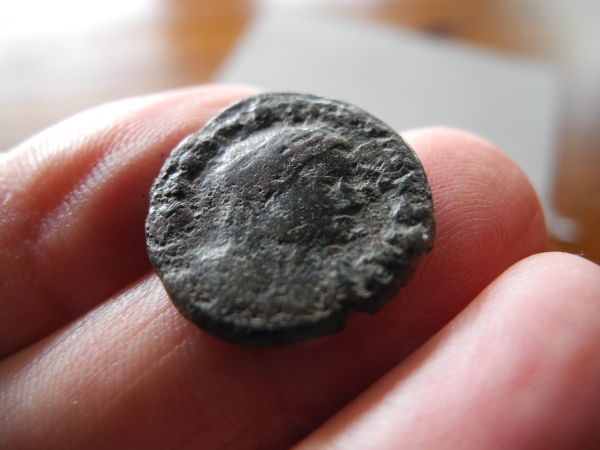 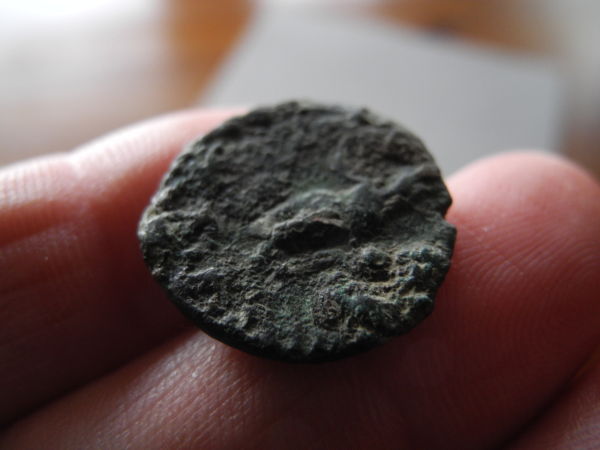 |
|
|
|
Pillar of the Community
United Kingdom
2838 Posts |
 this could be hard, I do though see a figure on the reverse so that should help. I may be seeing things but I think I can make out 'CONSTANTINVS' or something very similar on the obverse, perhaps starting with Constantine and his clan would be a good idea. |
|
Moderator
 United States
23731 Posts |
It looks late Roman to me and as Bobby said could be Constantius.
|
|
Pillar of the Community
United States
842 Posts |
I can honestly say that I can not ID it for you as is. It will, however, be fully attributable if cleaned carefully. My suggestion would be to try and clean it up as best you can. I will go so far as to say it should be a sharp looking coin when completed!  |
|
Valued Member
 Canada
155 Posts |
So a question I have, is how can I clean this coin? This is a new subject for me. I did do a search, but the discussions were mainly around modern coins. Ideas?
|
|
Pillar of the Community
United States
842 Posts |
There are several methods. Most involve soaking the coin for periods of time. You can soak it in olive oil, distilled water, or hydrogen peroxide. Olive oil is by far the longest method of cleaning one can choose, but perhaps the safest. Every once in a while you should remove the coin from whatever you have it in and gently scrub it with a soft-bristled toothbrush.
|
|
Valued Member
Canada
155 Posts |
|
|
Pillar of the Community
United States
4253 Posts |
I'm certainly not guaranteeing this, but I think it may be Constantine I with a SOLI INVICTO or SOLI IN-VI-CTO COMITI reverse.
|
|
Valued Member
Canada
155 Posts |
I've started soaking it for cleaning, and will post updated pics once I make some progress. When we are talking about soaking the coin, are we talking about hours? days?
|
|
Pillar of the Community
Canada
937 Posts |
Sadly, it can take longer than mere days. I had a few late Romans that I had to soak for almost 6 months, and even then they weren't fully clean. For what it's worth, I do know of a rather caustic method of cleaning that doesn't take long at all (the minutes instead of days method), but the coin ends up with no patina at all at the end of it. An aquaintence of mine uses a few common household items in conjunction with a small power transformer to clean his coins. I'm not recommending this method (for a variety or reasons -- harsh fumes and acidic residue, for example), but it does work in cases where the encrustation is just so thick that the coin in as-found condition is a virtual slug. For now I'd just stick to soaking your treasure, and hope that it cleans up decently for you in a reasonable time. You'll be happier with the results. And remember to use a soft brush (ie an old used toothbrush) every couple of weeks or so to see how it's coming along.
Let us know how it turns out!
|
|
Pillar of the Community
United States
4778 Posts |
|
|
Valued Member
Canada
155 Posts |
Thanks. I think I will stick with the toothbrush method> I presume that I can change the water or hydrogen peroxide solution occasionally?
|
|
Pillar of the Community
United States
842 Posts |
Actually you need to change distilled water out every once in a while. If you don't, it loses its ability to sap away the gunk on the coin. As for olive oil, I normally change that every two months, or when it turns an eerie neon green color.
|
| |
Replies: 12 / Views: 1,656 |
|










 Posted 04/14/2012 3:22 pm


