| Author |
 Replies: 9 / Views: 1,474 Replies: 9 / Views: 1,474 |
|
|
New Member
Saudi Arabia
3 Posts |
Dears, This is my first time in this forum. Honestly, I was compelled to register to know the value if there's any (I hope so) and to have your advice, appraisal and comments for my king Philip coin. I'm working and living in Saudi Arabia and I purchased this coin in a flea market. Also, I made some minor polishing to look it nice and able to read details. I really love to have this kind of coin, so this one comes first on my priority to buy though there are so many old coins available. I hope you can reply to the soonest possible time. Brief details: Weight: 16.7 gms Diameter: 26 mm Obverse: Head of King Philip Reverse: A boy riding on the horse with Greek letters Die axis : 12:00 o'clock 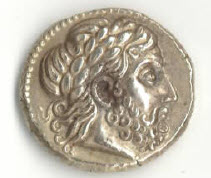 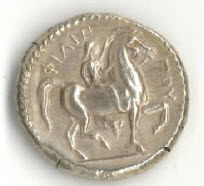 |
|
|
|
Pillar of the Community
United States
2596 Posts |
|
|
New Member
 Saudi Arabia
3 Posts |
|
|
Pillar of the Community
United States
1549 Posts |
The style looks more modern than ancient. 99% of coins of this nature sold at flea markets are fake. Polishing a genuine coin of this nature would reduce its value by at least half. You should not accept my opinion but you should show the coin to a dealer in such objects and see if they wish to buy it. If they offer over $1000 I may be wrong.
|
|
Pillar of the Community
United States
4253 Posts |
 with Doug. However, I am more inclined to say this is a cast fake. I certainly am no expert as I have bought a couple fakes in my life, but this appears to have a sprue in the 7 o'clock position. Examine the edge to see if there might be what would appear as a seam. Also, I do believe Saudi Arabia as very strict Antiquity laws so to be able to find an original coin like this at a flea market makes me suspect. Please don't take my word on this. As Doug said, have a professional handle the coin to be certain. |
|
Bedrock of the Community
Australia
21793 Posts |
If this coin is a good quality cast copy, the detail on the inner faces of the edge cracks will be relatively smooth.
If it is a struck coin (copy or genuine), the inside faces of the cracks will show obvious signs of metal distress, and should be quite rough. Casting does not leave this evidence, and is virtually impossible to reproduce with tooling.
If it is a struck copy, the style has to be closely examined. The best struck copies are made from original dies by a talented die cutter, who intimately understands the mind of his ancient die cutting forebear.
In these sort of cases it is essential for the weight of the coin to be known, and to establish a proven provenance.
Failing that, it should be taken to an experienced specialist, with an established reputation for his opinion. The first question such a professional will ask is:
"Where did you get it from?"
|
|
Moderator
 United States
23731 Posts |
IMO the details look too good to be a cast, but it could still be a copy just struck. If real it's a beautiful coin.
|
|
Valued Member
United States
422 Posts |
Hadn't really looked at Phillip II coins that closely. The link to Wildwinds jessvc1 was interesting. About 99% of the reverses had horses on them. That makes it harder to figure out which reverse coolest has. When I first saw this coin, after seeing many fakes come over the forum, I immediately thought it was a copy. Sel_691's crack comparison is probably the easiest way to tell if it's phony. And JW's 'sprue' sighting is another. I see it now. You guys are pretty sharp. My bet is it's a fake as well. But like all have said before coolest, get a professional specialist to confirm or deny.  As echizento said, if it is real, it a beautiful coin and it would be a great find! |
|
Bedrock of the Community
United States
10045 Posts |
that a flea market isn't probably the best source for genuine coins. If genuine, consider the finder of the coin probably get more money from a dealer than selling at a bargain. Without checking the databases on FORVM Ancient Coins or The Forgery Network, it looks "too good to be true". It doesn't show much sign of age such as pitting due to burial or crystallization, common on coins this old. |
|
Bedrock of the Community
Australia
21793 Posts |
There are a couple of methods to non destructively test for trace metals in a fake or genuine coin. These include:
Spectrophotometric analysis, and
X Ray fluorescence.
I have access, via friend, to the second of these two methods.
The trace metal composition in the alloys of ancient and modern coins is very usually, quite different, and can be used a tool in the identification of fake ancient coins.
I have a book that details how to make fake coins, both ancient and modern. These methods describe how to make good quality dies for striking, and good quality molds for casting.
Appreciation of these methods gives the reader good insight to better identify fakes from the genuine article.
Am I an expert in the ID of fakes? NO! But I hope that others may be made more aware of the methods of both the honest and dishonest.
|
| |
Replies: 9 / Views: 1,474 |
|




 Posted 06/02/2012 08:07 am





