| Author |
 Replies: 21 / Views: 3,819 Replies: 21 / Views: 3,819 |
|
Valued Member
United States
67 Posts |
ok so I have this hungarian medal that I bought at an antique store for $10. Its about the size of a double thick eagle weighing in at exactly 2 ounces. here is the thread with info that never got a conclusive result. https://goccf.com/t/114187This is either completely worthless or extremely rare because even after translating the words I cannot find a single example on the internet for comparison. It seems I need to do an acid test to decide if this is worth its weight in scrap or not. To do the test I need to rub it against a stone which will obviously damage it. Should I just test it? I'm pretty sure there is no market for this medal but I could be wrong in an alternate universe somewhere.    |
|
|
|
Pillar of the Community
United States
3184 Posts |
do you think its gold or silver? hard to tell from pics
|
|
Valued Member
 United States
67 Posts |
sorry, I think its silver. I bought an acid kit but didnt realize I needed a special stone to go with it so I will have the results in a few days.
it appears to have tarnished from my fingerprint on the hair above his ear.
if it was gold I would prob assume only plated and cut it in half just to make sure lol.
|
|
Pillar of the Community
United States
1796 Posts |
There are additional means to test for silver without destroying it with acid or scratching it.
Have you checked for a diamagnetic reaction?
|
|
Valued Member
United States
67 Posts |
if you mean a magnet I have a 29lb pull jeweler's rare earth magnet that does not react to it which is promising.
|
|
Pillar of the Community
Canada
4227 Posts |
I would take a guess and say it's part of a Franklin Mint set... I have no idea if that would make it at all easier to search or not. A close up of the hallmark on the edge would help determine if it's Franklin Mint. I would be surprised if it's not silver, but it's good to find out for certain.
|
|
Valued Member
United States
67 Posts |
on the side FEM is stamped.
on the face there is a very small logo of a shield that says BOZO.
I think I read Bozo was a medallion designer for the Hungarian govnmnt. I checked the Bozo designs and still couldnt find this one.
|
|
Bedrock of the Community
United States
20753 Posts |
Rather than damaging that thing, why not just try some other ideas.
1. Go to the World coin forum here and ask there.
2. Go to Google and type in foriegn coins or Russian coins. Might be a forum for those.
3. Have you tried other forum like PCGS or NGC?
4. Have you tried a coin store?
5. Have some fun and try to find someone in Russia on the internet and ask them.
|
|
Valued Member
United States
458 Posts |
Dont damage the coin! Figure it out the hard way.
|
|
Pillar of the Community
United States
1841 Posts |
Have you tried the ring test? Silver has a distinctive resonance. Try balancing the medal on a gloved finger and tap the side with a pencil. Then try the same using a coin with known silver content for comparison. I use a well circulated Morgan dollar when doing this. It may not be a perfect method, but it is much more gentle than a scratch test. |
|
Pillar of the Community
United States
1796 Posts |
|
|
Bedrock of the Community
United States
20753 Posts |
A long time ago what was called Ham Radios were really popular and with one you could talk to people all over the world. Why not try using the internet to find someone in places like Hungary, Russia, etc. that may well know all about that thing.
|
|
Pillar of the Community
Russian Federation
5186 Posts |
Came in to say: I'm from Russia, and I apparently know even less about this Hungarian medal than you do  Seriously, how did Russia manage to enter the question? This is an obviously Hungarian medal that doesn't have anything to do with Russia (as far as I can tell). Completely unrelated: the link you posted said that a diamagnetic test involves a strong button magnet. As such, I have two questions: 1) does it have to be a button magnet, or would a spherical one do, and 2) how strong (in terms of liftable steel) does it have to be (i.e. is 200-300 grams enough)? |
|
Pillar of the Community
United States
2120 Posts |
Might want to rinse it with Acetone (dangerous stuff, read about saftey with it first) since you have likely gotten finger oils on the face of the coin. If left for too long, it will damage what could be a valuable coin/medal.
|
|
Pillar of the Community
United States
1796 Posts |
@january1may - You can do a diamagnetic test with a larger magnet, but there needs to be some means to slide things around. Diamagnetism is a phenomena where a material exhibits a direct opposite magnetic force if -- and only if -- it's in motion relative to a strong magnetic field. A spherical magnet could work if it's pull is closer to 500 g to 1 kg, which is easy to manage if it's neodymium.
If it's a button (1 cm diameter) you can put the coin in a flip and simply slide the magnet down the outside of the flip. If it's a large magnet, you'll have to slide the coin on the magnet somehow which is harder but doable (with some jiggery-pokery).
|
|
Pillar of the Community
Australia
7096 Posts |
Quote:
A spherical magnet could work if it's pull is closer to 500 g to 1 kg, which is easy to manage if it's neodymium.
How about these, old computer hard drives have these in them. That's a full sized axe not a hatchet  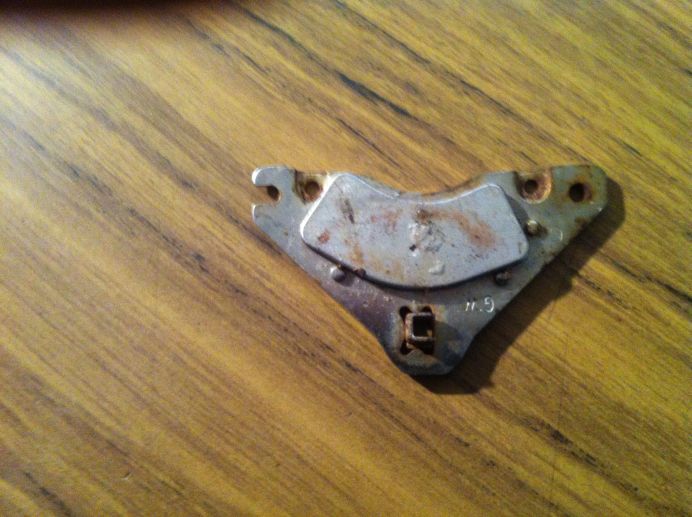 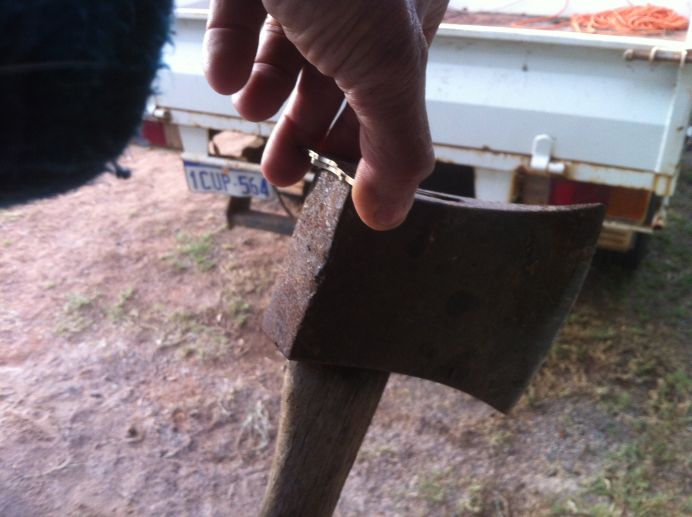 |
| |
Replies: 21 / Views: 3,819 |










 Posted 06/03/2012 5:37 pm


