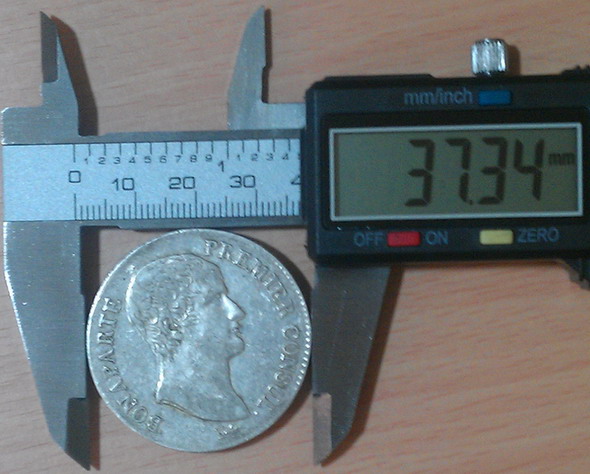
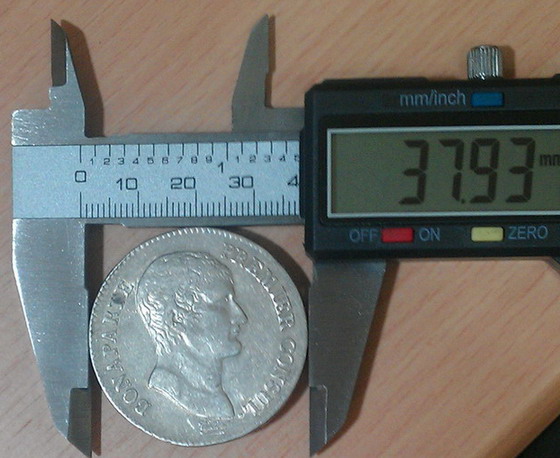
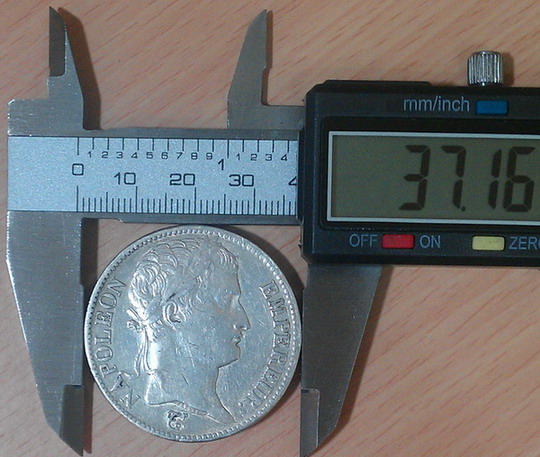
akira0518 - Absolutely true and your measurements are proof of that. The final size of the coin depends not only on the starting diameter but also on the striking pressure used. The higher the pressure - the greater the diameter. This is why the best struck coins are often just a bit larger than a weak strike EVEN if the planchets were identical.
The coins made without a collar may also be slightly out of round as well. The collar (the third die) in a modern coin press does NOT allow for the coin to spread as it would (does) in an open collar press. Stress on the silver blank varies by the shape of the dies - at the highest points of stress (the point where dies normally fracture due to fatigue) typically at the ends of raised features like the point of Napoleon's bust nearest the rim - you can expect a small bit of extra displacement of the flan.
So yes, this fact is CRITICAL to know when hunting for real coins. But the key to using the fact is an accurate dating of when the technology changed.
The later French 5 Francs will be perfectly round (unless they have received post strike damage or unless the planchets were defective.
So once again, research your series BEFORE you buy. Know what they should look like and how they were made BEFORE dropping a lot of money on a fake. And finally always be extra cautious when faced with a great bargain.





 First Page


 Posted 07/05/2012 12:58 pm