



Coin Community Family of Web Sites Join Thousands of Coin, Bullion, & Money Collectors
Specializing in Modern Numismatics 300,000 items to help build your collection! Shop for APMEX Bullion on eBay!Coin, Banknote and Medal Collectors's Online Mall Join Thousands of Coin, Bullion, & Money Collectors Vancouvers #1 Coin and Paper Money Dealer Royal Canadian Mint products, Canadian, Polish, American, and world coins and banknotes.


Username:
Password:
Save Password
Forgot your Password?


This page may contain links that result in small commissions to keep this free site up and running.

Welcome Guest! Registering and/or logging in will remove the anchor (bottom) ads. It's Free!

Is It Rust?

To participate in the forum you must log in or register.
Author Previous TopicReplies: 6 / Views: 1,283Next Topic  
Valued Member
Babar's Avatar
Pakistan
207 Posts
 Posted 06/25/2012  1:28 pm Show Profile   Bookmark this topic Add Babar to your friends list Get a Link to this Message Number of Subscribers
Hey all!

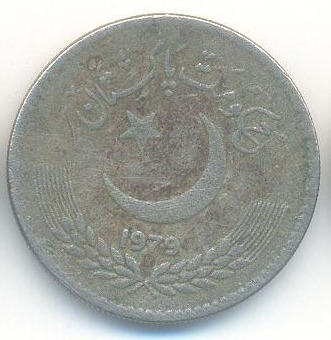
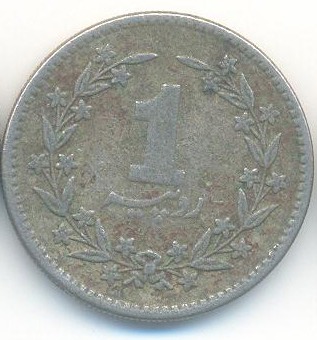
I noticed a common kind of...well...whatever it is in a number of my copper-nickel coins. Is it rust? I dabbed the coin lightly with acetone, then submerged it in acetone for a couple minutes, then poured some (fresh) acetone over it, but there was no change.

Here is a picture example:
Is-It-Rust? Is-It-Rust?

And here is what a (slightly more) normal version of the coin should look like:
Is-It-Rust?

Does this happen to all copper-nickel (or nickel) coins that are not kept carefully? It doesn't appear to hide any of the details, and in some cases makes them easier to see. Would it reduce the any theoretical grade the coin might have gotten otherwise?
There some way to remove it? Do I need to? Should I bother?
Valued Member
Mechman's Avatar
United States
275 Posts
 Posted 06/25/2012  5:06 pm  Show Profile   Bookmark this reply Add Mechman to your friends list Get a Link to this Reply
Not rust. Some kind of environmental damage. Could it have been in the ground?
Valued Member
Babar's Avatar
Pakistan
207 Posts
 Posted 06/26/2012  03:42 am  Show Profile   Bookmark this reply Add Babar to your friends list Get a Link to this Reply
It could be, I suppose. I've had it for about 15 years now,and I got it from circulation, but who knows where it was before that?
It'd be a bit weird though, because I have other copper-nickel coins with similar kinds of "damage" (with varying intensity, of course).
Pillar of the Community
trout1105's Avatar
Australia
7096 Posts
 Posted 06/26/2012  03:50 am  Show Profile   Bookmark this reply Add trout1105 to your friends list Get a Link to this Reply
We call these tarnished coins pub coins here in Aus
Bedrock of the Community
United States
20753 Posts
 Posted 06/26/2012  10:07 am  Show Profile   Bookmark this reply Add just carl to your friends list Get a Link to this Reply
That could be almost anything on those coins. Without knowing the actual composition of them, it is difficult to attempt to figure out what it could be. You say it's Copper-Nickel but is there any Iron in it? What percent of each is there supposed to be. Acetone doen't really remove everything as some assume. And from your photos, not a lot of anything that may be removed with damaging the coin.
Might just be something in the air in your area that combines with either the Copper or the Nickel. If so, removing it may remove some of the metal of the coin too.
And note that RUST is normally just a term used for Oxydation.
Edited by just carl
06/26/2012 10:08 am
Valued Member
Babar's Avatar
Pakistan
207 Posts
 Posted 06/26/2012  12:38 pm  Show Profile   Bookmark this reply Add Babar to your friends list Get a Link to this Reply
According to this website: http://www.chiefacoins.com/Database...a-ul-Haq.htm

It is 25% Nickel and 75% Copper, with no iron. I guess I'll just leave it as is, then. Thankfully I've got another rupee coin of that same year.
Bedrock of the Community
United States
20753 Posts
 Posted 06/26/2012  3:40 pm  Show Profile   Bookmark this reply Add just carl to your friends list Get a Link to this Reply
At 75% Copper that well could explain some of that STUFF on the coin. Copper does have a habit of combining with numerous different elements and some do create that effect.
For example when Copper is exposed to moist air it first formes a layer of Cuprous Oxide. From this, if enough CO2 is present, it begins to form Copper Carbonate which is somewhat what your coin appears to have. Regardless, from the amount present, removing any may well remmove to much of the coin's metal. Best leave it alone and attempt to just stop further problems.
  Previous TopicReplies: 6 / Views: 1,283Next Topic  

To participate in the forum you must log in or register.


Disclaimer: While a tremendous amount of effort goes into ensuring the accuracy of the information contained in this site, Coin Community assumes no liability for errors. Copyright 2005 - 2026 Coin Community Family- all rights reserved worldwide. Use of any images or content on this website without prior written permission of Coin Community or the original lender is strictly prohibited.
Contact Us  |  Advertise Here  |  Privacy Policy / Terms of Use

Coin Community Forum © 2005 - 2026 Coin Community Forums
It took 0.3 seconds to rattle this change. Forums