










 Posted 07/04/2012 08:25 am


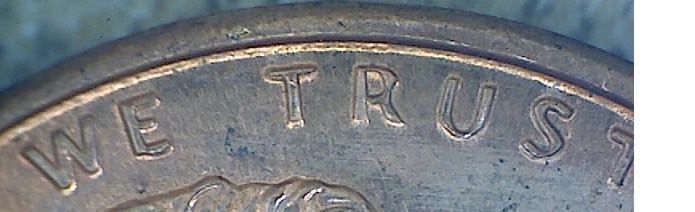
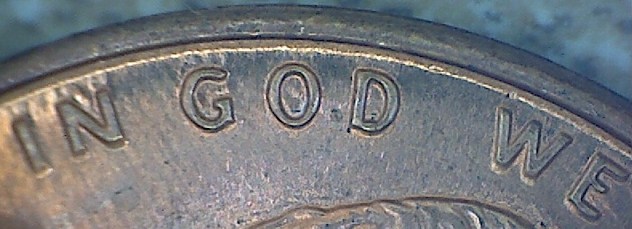
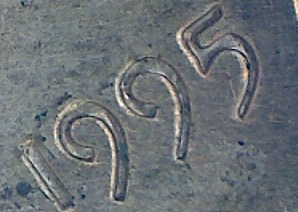
Actually, the letters may have been deformed by letter flow that occurred during the strike. For reasons that are unclear, even coins struck fully within the collar will sometimes show slight metal flow.
Another possibility is the subcategory of machine doubing that Alan Herbert has designated "slide doubling". In such cases the die, after reaching the point of maximum penetration into the planchet, shifts laterally, dragging itself through the newly-struck design.
Because the affected elements are deformed, and not simply thinned, this would not be a case of intentional die abrasion. And although Die Deterioration can cause letter and number deformation, significant thinning is generally not part of the equation.
Another possibility is the subcategory of machine doubing that Alan Herbert has designated "slide doubling". In such cases the die, after reaching the point of maximum penetration into the planchet, shifts laterally, dragging itself through the newly-struck design.
Because the affected elements are deformed, and not simply thinned, this would not be a case of intentional die abrasion. And although Die Deterioration can cause letter and number deformation, significant thinning is generally not part of the equation.
Error coin writer and researcher.


