| Author |
 Replies: 8 / Views: 1,947 Replies: 8 / Views: 1,947 |
|
|
Pillar of the Community
United States
4337 Posts |
|
|
|
|
Moderator
 United States
23522 Posts |
Kinda depends. This obverse die, with the raised 3, was used twice. Die pairs designated as JR-5 (common) and JR-7 (scarce) both used it, and an image of the reverse will be required to tell which yours is. Yes, I could tell you what to look for, but I want to see it. Tell you then.  |
|
Pillar of the Community
 United States
4337 Posts |
Here's the reverse...PLEASE let me know what you see because I found an EF40 pic online and I would like to know what I am looking for...it's like a "Where's Waldo" to me and I can't frigging find Waldo!  Angle for the surface shot...nice and original it seems to me 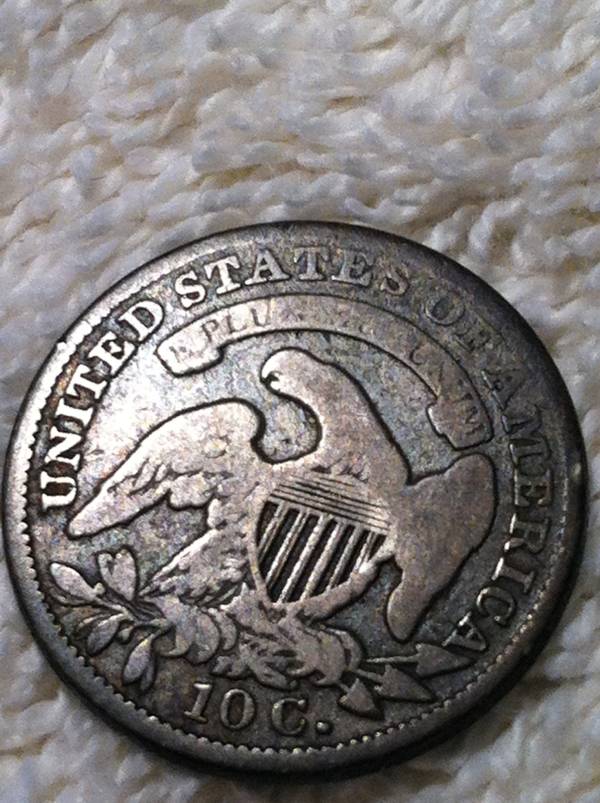 head on... 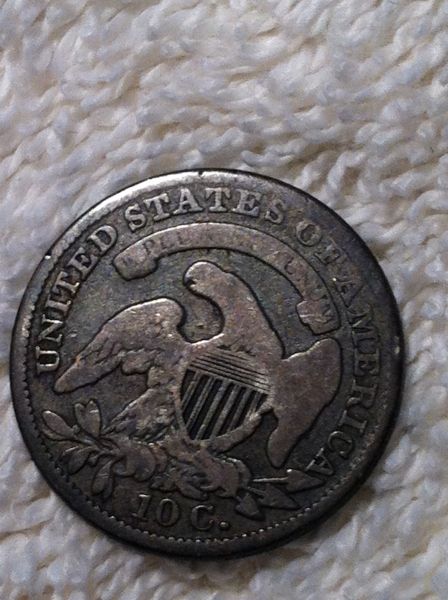 |
|
Pillar of the Community
United States
4337 Posts |
Does anyone know anything about a Jr-5 versus JR-7 die difference? I found pics online but I only see like little angle subtleties on the reverse , so does that mean the die was struck in a different, rarer pose? Like, errrr...  ...I don't get it Beavis... |
|
Moderator
United States
23522 Posts |
The most easy way to tell these two varieties apart is the reverse legend. JR-5 has more widely-spaced letter- and word-spaces, JR-7 much more tight ones. The single easiest telltale is the relationship between the S in PLURIBUS and the S in STATES; your coin is worn to the point where that's not possible so we revert to overall spacing in the legend. The distance between the OF in OF, and the space between that F and the A in AMERICA, indicate to me this one is JR-5. Other specific letter relationships confirm this.
|
|
Pillar of the Community
United States
4337 Posts |
still a bit more numismatic value anyway though, no?
|
|
Pillar of the Community
United States
4337 Posts |
You're 100% correct dude. Look at this link and go back between the two dies http://www.byronreed.com/byrons_col...1833jr07.htmA way I think I found to tell on my coin is the relationship between the "O" in OF as it sits above the "U" in Unum On the link you can see clearly on the JR-7 the O is moved over to sit more directly above the U The might be the best lesson I ever had on this site...thanks man! |
|
Moderator
United States
23522 Posts |
Have a look, though: "E PLURIBUS UNUM" is unchanged on both varieties. It begins at the same place below the D and ends at the same place below the M. Although, like other Bust coinage, the first place I look for attribution is the relationship between E PLURIBUS and the legend, on worn coins like yours sometimes you have to broaden your view to other stuff. It's only the differing position of the O on your coin, and you wouldn't need the you at all to tell this. You know how you said before: Quote:
I don't get it Beavis Well, you do now. This is one of the major methods for attributing Bust coinage. And to address your previous question, it has numismatic interest to a variety collector but probably not much additional value. They're too available in higher grades. |
|
Pillar of the Community
United States
4337 Posts |
excellent Dave! Thanks again!
|
| |
Replies: 8 / Views: 1,947 |
|










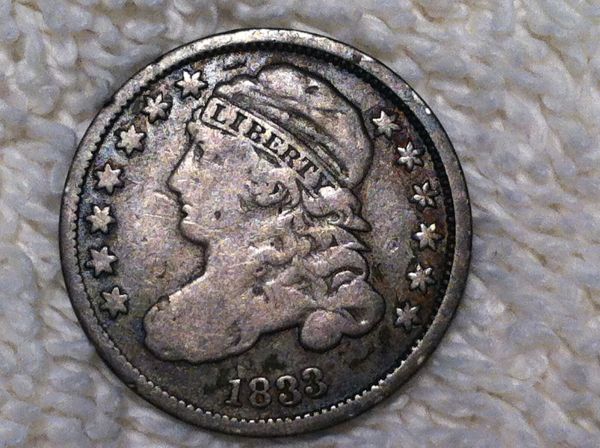
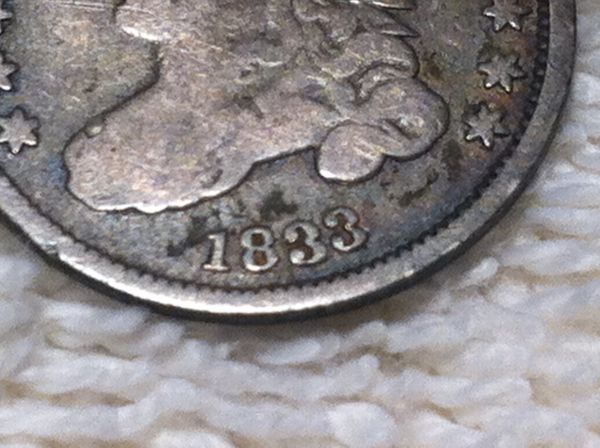


 Posted 07/03/2012 10:43 pm


