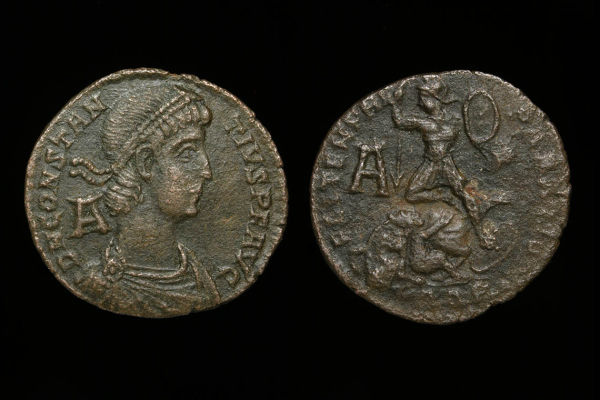
The field letters on the FH coins include A, B, gamma and Delta but then jumps to S. They were used by several mints with the relative sizes being the same. Gamma is by far the most common so I assume that the gamma weight standard remained in place longer. Because of the way the letters clustered at the start of the alphabet I have assumed that the series were just marked in order as changes were made but wonder if some might have a meaning like S could stand for semis but that is just a guess. There are of course many other marks that are not part of the same sequence including Roman numerals up to III. The only one I understand is LXXII which indicated 72 coins were struck from a pound of metal. The whole matter gets more confusing when we have letters on both sides. LXXII coins have A on the obverse as do some gamma and III coins. There are even A obverse coins with reverses bearing both S and LXXII. Meaning? Why do most of the S coins have a dot on either side of the letter (.S.)? The last field letter used was M and some people say that 1000 such coins might equal a larger value (solidus?). I don't know.
In the mid 19th century it became fashionable for a hundred years or so to study coins closely and produce die studies that answered a lot of questions about the selected coins. One example is the work on silver of Syracuse by Boehringer. No one ever tackled the dirt cheap late Romans partly because the vast quantity of material would make the study ten times as complex and partly it is easier to get funding to study sexy coins than junky copper.
I am not a serious numismatist. My 'calling' in the hobby was to write web pages to try to ease beginners into the study of coins rather than just buying things and learning nothing. A number of my earlier readers now are far beyond me in the study of their chosen specialties and nothing makes me happier than to learn from them. If anyone here ever figures out the weight standards and markings of the FH period and writes it up either online or in a book, I hope they will share it with me.
I will point out one thing that must be understood by anyone undertaking this study. Most coins were issued on what is called an al marco standard system. That means that a certain number of coins were issued from a certain amount of metal. It does not mean that a lot of effort was put into making each coin in the batch weigh exactly the same. When you get a coin that weighs too much or too little to match the RIC listing, you have to get over jumping to assumptions on the meaning. In some periods, coins were individually adjusted (that is called al pezzo) and a student needs to know what rules were in place before getting bent out of shape about the weight of their coins to the third decimal place.






 Posted 07/09/2012 11:56 pm





