| Author |
 Replies: 8 / Views: 1,858 Replies: 8 / Views: 1,858 |
|
|
Moderator
 United States
23731 Posts |
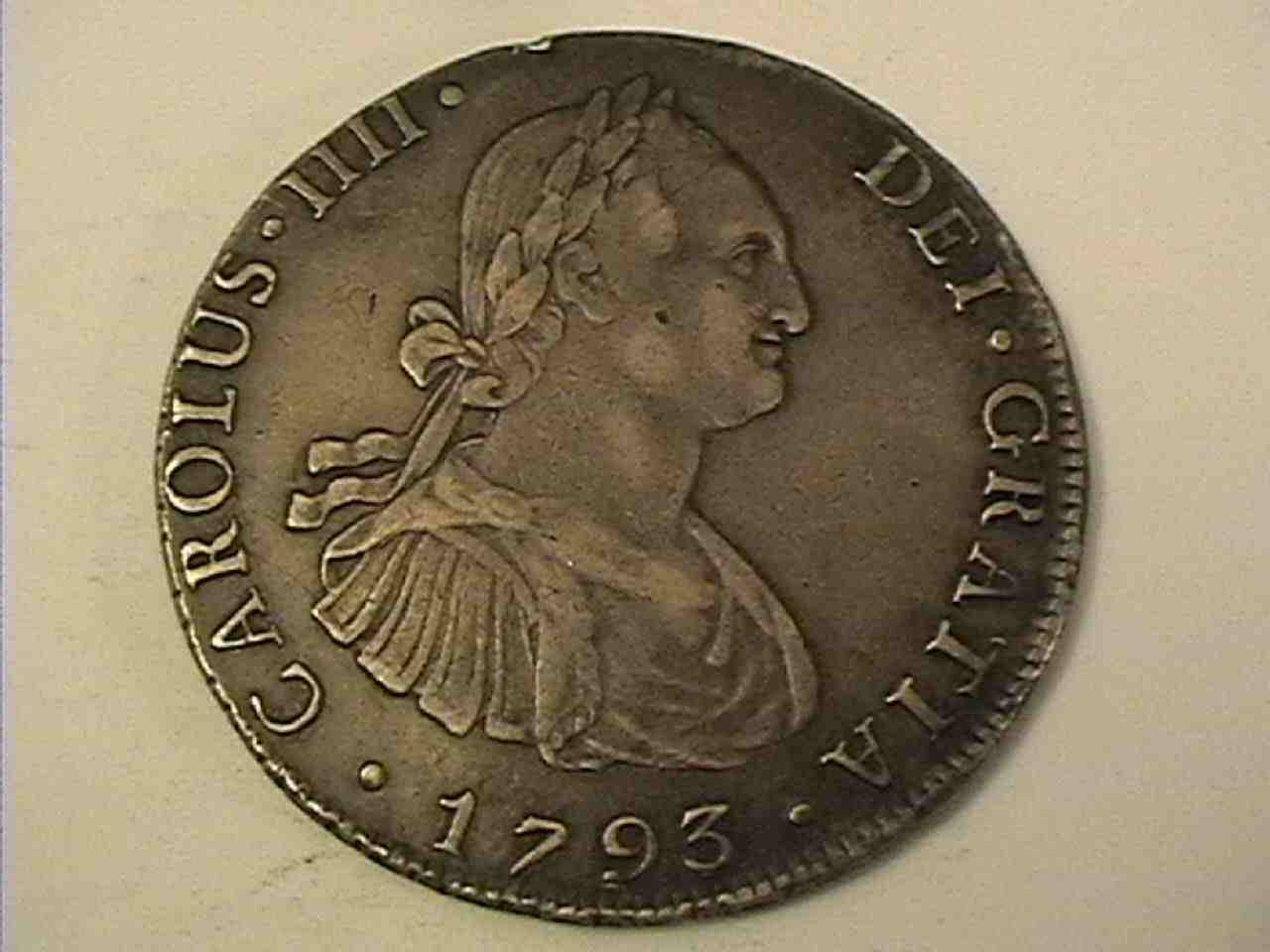
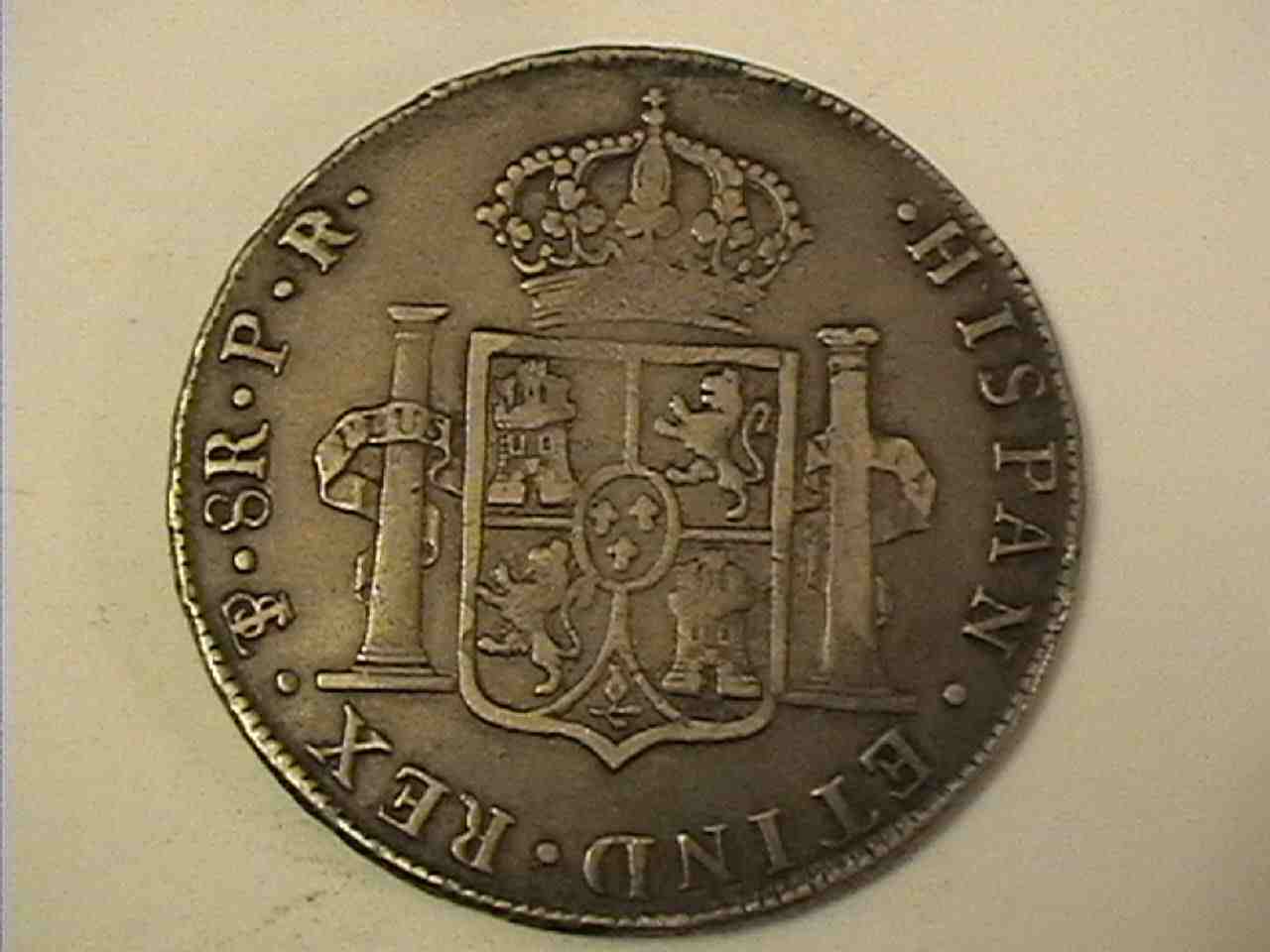
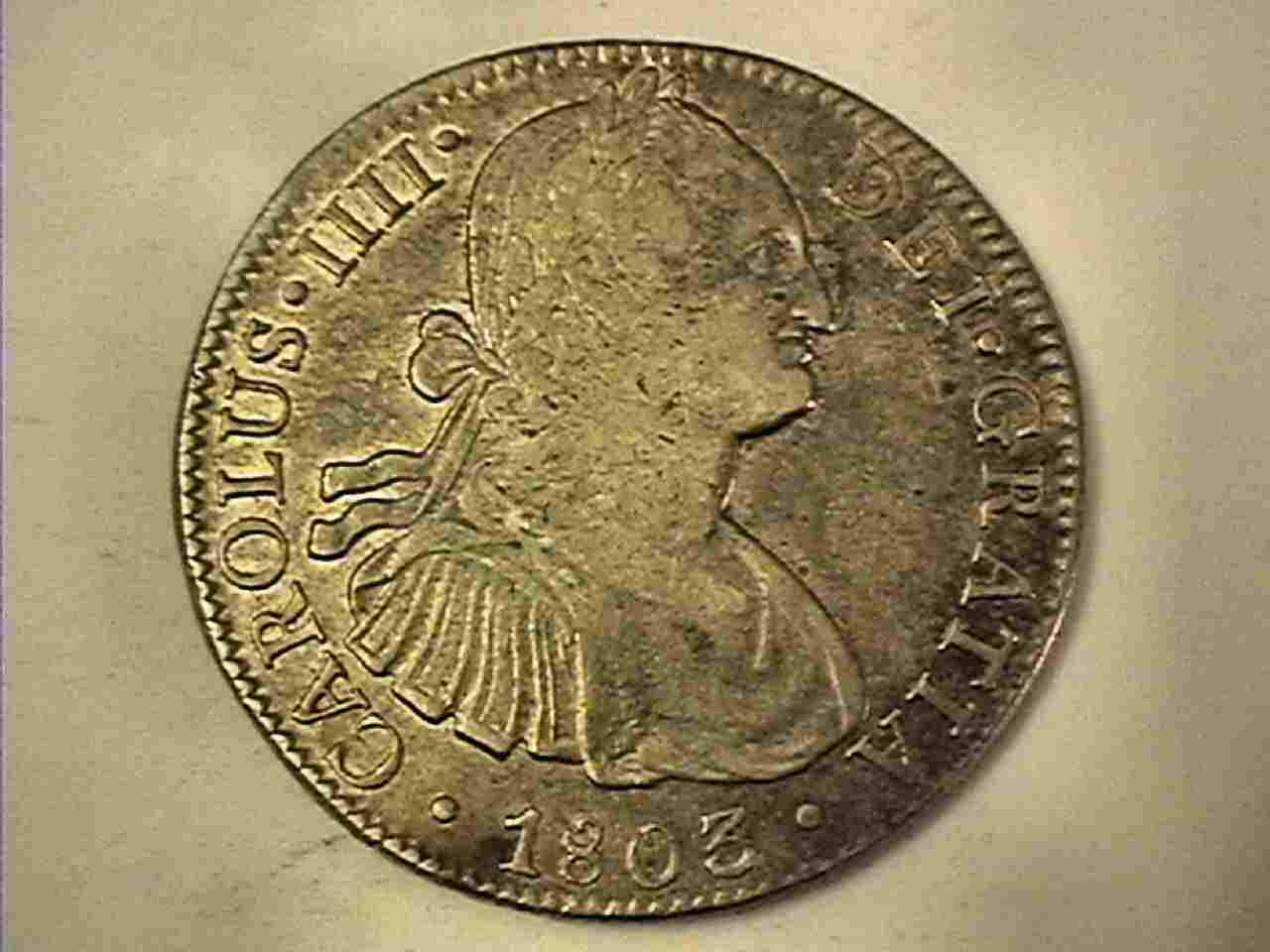
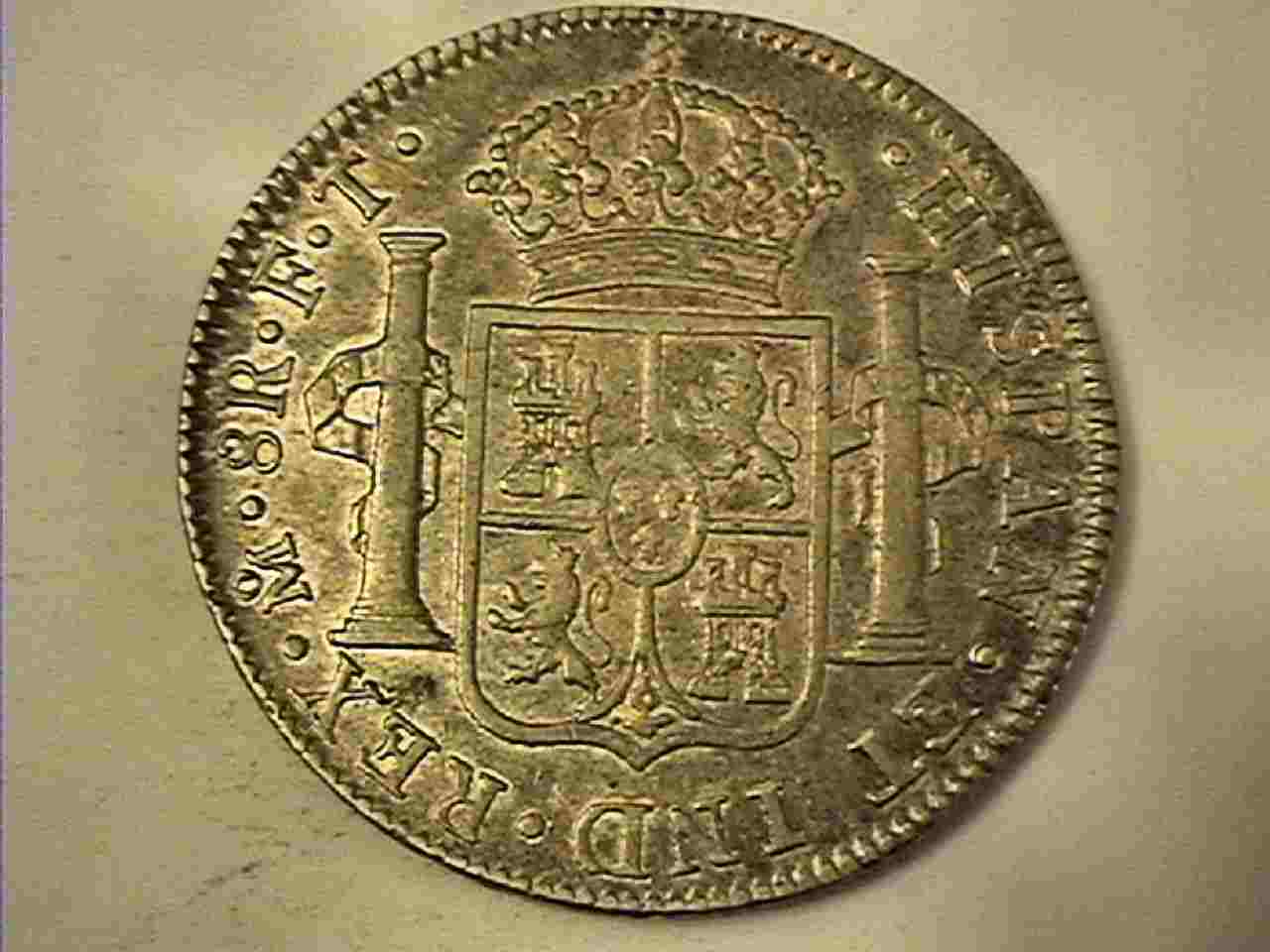
I bought these coins a number of years ago and believe that they were the real thing. I have been reading all the excellent posts on this subject and have come to the conclusion that I am no longer sure if they are genuine. So I wish to defer the more knowledgable collectors (swamperbob, et el) what your thought's. All are on or about 26.9 grams. Coin #1 is 42mm, #2-40mm an #3-41mm. Thanks for the help, Ron Image:  pd1a.jpg pd1a.jpg65.67 KB Image: pd1b.jpg68.18 KB Image: pd2a.jpg68.18 KB Image: pd2b.jpg70.65 KB Image: pd3a.jpg59.1 KB Image: pd3b.jpg60.22 KB |
|
|
|
Valued Member
United States
235 Posts |
Just a guss: #1 and #3 look real because the denticles run off the rim of the coin in places, indicative of being minted on an actual screw press. #2 has denticles all around the rim and has that pitting typically associated with cast copies. But I certainly am no expert like swamperbob. I am s eager as you to see his opinion.
|
|
Pillar of the Community
Czech Republic
803 Posts |
The weight sounds about right. Could you tell me what the edges look like? If you follow the edge pattern, do you see an overlap? And if you do, is there one right across from it, as well?
Having said that, #3 is the only one that raises a flag for me. I'll take a closer look tonight, however there are a few things on the reverse that are very suspicious.
#1 has unusually smooth surfaces for the type (which may not be indicative of a counterfeit by itself) and Fleur-De-Lis appears to be re-worked.
#2 looks fine to me.
~Roman
|
|
Moderator
 United States
23731 Posts |
Was hoping swamperbob would weight in on these.
|
|
Pillar of the Community
United States
5362 Posts |
echizento - sorry I took so long to get back to the forum, but my wife was a juror on a three week long trail of a medical malpractice case - and I was pushing her wheelchair. Now that the case is over - in favor of the defendent - I can get back to reality.
I noticed that the comments made included some comments I would make myself. Most notably - please check the overlaps!
The 1793 Bolivian 8R looks absolutely correct to me. I see matching punches - an obviously struck coin and 26.9 grams would be about perfect for wear. So I would only caution that you check the edge.
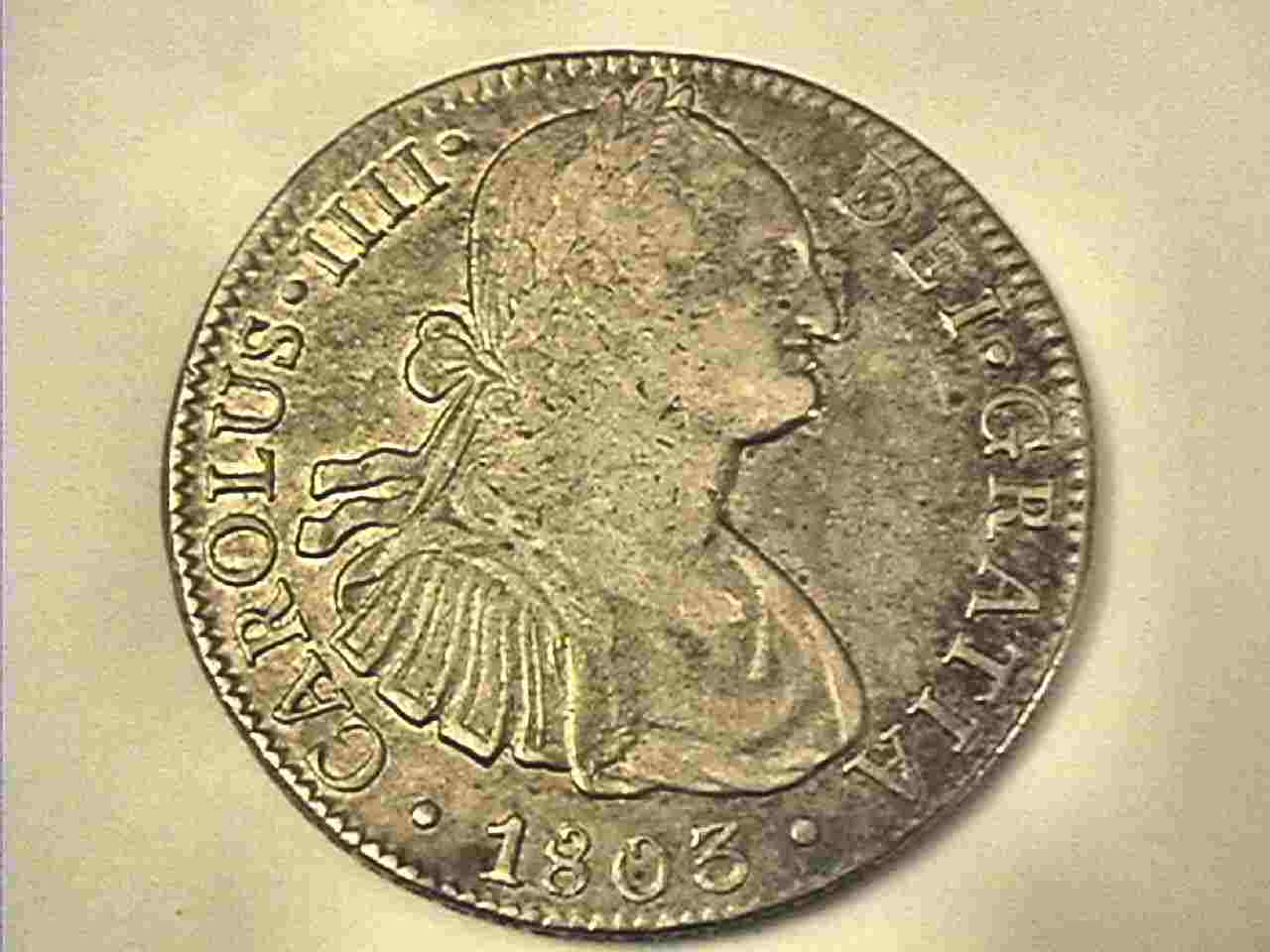
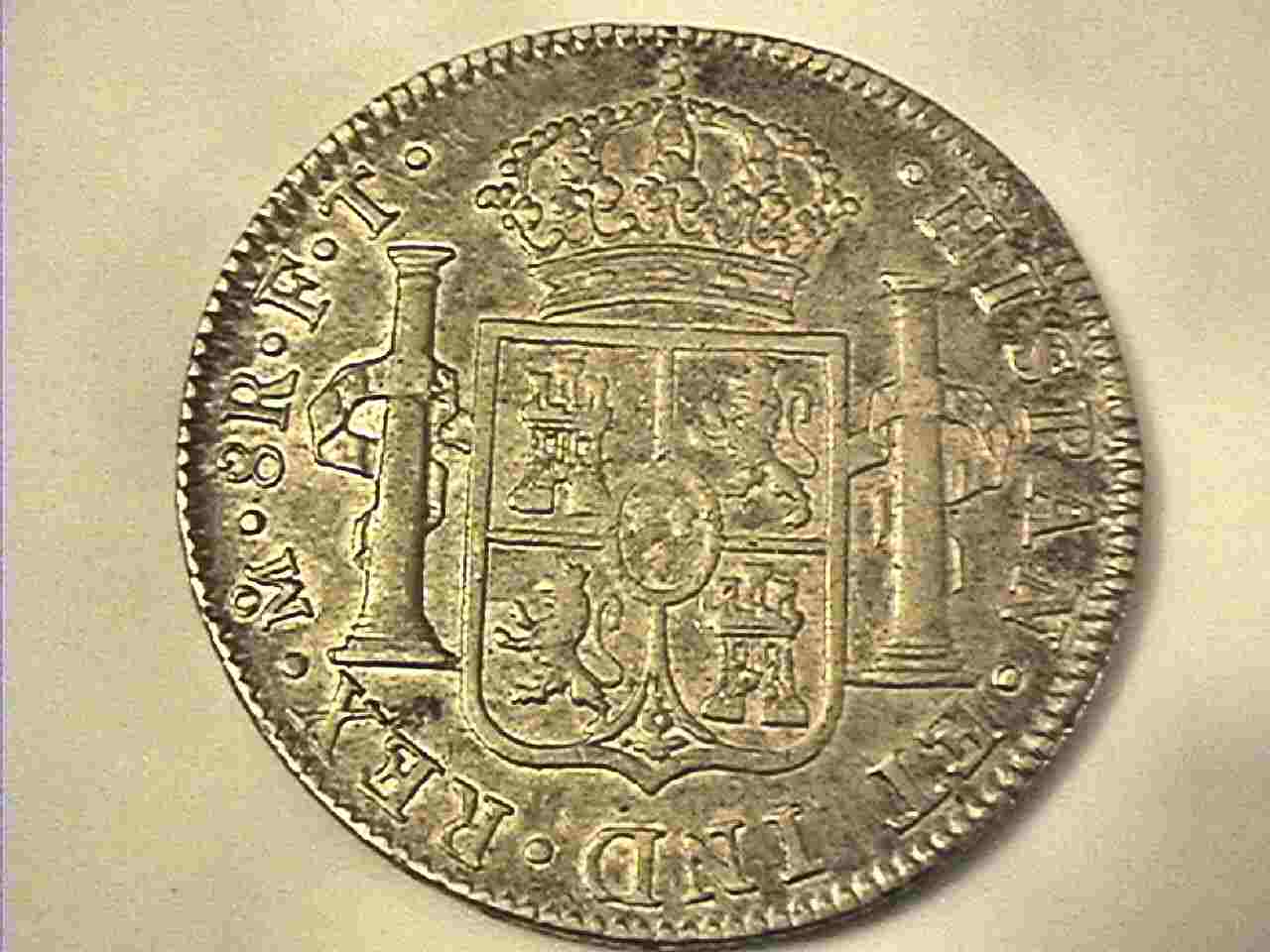
The 1803 Mo FT Mexican 8R is a grainy picture - can it be re-taken? I noted the reply that this might be a cast copy. That is possible. There are a number of dark spots which could be either post strike damage or possibly evidence of casting - BUT I really can't tell from these pictures. I am leaning toward real unless I see something clearly pointing to a forgery. The fonts used for the letters and numbers are the correct shape. There may be "something" right in front of the King's nose that could be an issue but I can not see it clearly. If the weight is 26.9g once again - that is correct. However, counterfeits made for merchant use in the mid to late 1890s were the correct weight. So once again the edge is absolutely critical. If you get better scans I would love to see them.
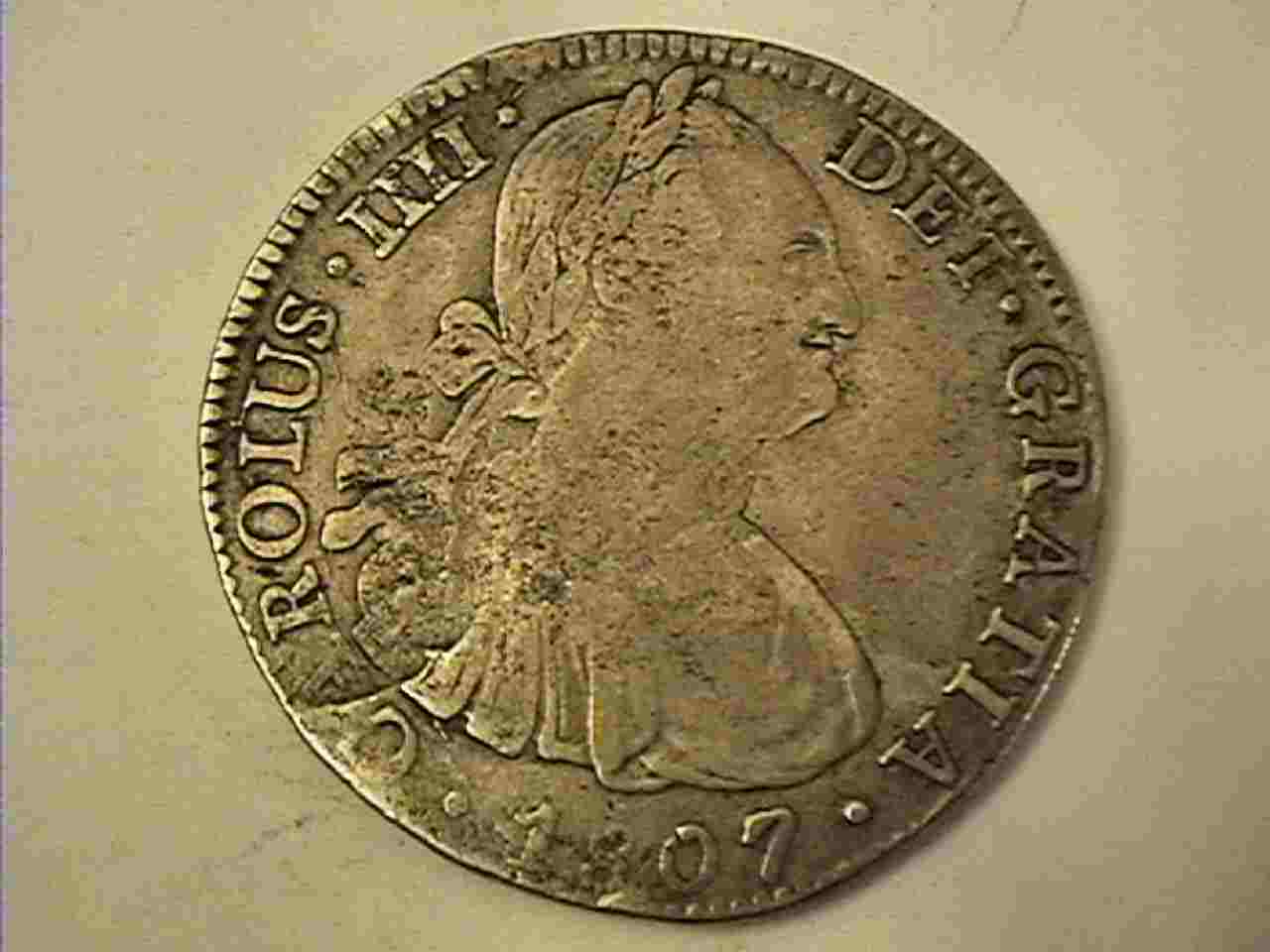
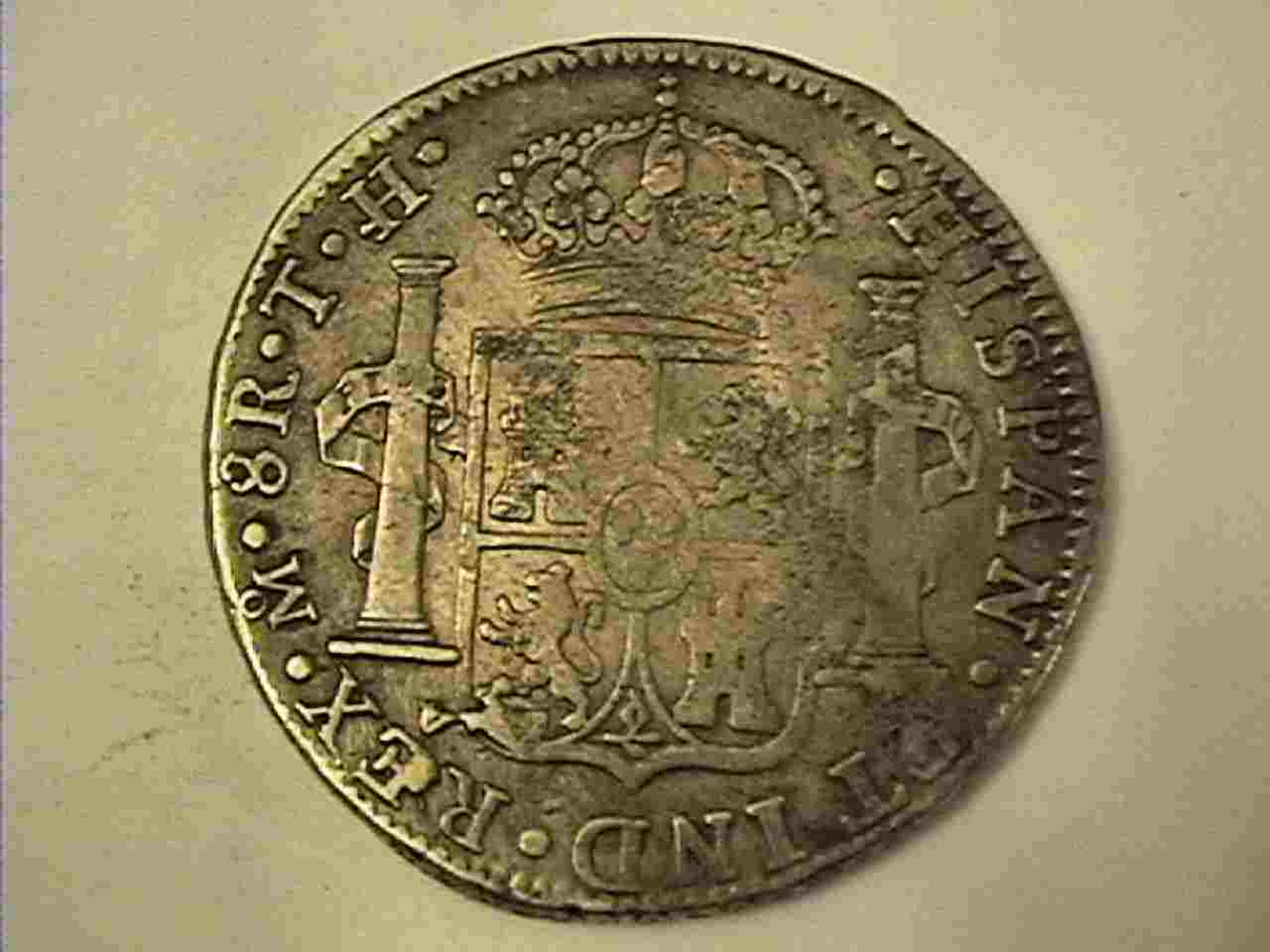
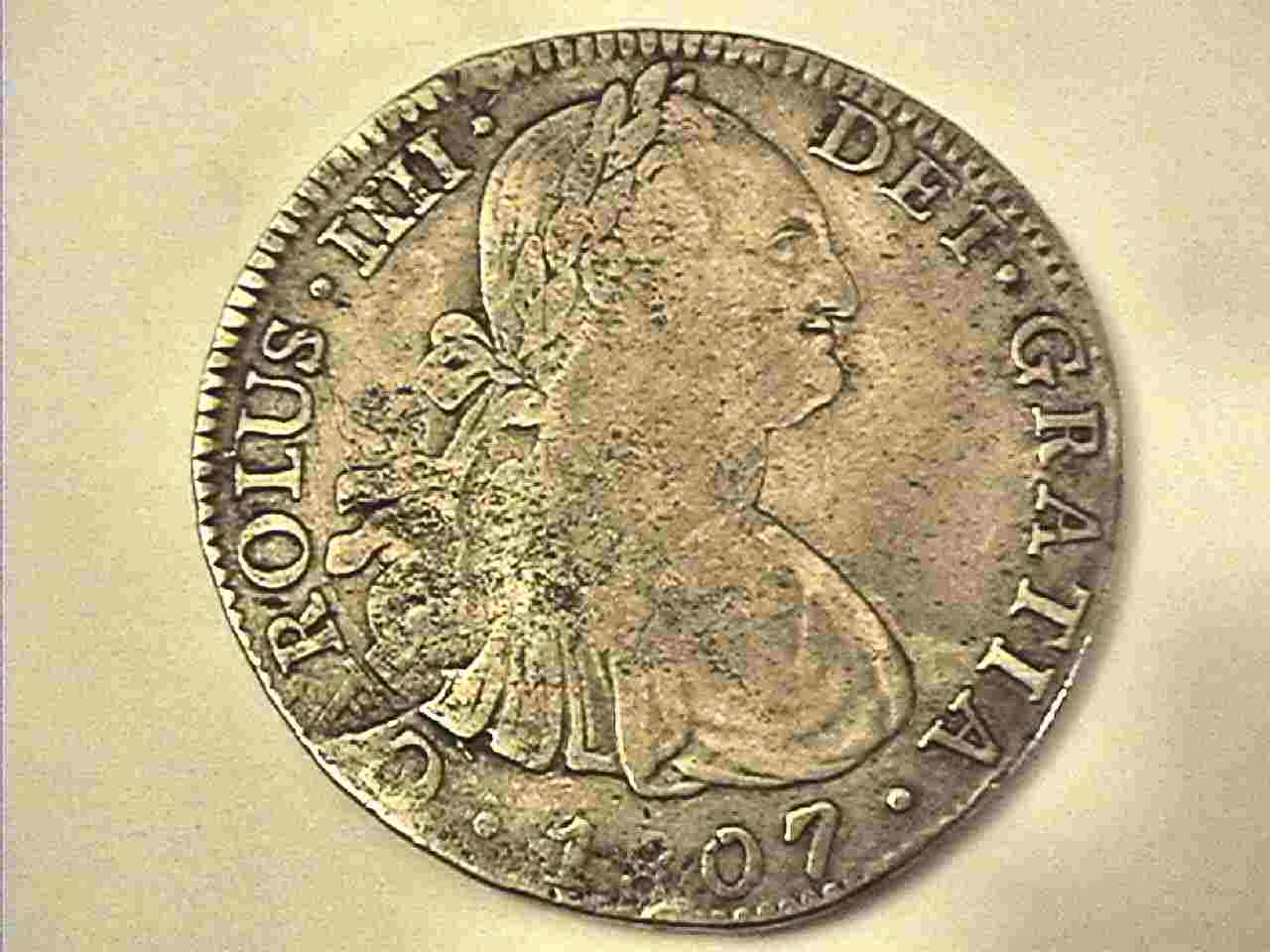
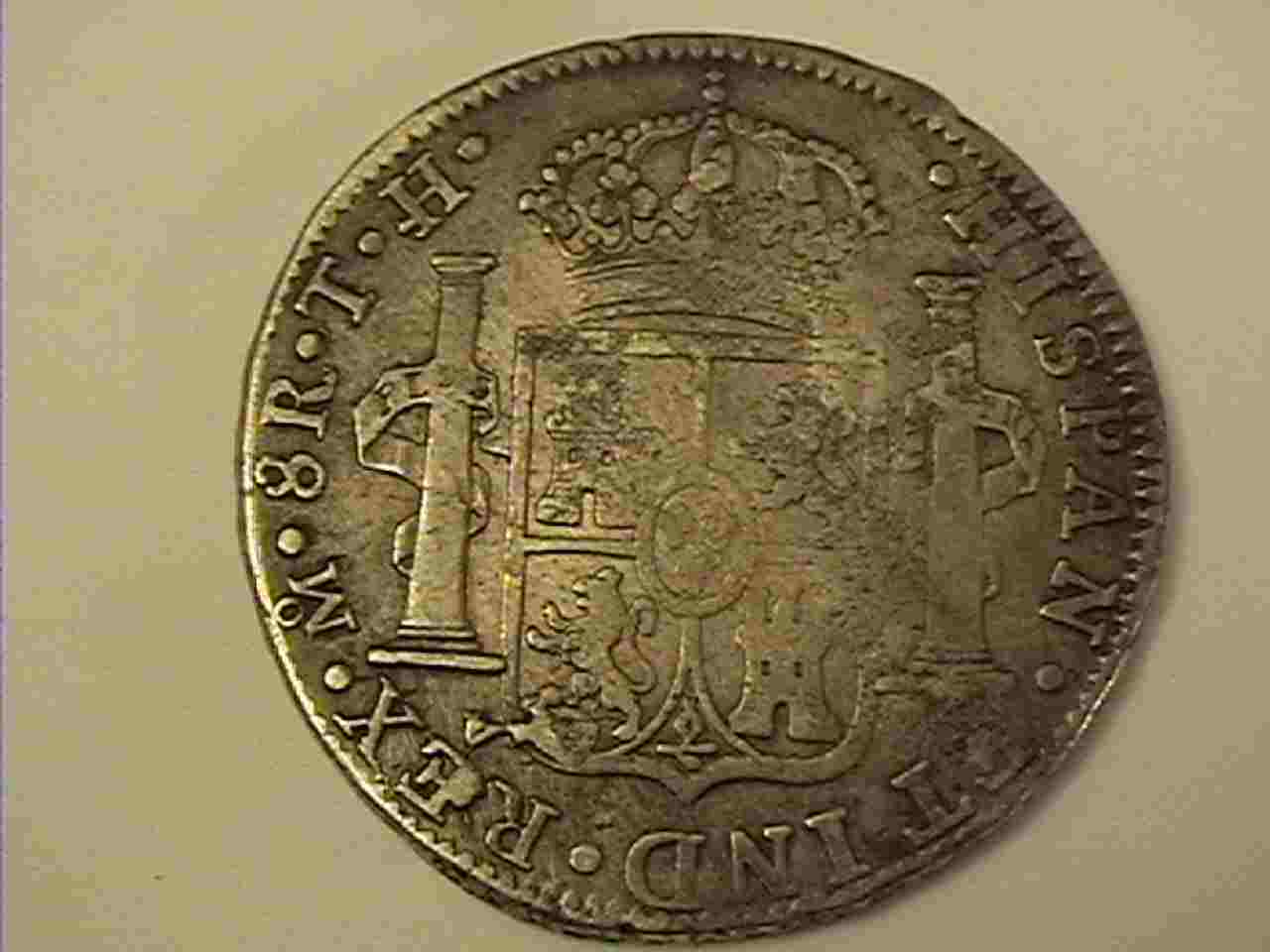
The 1807 Mo TH Mexican 8R is the MOST suspicious based on these scans. I am concerned about the overall appearance. I think higher resolution pictures could help but what I see is a bit too much in the way of die chipping. But more than just the number of chips it is the position and shape of the chips themselves that gives me concern. Look at most 8Rs and chips are usually outgrowths of small cracks or splits. They also tend to occur at points of stress concentration. The one exception is a bad die with surface voids - but these were a problem during the Revolution (War of Independence). The earlier Royal dies were made with a better grade of steel. For some specific concerns, consider the following. There is a small line segment above the C in Carolus near the Bust that looks correct. It looks like a small enlarging crack and that is a high stress area. Compare that with the cluster of lumps between the E in REX and the lower left lion. The outline of the shiled is a low stress area yet here are an odd accumulation of lumps. Are there stress cracks in the area? On the Crown - I am bothered by the chipping of the die in areas not all that typically damaged on real coins. Look inside the crown for "enlarged" details caused by chipping of the edges of the design. This type of damage is often associated with molds that are weaker than dies and with soft metal dies created by impact transfers. This one could be real but I am really hesitant. Also what caused the damage that runs through the A in Carolus? There almost seems to be a ghost second image - a possible multiple strike? Remember that multi-struck coins are often forged. The counterfeiters often used presses with lower striking pressures so multiple strikes are common in the forgeries.
Anyway, I would like to see better scans and I would like to see the edge or at least get a report on the overlaps before making a final judgement.
Edited by swamperbob
03/19/2007 7:24 pm
|
|
Moderator
United States
23731 Posts |
Swamperbob et al,
Hopefully here are some better images of the coins in question.
1803- There is wear and some dings on the face ( not really pitting. There is some luster between the lettering. The lettering is sharpe and well defined. On the reverse, there is minor wear, the lettering is sharp and well defined. The appears to be a slight die break running from the top of the mint mark through the 8R and through F to the dot before the T. There is also some luster between the lettering and in the crown.
1807- This coin is somewhat out of shape, looks like it was struck something leaving a dent between the C and A and some flating and elongation at the date. The coin is worn and there appears to be some die errors between the LU on the name. Also a die break in the IIII. The dentals seem somewhat flattened, and the is some pitting on the obverse. On the reverse there is some pitting, there is extra metal in the sheild on the lower lion and on the E in REX. Also there is extra coming off the H. Now that I have really taken a long look at this coin, I would venture to say fake.
If these two coins are fake, do you feel that they are recent copies fron China or older.
Thanks for all your help.
Ron
The images are not loading so I will try them later.
|
|
Moderator
United States
23731 Posts |
Edited by echizento
03/20/2007 08:37 am
|
|
Pillar of the Community
United States
5362 Posts |
echizento The new pictures make the 1803 look just a little better - I am still concerned about the spot in front of the King's nose.
The 1807 looks a lot worse. I am fairly certain that the 1807 I a cast copy. On the shield side at the bottom, I believe I can see a seam line running right around the edge near the corner of the coin. This is a popular spot for a mold seam.
How do the edges look? Have you checked to see if the overlaps are paired?
|
|
Moderator
United States
23731 Posts |
Swamperbob,
Can't really get the images any clearer, (limited to upload resolation. On the 1803 it's a shadow in front of the face. After what you have pointed out I agree that the 1807 is a fake. Do you think it's recent or and older copy?
I have tried to take a picture of the edges but have not been able to get a good enough image to post.
Thanks for your help.
Ron
|
| |
Replies: 8 / Views: 1,858 |
|










 pd1a.jpg
 pd1b.jpg
 pd2a.jpg
 pd2b.jpg
 pd3a.jpg
 pd3b.jpg

 Posted 03/07/2007 09:19 am


 03a.jpg
 03b.jpg
 07a.jpg
 07b.jpg


