| Author |
 Replies: 10 / Views: 2,626 Replies: 10 / Views: 2,626 |
|
|
New Member
United Kingdom
20 Posts |
Hey there, I have only recently started to observe british error notes. How frequent and common is blank reverse as an error on british notes? I have seen it on £1 1970 series only...and then I came accross this one. Thanks for any comments. Peter 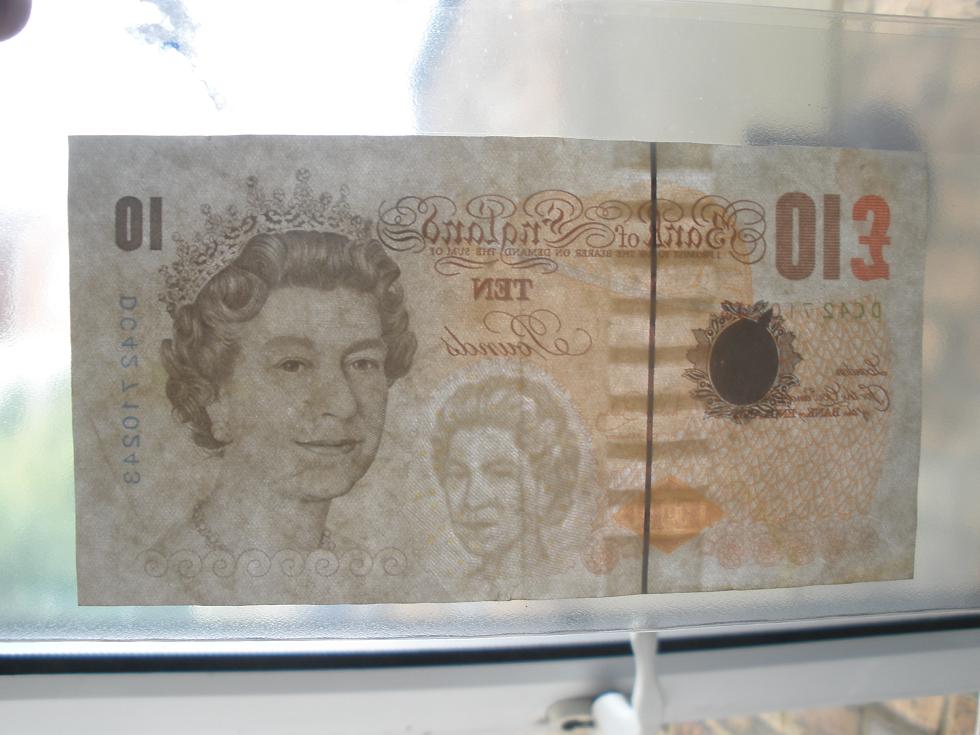 Edited by chybotisky
08/13/2012 10:11 am
|
|
|
|
Pillar of the Community
United Kingdom
2624 Posts |
I don't specialise in errors so can't give any educated answers but one question...
How do you know it was made like that given the amazing bleaches that can be made?
|
|
New Member
 United Kingdom
20 Posts |
I am not aware of any such amazing bleaches or fakes errors that would make underprint totally disappear.
I do believe this error is genuine but maybe you prove me wrong here.
|
|
Pillar of the Community
United Kingdom
2624 Posts |
I am not going to attempt to prove you wrong but I am naturally cynical. Mistakes occasionally happen but this is a huge one, and the standard for British coins and notes is quite high in general. It makes me think that either this is a rare one or it is not the real deal. This error is known to occur when the corner of a sheet gets folded over as it is printed and the design is printed on the wrong side of some notes and is missing from others. You would imagine that the checkers would generally notice this and few would escape into the public. Its certainly interesting in either case and something to hang on to in your collection. When I asked how you know it wasnt bleached I was hoping to hear it came out of a sealed bank packet or with some other plausable provinance, I would feel more assured if that is the case than you bought it on ebay. So where did you come by it? Edited by DavidUK
08/13/2012 11:08 am
|
|
Valued Member
United Arab Emirates
242 Posts |
|
|
New Member
United Kingdom
20 Posts |
thanks, I know all these pages.
What is the printing process of current notes of Bank of England?
There is no "see through" security feature on English notes which means that the averse/reverse offset doesn´t necessarily have to be printed simultaneously (but I still think it is).
Anyone?
|
|
Pillar of the Community
United Kingdom
2624 Posts |
The banknote printing process
Currently three printing processes are used in the printing of banknotes.
• Offset Litho
• Intaglio
• Letterpress
Offset Litho -- the printing plates transfer the ink to the paper via an intermediate offset roller. This process is used to print most of the front and back of the note except for the portrait of Her Majesty the Queen, the lettering and the numbering. Offset printing involves a number of separate plates with different colours superimposed in close register to produce high quality clearly defined images.
Intaglio -- this process is used to add the portrait of Her Majesty the Queen and the raised print on the front of the note. The ink rests in grooves engraved in the printing plate. When the plate comes into contact with the paper the ink is forcibly ‘drawn' from the plate onto the paper under very high pressure. This produces the raised print which is one of the characteristics that gives Bank of England notes their distinctive feel.
Letterpress -- this process is used for the cypher and serial numbers on the front of the note. Ink is transferred onto raised letters and digits which are then printed onto the note.
I copied that from the Bank of England website, I can see how the error you have occurs with the eariler sheet fed printing but with it occuring during the offset lithgo printing phase (fed through rollers I think) maybe that rules out the paper being folded over. I think you are right when you say that both sides are printed simultaneously, I have seen footage of this but I can't recall where.
Edited by DavidUK
08/15/2012 08:18 am
|
|
Pillar of the Community
United States
1812 Posts |
I purchased this error from the person who received it from the ATM. After sending for certification, and not being able to locate another example of this note, I contacted the Bank of England and after a internal investigation, receive a answer on how this happened and the printer made changes so this can not happen again... I then forwarded the reply to Coin World, along with the note to request if anyone else had one of these errors in their collection... This note is special as it contains the REJECTION MARKS over the serial numbers, removed from production, then entered back into production with a third set of serial numbers over the rejection marks... I posted this note in this forum sometime last year and received no replies...    |
|
Pillar of the Community
United States
1812 Posts |
I just checked the links that James4444 posted, and this type of error is not listed...
|
|
Valued Member
United Arab Emirates
242 Posts |
I believe that links I've provided are not considered a comprehensive reference. Thus, you might come across some "unlisted" UK note errors in the market from time to time.
Cheers
|
|
Pillar of the Community
United States
1812 Posts |
This is note number 37 of the 40 notes on the sheet.
I have been searching the internet for over 5 years now looking for a second example as the last 6 digits of the serial numbers will all be the same as this note, only the 1st 2 numbers will be different (#01 to #40)...
***I strongly desire a second example***
Should anyone locate one, PLEASE contact me...
THANKS...
|
| |
Replies: 10 / Views: 2,626 |
|










 Posted 08/13/2012 10:46 am