| Author |
 Replies: 19 / Views: 8,364 Replies: 19 / Views: 8,364 |
|
New Member
United Kingdom
5 Posts |
I came across this coin in my mothers effects and first thought it might be worth about £8 ($12) So I took a high res photo to place it on an auction sight. I noticed that there were a number of lines on the cheek which are proud and the same color as the rest of the coin also there are a number of what looks like copper splatter. I find it hard to believe that some one would go to such lengths to forge a Penny I would be interested in any one's opinion and if the consensus is its real what sort of value might it be worth Thanks in advance Del 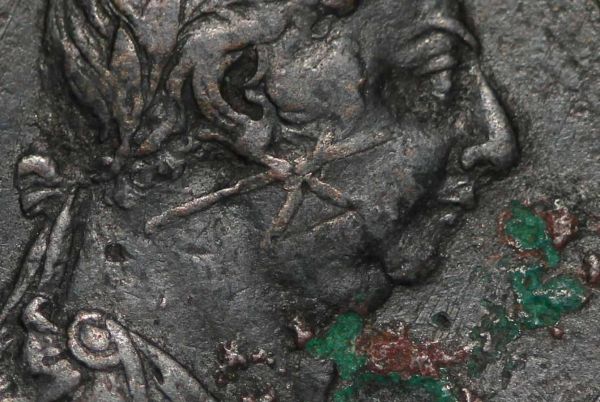 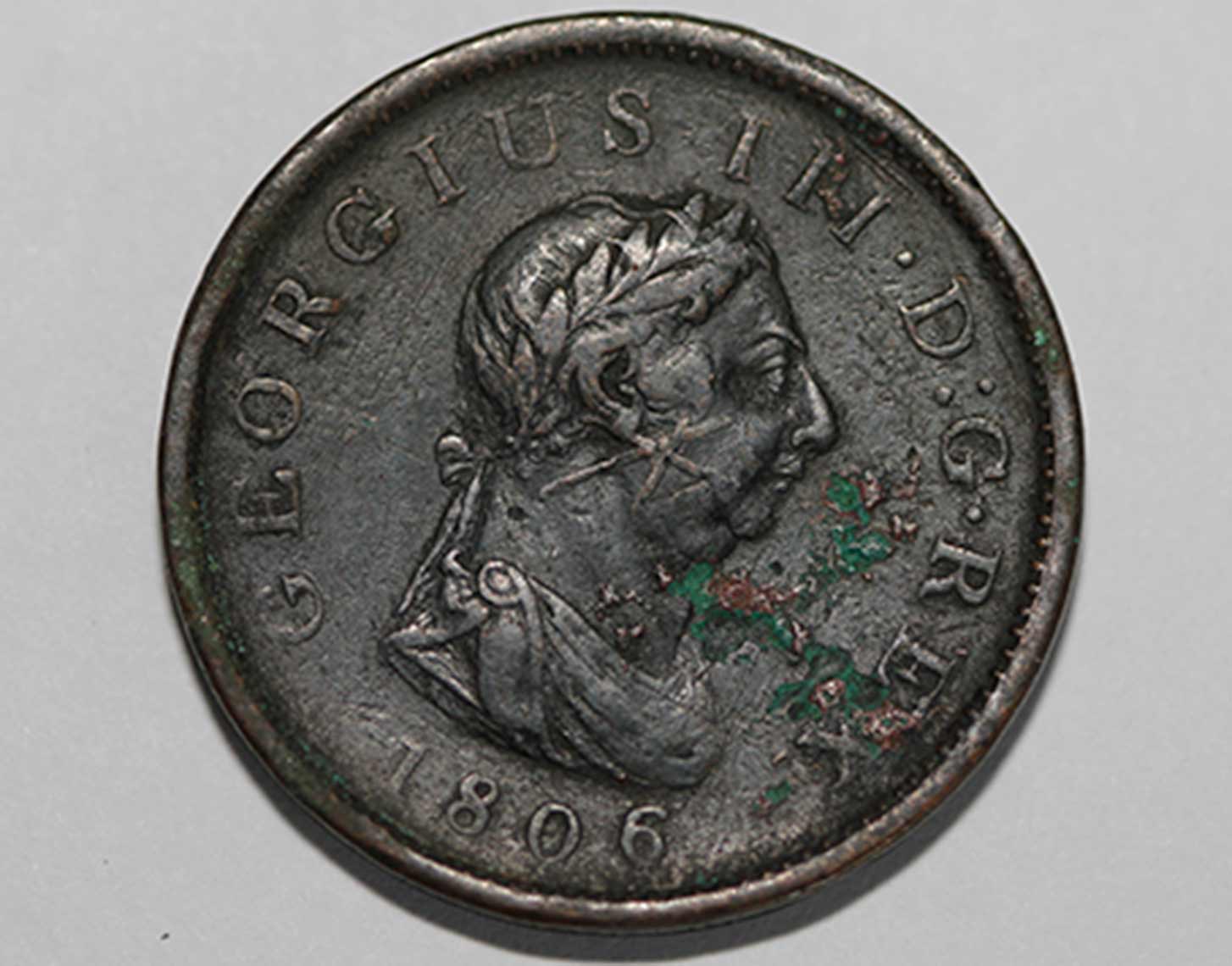 |
|
|
|
Pillar of the Community
United States
1374 Posts |
 Do you have a picture of the reverse? |
|
Pillar of the Community
United Kingdom
2624 Posts |
At first glance it looks genuine to me (not that I am an expert but I am familiar with the coin) I cant think what those lines could be, I look forwards to an expert explaining them.
|
|
New Member
 United Kingdom
5 Posts |
I can photograph the obverse but it is Britannia and not Britannium if this is any help till I upload an image later
regards
Del
|
|
New Member
United Kingdom
5 Posts |
Here is the obverse of the penny the coin is a dark brown on both sides. Hope this helps 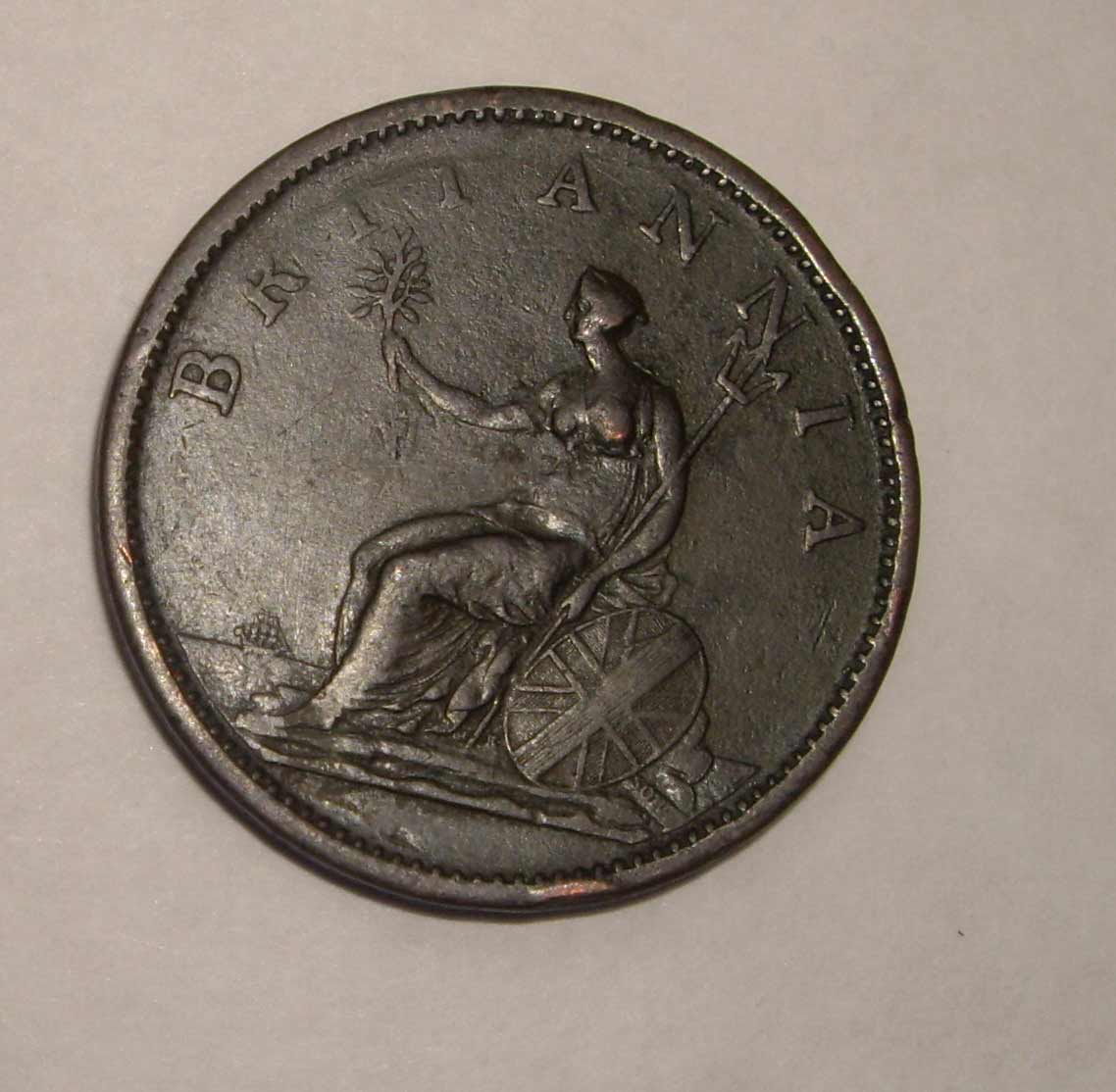 |
|
Pillar of the Community
United Kingdom
4208 Posts |
I think it could be remains from a mount. The splodge on George's face and the lines could be where the mount was soldered and the green is where copper in the mount reacted onto the coin.
But hey, speculation.
|
|
Pillar of the Community
United Kingdom
2624 Posts |
The green is not unusual on coins of this era and type... I have a 1799 cartwheel penny with similar and I don't believe it was mounted. Copper would not react with copper anyway and this coin is copper. The green is very hard and wont damage the coin, I tried verdi-care on some and it doesn't move it. It seems to be a mineral depost or something so I decided to leave well alone. (Its not attractive but if removed whats underneath might be equally unattractive)
This mark of the face is myserious to me, but I believe if anything was soldered on the coin that would be the entirely wrong place to do it.
The reverse is as I would expect...and the colour is normal... some of these coins are a light brown and some a very dark brown... the older generation used to treat coins with something that darkens them, I cant remember what but thats possibly why its not uncommon to find 1800's coins that colour.
|
|
Valued Member
United Kingdom
128 Posts |
Interesting thread; been waiting for the definitive answer but no joy yet and Googling revealed nothing relevent.
The lines on the cheek appear to be there deliberately and I'm wondering if those lines were put into the die as it was wearing out in the foundry to indicate that it was no longer fit for purpose, but someone did use it.
Second thought was that somebody did not like the king or what he was doing and defaced the die. It looks far to symmetrical to have happened by accident. It looks like the die was attacked with a screwdriver bit and a hammer. Just a couple of thoughts.
Mike.
|
|
Valued Member
United Kingdom
128 Posts |
Update. I've now found several references to the defacing of dies once they were considered worn.
Just one reference... "Royal Mint: Dies Matrices and Puncheons. ... Division within MINT Records concerning Coins, Medals and Dies ... by the Smith, and when the dies were worn out to see them defaced in the presence of the Warden, Master and Comptroller."
Apparently this was very common in many countries and often these dies were sold off and eventually reused by unscrupulous individuals to fake coins.
Perhaps this is the answer?
Mike.
|
|
New Member
United Kingdom
5 Posts |
The green is a reaction to the atmosphere oxidization and moisture, copper sulfate I think, like the green on copper roofs and domes.(From the internet)
It's the lines that have me puzzled if they were chisel marks from defacing a worn die I would have thought they would be random across the full face of the coin.( as per Balshaw second restrikes of 1961) But as can be seen in the image they are only a few milometers the longest being
approx 8mm are approx 0.5mm wide.
Just my thoughts as I have said I new to this game and looking for idea's
Thanks to every one thus far please feel free to comment
Regrds
Del
|
|
Valued Member
United Kingdom
128 Posts |
It's certainly a puzzle Del; it looks like the 'X' was done first and then the long line which makes me think that it was not in any way intended to be part of the design.
I do agree that the defacing is quite small but perhaps if they sold them off the buyer would prefer it to be so. I haven't seen any similar defaced dies though to compare it with; I can only find references that it was common place to deface dies when getting worn and unusable but no examples of what they actually did.
However if you wanted to make it instantly obvious (should someone want to use it in the future) making marks like that on the face would be the best way to go.
One thing I'm fairly sure of is that it's not a fake, having examined pictures of the same year coin from the web.
Perhaps in time someone else will come up with a more plausible explanation. I'd certainly be fascinated to know; I love a good mystery.
Mike.
Edited by MikeG
09/19/2012 2:46 pm
|
|
Pillar of the Community
United States
1761 Posts |
The coin may have been mounted. What is the color of the obverse and reverse? They look different. Is the obverse plated?
|
|
Pillar of the Community
United Kingdom
2624 Posts |
I don't understand the fascination with saying this coin has been mounted... I see no particular reason or evidence of it.
Generally a mounted coin has a bezel that go over it, this has 4 teeth which go through holes in the mount and are folded over to keep the coin in place. A bad mount would have the coin soldered in place...
A mounted coin therefore very often has 4 contact marks at north/south/east and west. This coin doesn't... nor does it have any colour difference from a collar partially protecting some of the coin and not other bits.
The only suggestion is the wear on R I T of Britannia... and those familiar with the coin might agree that very often these legends are not deeply struck and can suffer wear.
Nothing looks plated either... you can see the natural colour of the metal showing through on the rim of the reverse and on some of the teeth of the obverse but it is mainly showing a dark patina which is typical of this kind of coin (even if this darkness has been enhanced by some sort of oil as I believe was the custom in the past)
Defacing the dies is something I hadn't thought of but obviously a security measure to see that they would not be re-used. However I would have expected that a more thorough job would be done than just a couple of chisel marks. It certainly seems a plausable explaination in the absense of any other though.
Edited by DavidUK
09/20/2012 4:37 pm
|
|
Pillar of the Community
United States
1761 Posts |
The only reason I mentioned plating it seems to be the case on the obverse around REX. It appears to be a bi-layer area there opening up with green copper oxidation coming out from the underlayer? I agree the mounting observation seems/is weak - and it appears as die damage imparted to the coin. What do you think caused that striking weakness on the tops of RIT on the reverse - note the corresponding? obverse with the top of G and 1 also weak.
John Lorenzo
United States
|
|
New Member
United Kingdom
23 Posts |
Post-mint damage. There are drips of a similar solder on the portrait's neck.
|
|
New Member
United Kingdom
5 Posts |
Post-mint damage. There are drips of a similar solder on the portrait's neck.
I don't think its solder as they are small like splatter and appear to be copper being the same color but are attached to the coin and can't be lifted off. Also the lines on the cheek are so fine and straight and as I have said they are exactly the same color
Regards
Del
|
| |
Replies: 19 / Views: 8,364 |






 Posted 09/17/2012 8:02 pm





