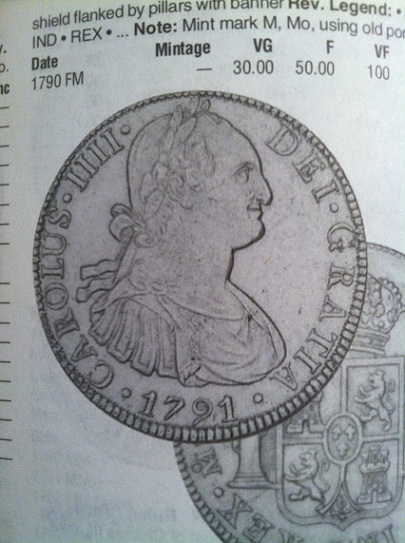
| Author |
 Replies: 8 / Views: 4,632 Replies: 8 / Views: 4,632 |
|
|
New Member
United States
20 Posts |
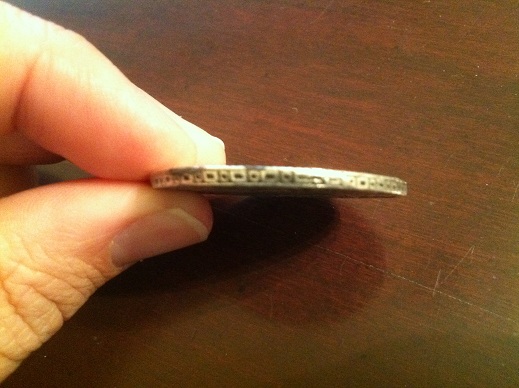
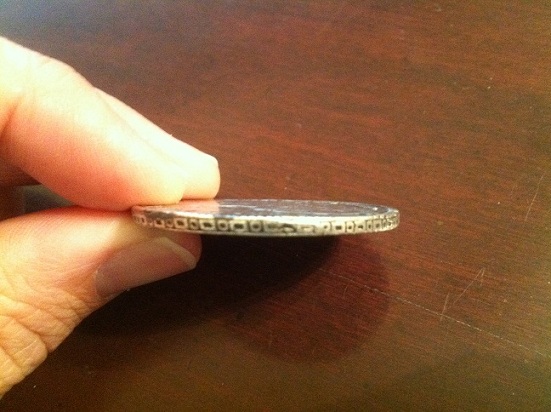
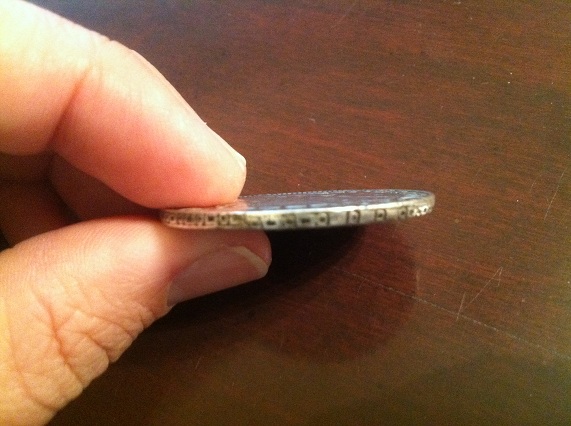
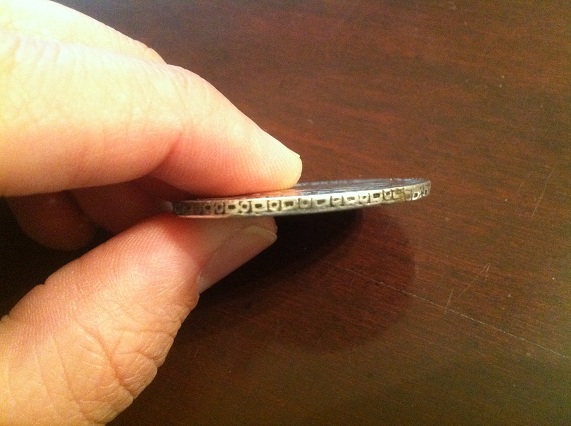
Could someone help me with this coin? The weight is right for the year, I think it's authentic but can anyone confirm or deny that? Also, anyone know the history behind the Chinese marks on the coin? I guess these were shipped over to china, right? Thanks!  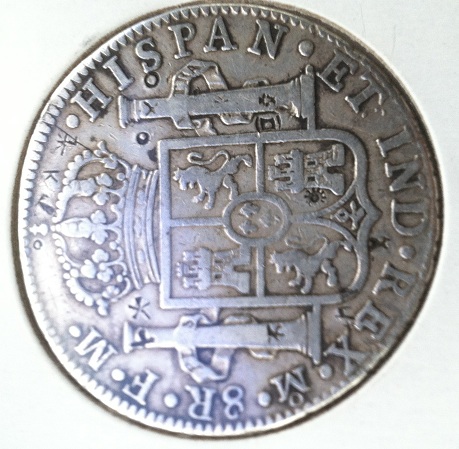 Edited by Ryaah
10/27/2012 02:54 am
|
|
|
|
Pillar of the Community
Czech Republic
803 Posts |
It's not authentic. The first things that jumps out is how uneven the dentils are between G and R in GRATIA.
|
|
Pillar of the Community
United States
1436 Posts |
Does it have any design around the rim edge?
|
|
New Member
 United States
20 Posts |
|
|
Pillar of the Community
Hong Kong
1270 Posts |
Ryaah, your coin looks so natural, these countermarks are common and right so I don't think it is fake. I don't have the same year of your coin so I can't say about the unevenness of the dentils.
|
|
Pillar of the Community
France
1591 Posts |
The mexico mint was very serious and accurate, it was not like Potosi.
You could expect some strange design issues from Potosi, but not from Mexico.
Here, the dentils have some issues, as noted already. The rim is not regular, some squares look a bit inclined, and the circles look like squares. Those were made by rolling the coin between two patterns, so everything should be correct and regular. Oh, and because of those two patterns, the design should stop at two places, not one (I only see one here on the first and second picture, but it's a bit hard from the pictures without seeing the position on the coin)
|
|
Pillar of the Community
United States
5362 Posts |
Without an XRF test it will be difficult to tell, but in my opinion you have a Class 2 Silver Counterfeit - an Unauthorized Replica.
I tend to agree with Matthew that Mexico set the standard for precision in the matrix. But that said I have seen a couple cases that I think MIGHT be real that have dentils that were interrupted by repunched letters. Perhaps repair after a clash?
But the edge for me says forgery - the type that was mass produced as trade coins in many locations worldwide. The only way to be sure is to look at the trace contaminants in the silver. The level of GOLD is the most critical and to be original needs to be elevated ABOVE 0.2% gold. Lower levels of gold and the presence of a couple other rare earth elements would confirm a date after 1870. Other trace elements actually point to dates after 1910.
The silver counterfeits are extremely common and are treated as real by MOST dealers. They are a category that has yet to be widely accepted BUT I HOPE THAT CHANGES SOON!
|
|
New Member
United States
20 Posts |
Wow, that's very interesting swamperbob! I'm curious now though, why would there be gold and other rare elements before 1870? The refining process wasn't perfect? Are there books out there to help identify fake mexican coins? Thanks so much!
|
|
Pillar of the Community
United States
5362 Posts |
Ryaah Elements are NEVER pure. When they are mined there are all sorts of other elements that need to be removed. Silver from Mexico has Gold as a substantial contaminant. That has been well known for years. Even today elements you buy have purity listed 999 or 999.9 fine for example. The test is determining the last 1 or 0.1 to make it reach 1000 fine.
You are correct in your assumption that refining was not always what it is today. The simple fact is that at different times the ability of mines to "part" gold and silver varied. So in the early 1800s there was NO way to purify any metal to better than 1 point of fineness. There were traces of junk metal mixed in. In fact many mine ingots were only 92 or 93 percent pure. The ability to part gold and silver was really developed in the late 1800's and early 1900's and is a great overall marker for age.
But gold is only one of many contaminants present in native silver. Others in much smaller traces were not even identified as elements until the 20th century. Some belong and SOME DO NOT. The elements that do not belong pretty well label a coin a fake.
There are several excellent books on the subject - one of the best is Craddock's "Scientific Investigation of Forgery" which runs about $175. This highly technical look at Art forgeries is fully applicable to the world of Numismatic Forgery. It also suggests the near impossibility of securing raw materials to make a perfectly correct assay at this date in time. Production of a perfect alloy requires a source of actually PURE metals to mix.
The problem is that most PURE elements like copper are NOT available commercially to the standards of purity required and that the trace contaminants often identify the copper as containing infinitesimal modern trace contaminants. The rare heavy metals used in the past few decades in the electronics industry are added to copper (non-native) and CONTAMINATE all modern copper and silver a like. Remember as XRF gets more precise 10 parts per MILLION or even one ppm is not impossible to conceive.
We are not all the way there to a complete list of what must and must not be present - BUT we are a heck of a lot closer in my own opinion than just 2 years ago.
The book being written by John Lorenzo, Gord Nichols and myself will cover much of this subject regarding the forgery of Portrait 8 Reales as far as we dare to go right now. It should be out next year.
|
| |
Replies: 8 / Views: 4,632 |
|







 Posted 10/27/2012 8:48 pm