| Author |
 Replies: 12 / Views: 6,862 Replies: 12 / Views: 6,862 |
|
|
Pillar of the Community
United States
8904 Posts |
I think THIS is cool!! I would love to own this bill!  [eBayItem]310503376368[/eBayItem] |
|
|
|
Bedrock of the Community
United States
11951 Posts |
I agree .. that is a very cool looking note .. I don't I have seen that one before
|
|
Pillar of the Community
United States
1339 Posts |
That one is sweet for sure !! Binary serial number to boot! Dream only for me!!!
|
|
Pillar of the Community
United States
6000 Posts |
I'm a huge fan of those Series 1914 notes. In my opinion, they are right up there (well, almost) with the "Educational" notes of 1896. So far, I have the $5 and the $10 in the series: 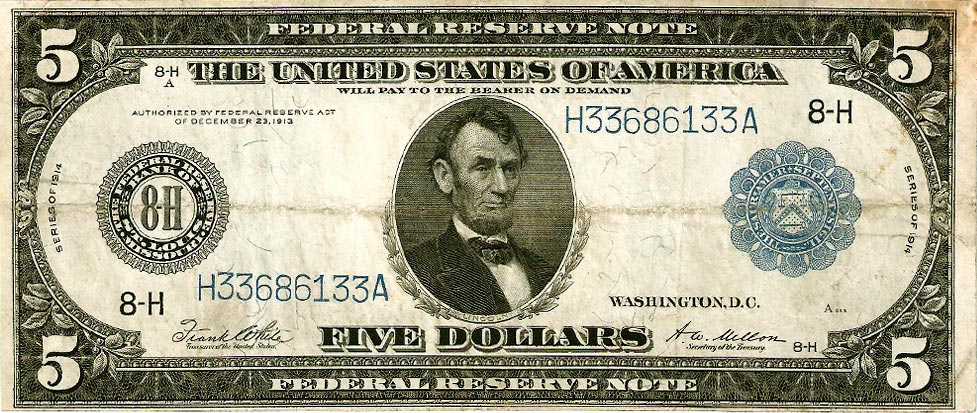 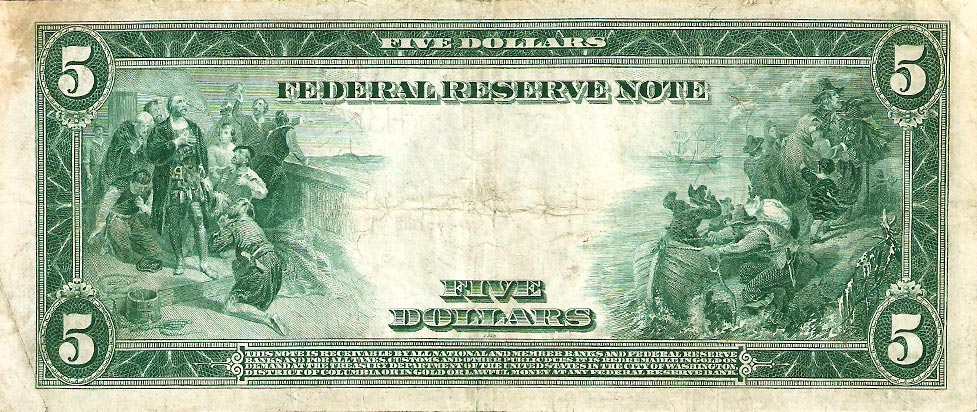 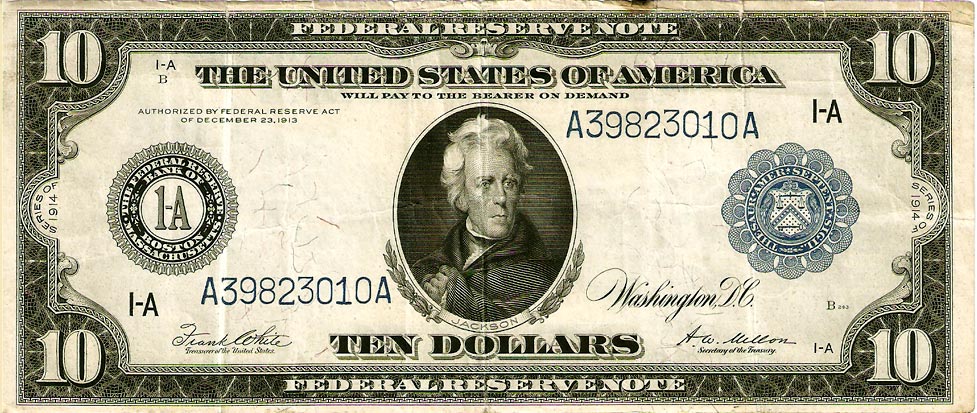 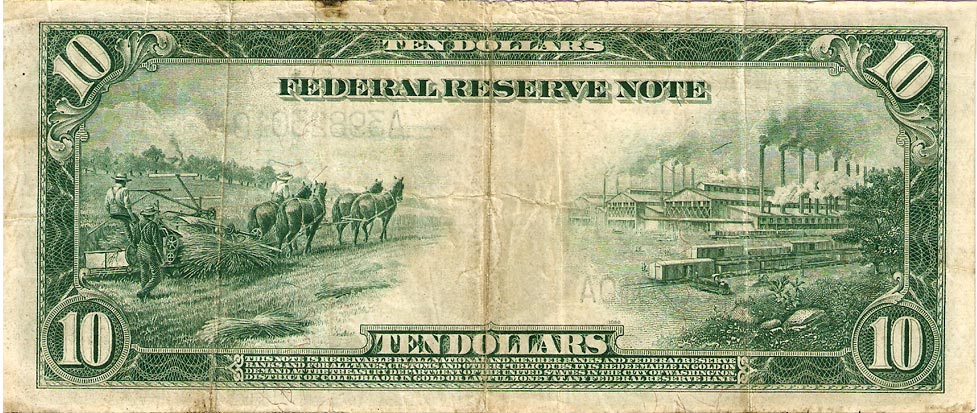 I hope to get the $20 in the near future. The $50 and the $100 may remain out of my grasp, but maybe someday... |
|
Pillar of the Community
 United States
8904 Posts |
Quote:
I'm a huge fan of those Series 1914 notes.  |
|
Pillar of the Community
United States
1812 Posts |
In my opinion the note has a washed out look, especially on the portrait, thus the VF20 Grade. It was common back then for the BEP to wash dirty currency, and after a half hour searching the internet, I found the BEP Time-Line and pasted the following from http://www.moneyfactory.gov/historytimeline.html ... "June 30, 1912: A machine for laundering currency notes is designed and constructed by the Bureau of Engraving and Printing and put into operation at various Treasury facilities. Money washing will be discontinued in 1918 due to problems with paper content and feel." |
|
Pillar of the Community
United States
621 Posts |
thats some good detective work broken-coin. thanks for that interesting bit of info. I never would of imagined they tried washing bills at some point.
the $100 bill looks awesome, I would love to have it too. its a bit out of my range though. for now.
Edited by justin3651
11/20/2012 06:02 am
|
|
Valued Member
United Arab Emirates
242 Posts |
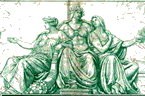
It's a cool looking note! I have one in my collection and never get bored of looking at it every day! 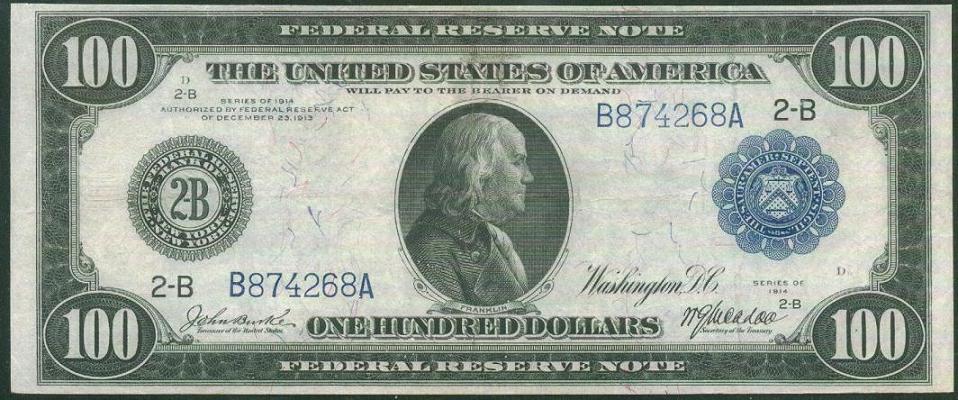 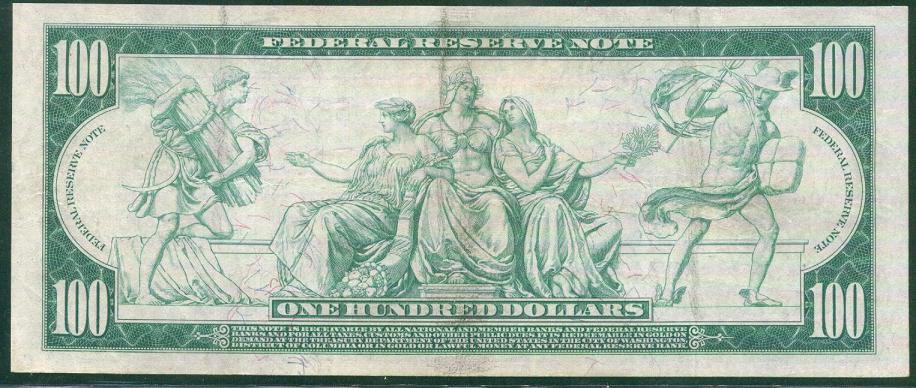 The "Reverse" of this note was intended to be used on all small size notes. It was first proposed in 1910 by MacVeagh (secretary). The original painting which hangs in the BEP is the work of Kenyon Cox: http://en.wikipedia.org/wiki/Kenyon_CoxLater, an engraving was made by G.F.C Smillie, and with a few alterations, this design was accepted for all $100 Federal Reserve notes of 1914 (BEP). The allegorical figures represent: Labor, Plenty, America, Peace and Commerce. Cheers Edited by James4444
11/21/2012 09:43 am
|
|
Pillar of the Community
United States
1285 Posts |
Broken coin...washed out is accepted in some circles as that was the MO back then
But words like..pressed and trimmed come to mind with some of these notes which are not OK so to say.
|
|
Moderator
 United States
15884 Posts |
Sidestepping the ongoing debate ... I agree with Moe that the OP posting is a very lovely example of USA history.
David
|
|
New Member
United States
28 Posts |
Washed or not, I'd love to own that bill!
|
|
Pillar of the Community
United States
6000 Posts |
w00t! Just got my Series 1914 $20 in the mail today ( ebay purchase). Until such time as I decide to expand my collection to $50 and $100 bills, this completes my Series 1914 set: 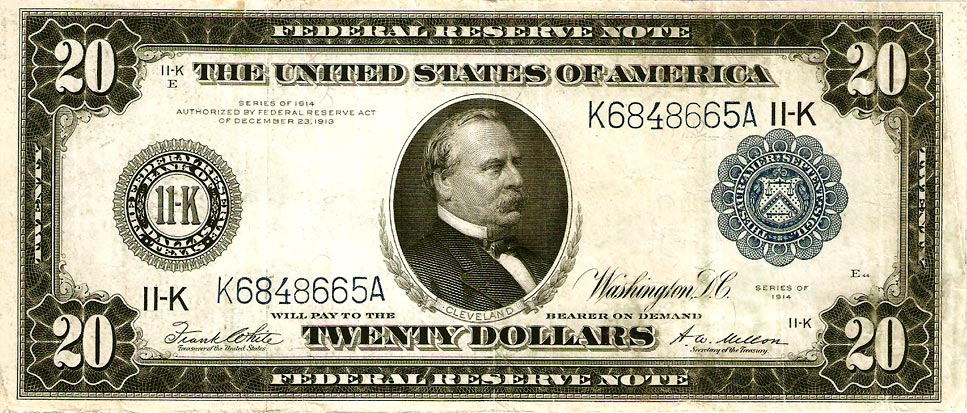  |
|
Pillar of the Community
United States
3453 Posts |
Want to hear something fun? Last month I was asked by a friend to help put an insurance value on a coin and bill stash her son inherited from his grandfather. I pulled out the 1914 $100 and nearly had a heart attack - I was so excited. And then her husband said "Oh, that is one of his fake notes, we can throw that away". I can tell you I nearly sucked all of the oxygen out of the room before I yelled NOOOOO! The old gentleman had very eclectic taste in notes and coins. Once we have everything listed for insurance, I hope they let me post some of the items up for help with attribution. |
| |
Replies: 12 / Views: 6,862 |
|







 Posted 11/19/2012 7:54 pm