| Author |
 Replies: 18 / Views: 2,284 Replies: 18 / Views: 2,284 |
|
Pillar of the Community
921 Posts |
This 1964 Kennedy half has something through the #4 in the date all the way upto the S. It dosent come off and is part of the coin itself. Would this fall under any ERROR scenerio or class? Obviously its a mint error? isn't it? 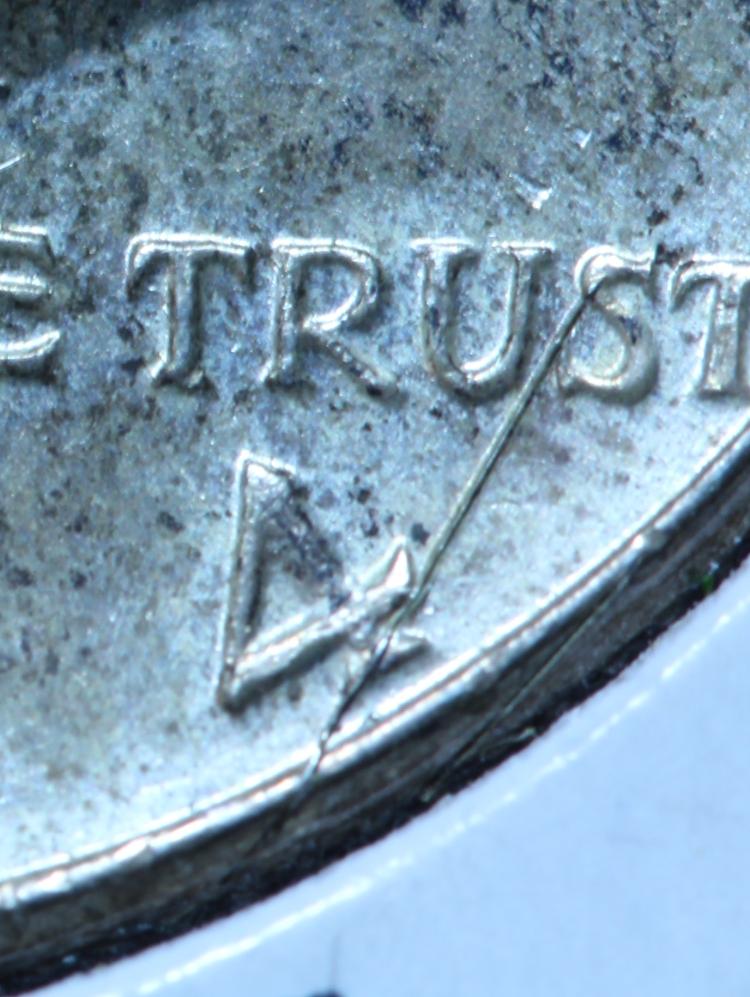 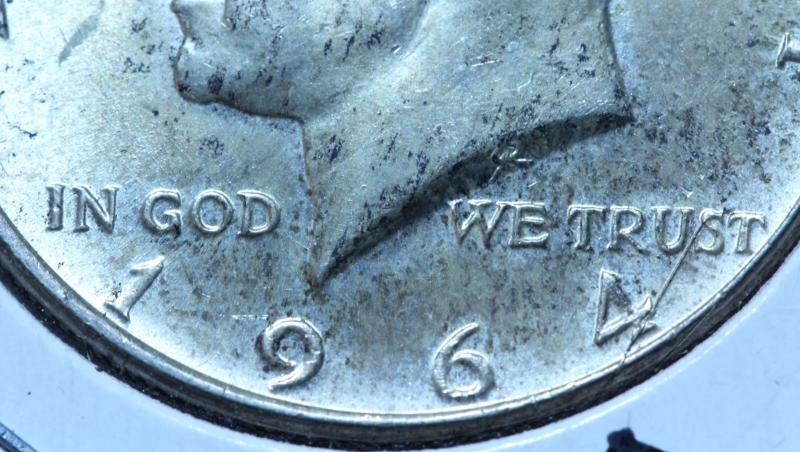 |
|
|
|
Valued Member
United States
71 Posts |
This is a mint error, it looks like a die chip, to me. Nice find.
|
|
Pillar of the Community
United States
1195 Posts |
Nay, it's a small die crack. Also a nice find.
|
|
Rest in Peace
United States
1943 Posts |
This looks like an angled cut. The cut is on the right side pushing the metal up on the left side. It is just PMD. |
|
Pillar of the Community
United States
3077 Posts |
Pyrbob you sure that looks like a die crack to me
|
|
Valued Member
United States
162 Posts |
I see nothing that would indicate that it is a cut. Looks like a die crack to me, but to verify that it isn't a cut, could you possibly post another picture where the light hits the right side of the crack? In your 2 pictures, the light hits the left side of the crack making a little hard to tell what's on the right of it (in the shadow). :)
|
|
Rest in Peace
United States
1943 Posts |
The reason it looks like a crack is because of the angle of the light source when the photo was taken. The light was on the left side so it lights up the high part of the cut and the valley from the cut on the right side is just a dark shadow. Here are the things that shot up red flags to me against it being a die crack. 1) Die cracks that run from the rim to the field are thicker at the rim than they are where they end in the field. 2) They typically run in a jagged direction an are not perfectly straight. 3) They are on the die so they only affect the coin where the die strikes it.
Now look at the closeup above. The cut is straight and a constant thickness. Look at the lower part of the 4. The cut is deeper on the bottom serif of the 4. I see a lighter area on the right side of the ofd the cut here telling me the cut is angled from the right down to the left at an angle. Finally look below the 4. The cut comes past where the die had contact with the coin and comes down around part of the edge. Then there is a second cut at the intersection of the rim and the edge to the right of the main cut that didn't make it up into the field.
I think if a second closeup photo was taken with the light source on the right the cut would be easier to see.
|
|
Moderator
 United States
23522 Posts |
The first pic tells the tale anyway. This is a cut, and one which involved motion rather than a single impact. Look at the spot where it reaches the S. Note that, right at the shoulder of the letter, the damage disappears. A die crack would plainly extend through this area, since if it appears at the top of the S (a deeper part of the die) it would have to exist at the shallower part of the die as well.
Whatever did the damage likely started at the S and proceeded downward, "falling off" the S and into the field. A static (motionless) something causing that gouge wouldn't continue the damage in the field so close to the letter.
Kinda doesn't hurt that you can see a second cut at the rim, either.
|
|
Valued Member
United States
162 Posts |
Well, if you would have said it like that in the first place Pyrbob, I don't think any of us would have argued with you. Very good points! A picture with the light source at the right of the error should completely verify what you said. Simply telling someone what something is usually won't convince anyone. A little information goes a long way.  Edited by TheCentMan
11/22/2012 6:52 pm
|
|
Rest in Peace
United States
1943 Posts |
LOL. Well I try to keep from going into a long explaination unless it is needed. Plus sometimes I see the answer but I don't have the time to type a long explaination. Then I'll explain later if needed. I'm glad you can see it now.  |
|
Valued Member
United States
162 Posts |
Hehe, not trying to sound rude or anything sorry if it comes off that way I see how it could. I'm just saying, most people need some kind of explanation or convincing to get them off their opinions (me included). I actually started to question what I said after noticing it on the rim of the coin (where the die does not strike), but I thought I'd leave the post there to get further information. Hey, I learned something new. Sorry for being such a hassle guys. :D
|
|
Pillar of the Community
United States
2624 Posts |
First thing first:I agree it's PMD. Now for the "but": Quote:
pyrbob: 2) They typically run in a jagged direction an are not perfectly straight. I have seen many cents with straight die cracks,mostly on the reverse.I do not save cracks so I have none to post. |
|
Pillar of the Community
United States
3077 Posts |
thanks Prybob always a good day when ya learn sumtin
|
|
Pillar of the Community
United States
3640 Posts |
I agree that dies cracks almost always have irregular and not straight lines. Die gouges have mostly straight somewhat uniform lines. I must be going blind though as I do not see this line as being "cut" (incuse) on this coin. It looks raised to me. If the OP will state whether the line is raised or not then I will reply furthur. If raised and not incuse I would think a weird crack or otherwise a gouge or possibly some actual debris from the die still stuck/struck on the coin. If this is "cut" into the coin then no idea other than PMD. |
|
Pillar of the Community
 921 Posts |
Its actually all raised & curls over & stops on the face of the coin, then continues raised back onto the S, then to a point. There is a 2nd line thats hiding on the rims' edge too, which is also raised. Ill get on taking more pics on a different angle.
|
|
Pillar of the Community
United States
3640 Posts |
Round 3 Trainer, Cut Me. I'm goin back in for round 4  Easy test for the OP. Run your finger over the area to feel if it's raised or not. Maybe, just maybe if struck through foreign debris (still intact) that would explain the run over the rim and S |
| |
Replies: 18 / Views: 2,284 |





 Posted 11/22/2012 12:20 pm





