











 Posted 12/03/2012 3:00 pm


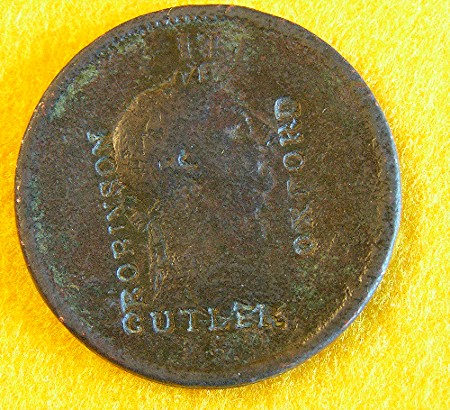
This is actually a counterstamped coin which, by "virtue" of the stamping renders it a token of sorts. It's still a coin, but one that then has appeal for token collectors who seek historic relics of commerce from bygone days. The counterstamp tells us that a particular merchant used this coin to advertise and promote their business.
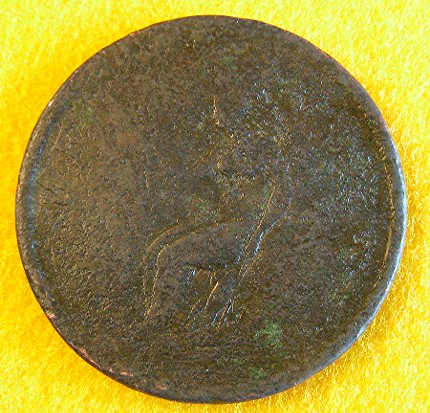
Dr. Gregory Brunk is considered to be one of the foremost authorities on the subject of counterstamped coins. Brunk states (2003) that the counterstamps or countermarks (terms often used synonymously) of Robinson are among the most commonly encountered ones on English coins. There were a number of different combinations of the counterstamps, ROBINSON, CUTLER, RAZOR, OXFORD and some other words, creating different varieties. The subject coin, a halfpenny (1806?), appears to be Brunk #R-388. According to Brunk, these countermarks/counterstamps were applied after 1837. English subjects would not likely want to deface the new coinage of their then Queen Victoria; probably, it being better, even popular, to deface the coinage of George!
James Robinson (commencing 1830 or so) is thought to have been running the business in 1837 at 46 Cornmarket. Perhaps, James was John's father and died about 1839? Brunk says that John was at 44 Cornmarket until 1847. For what it's worth, I've found that errors in this sort of research are fairly common.
Dr. Gregory Brunk is considered to be one of the foremost authorities on the subject of counterstamped coins. Brunk states (2003) that the counterstamps or countermarks (terms often used synonymously) of Robinson are among the most commonly encountered ones on English coins. There were a number of different combinations of the counterstamps, ROBINSON, CUTLER, RAZOR, OXFORD and some other words, creating different varieties. The subject coin, a halfpenny (1806?), appears to be Brunk #R-388. According to Brunk, these countermarks/counterstamps were applied after 1837. English subjects would not likely want to deface the new coinage of their then Queen Victoria; probably, it being better, even popular, to deface the coinage of George!
James Robinson (commencing 1830 or so) is thought to have been running the business in 1837 at 46 Cornmarket. Perhaps, James was John's father and died about 1839? Brunk says that John was at 44 Cornmarket until 1847. For what it's worth, I've found that errors in this sort of research are fairly common.


