| Author |
 Replies: 11 / Views: 1,082 Replies: 11 / Views: 1,082 |
|
|
Valued Member
United Kingdom
298 Posts |
What would you grade this as? Its very toned, but the only wear I can see is to the ES of States which is strange because it still has full rims on the edges. Do you think I should attempt a bit of aluminium (aluminum!) foil and baking soda treatment on this or leave as it is? 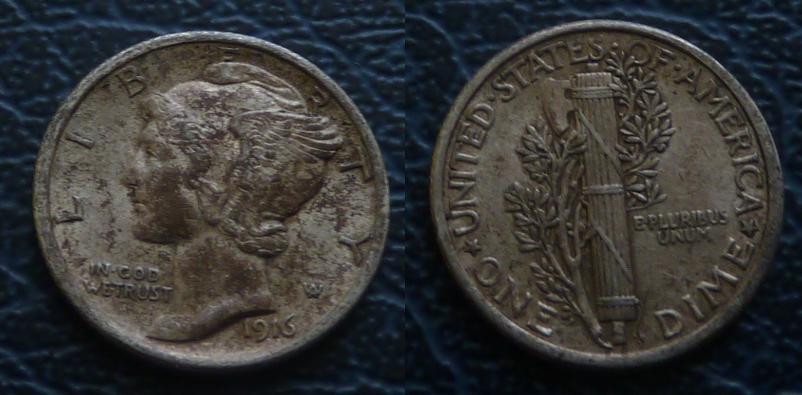 |
|
|
|
Pillar of the Community
United States
4337 Posts |
Quote:
aluminium (aluminum!) foil and baking soda treatment what is that technique all about? as for grade, it looks like MS devices and surfaces to me but wait for the Merc Experts to chime in nice dime |
|
Valued Member
 United Kingdom
298 Posts |
Quote:
what is that technique all about? placing a toned silver coin on foil and boiling water with a little baking soda will take the toning away (or has on bullion I've tried it on) |
|
Pillar of the Community
United States
797 Posts |
It looks like great details overall, but no mint luster. Sometimes that is difficult to make visable through pictures. |
|
Moderator
 United States
23522 Posts |
You are more likely to ruin it than help it with any "conservation" procedure.
|
|
Valued Member
United States
168 Posts |
It looks like a nice AU. If you want to destroy virtually all its numismatic value then I suggest you follow your aluminum and baking soda plan. If, however, you simply do not like the look and want to realize the most in a sale then I urge you to sell it as is and buy a coin that you like.
|
|
Valued Member
United Kingdom
298 Posts |
No denying I'm fairly ignorant about the numis side of collecting, was unaware the aluminium trick would do any other damage to the coin. I take it the only thing that is remotely acceptable is using acetone to clear any dirt?
|
|
Valued Member
United States
168 Posts |
Lots of folks use acetone to attempt to get loosely adhered dirt and gunk off of the surfaces of coins. However, quite a few others make no attempt at all to remove dirt. I am in the camp that likes to keep the dirt on the surfaces and would not want to buy a coin that was spiffed up.
|
|
Pillar of the Community
United States
4337 Posts |
Quote:
It looks like a nice AU - Tom B. This is a perfect opportunity for me to further my knowledge base. I'll preface with the old adage in numismatics - "Grading is subjective". I thought MS, albeit entry level, but MS nonetheless IMO at first glance. Why do you think AU? Is it due to the lack of luster? Would a coin only be eyed as MS, regardless of mottling, if there is enough apparent luster to the mirrors and devices? The fact that you have completely unsoiled details to the reliefs of both the obverse and reverse and what appears to be FSB are all discounted to an AU level due to luster lack? Sorry for the debate but its meant in the healthiest of tones and intentions. |
|
Pillar of the Community
United States
4132 Posts |
It's hard to tell from the picture if it's AU or just an ugly MS. An in-hand examination could determine if the flat spots in the hair area are light wear or just not fully-struck (common on 1916, which had a higher-relief design). It looks like it still has full bands, but that's actually not uncommon on AU 1916 dimes - many were set aside and tossed in drawers by the general public and were mishandled or pulled after short circulation.
|
|
Valued Member
United States
168 Posts |
I have no problem with an MS coin being dark and gunky. After all, MS is defined by the lack of wear rather than a bright surface. However, the Merc in question appears to have light wear on the fasces on the reverse, especially on the diagonal bands that cross the center. That looks like an AU wear pattern. The obverse is so dark in the image that it is tough to tell what is toning and what might be wear.
|
|
Moderator
United States
23522 Posts |
Quote:
No denying I'm fairly ignorant about the numis side of collecting, was unaware the aluminium trick would do any other damage to the coin. I take it the only thing that is remotely acceptable is using acetone to clear any dirt?
There is no hard and fast rule, only situational decisions. One must always consider what the resulting coin will look like. For instance, using acetone on a toned coin could easily leave "clean" looking places formerly covered by the stuff the acetone removed (which wouldn't have toned), making the coin look obviously treated. |
| |
Replies: 11 / Views: 1,082 |
|










 Posted 01/02/2013 11:59 am


