| Author |
 Replies: 8 / Views: 2,351 Replies: 8 / Views: 2,351 |
|
|
Valued Member
United Kingdom
53 Posts |
Hi can anybody tell me what this coin or medal is and if it is worth anythying, Thanks 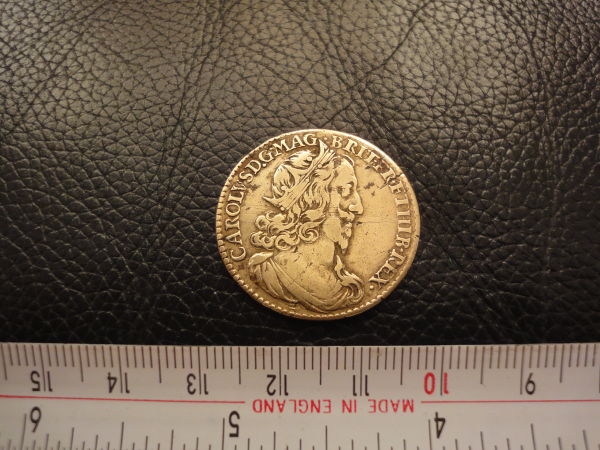 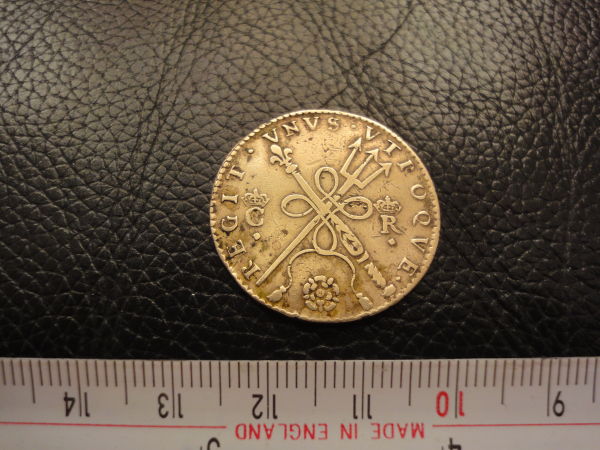 |
|
|
|
Pillar of the Community
United Kingdom
739 Posts |
Looks like a Charles I Pattern Coin of some sort.
I would say a groat but only a guess
Edited by rooneydog
01/27/2013 08:06 am
|
|
Valued Member
 United Kingdom
53 Posts |
coin is of a yellowish colour
|
|
Pillar of the Community
United Kingdom
739 Posts |
Here is an extract from treasure realm. Number 11 is similar to yours :
The following pieces are usually described as half groats, and are included in the series of silver coins, or rather patterns for silver coins. Their weight, in silver, however, varies from 21 to 30 grains, and I prefer to treat them as patterns for copper coins, particularly as two, at all events, occur in copper or brass. It may generally be laid down as a rule that, when a coin, concerning which we have no direct information, occurs in two metals, the lower metal most often represents its true position. Thus we have many proofs in silver, and sometimes in gold, of copper coins; while proofs in silver of gold coins, and in copper of silver coins, rarely occur. There are, of course, exceptions; but the comparative rarity of the coin in the one or the other metal has no bearing upon the question. Silver specimens of Queen Elizabeth's "PLEDGE OF A PENNY" are far more common than copper ones. The "QVATVOR MARIA VINDICO" farthings are more common in silver, and many other instance will occur to the collector.
8. O. CAR. D. G. MAG. BRIT. FRAN. ET. HI. R. the king's bust bareheaded, with a ruff, m. m. lozenge.
R. FIDEI DEFENSOR. Two C's interlaced, surmounted by a crown; under the cyphers, a small B. An inner circle on obv. and rev. R. 3. in silver, R. 8 in copper or brass.
This is by Briot, whose half-groat weighs 14 grains, whereas this, when in silver, weighs 27 or 28 grains. I have one in brass in my collection which weighs 31 grains.
9. O. CAR. D. G. ANG. SCO. FR. ET. HIB. REX. Otherwise as No. 8.
R. Same as No. 8, but there is a lozenge under and on each side of the interlaced C's, and there is no B under them.
I have seen this in silver only.
10. O. CAR. D. G. ANG. SCO. FR. ET. HIB. REX. m. m. a small lozenge. The king's profile bust with large ruff.
R. FLOREBIT. IN. AEVUM. A full-blown rose, irradiated, m. m. rose. R. 5.
A specimen of this in gold is in the National Collection. It otherwise occurs in silver only.
11. O. CAR. D. G. MAG. BRIT. FR. ET. HIBER. m. m. rose, king's head in profile with large ruff.
R. REGIT. VNVS. VTROQVE. m. m. rose, a sceptre and trident united by a triple knot between a C. on each side, crowned. R. 5.
|
|
Valued Member
United States
120 Posts |
|
|
Pillar of the Community
United States
567 Posts |
How do you get Leopold the Hogmouth from that?
|
|
Valued Member
United States
120 Posts |
You don't.....failed attempt at humor
|
|
Valued Member
United Kingdom
53 Posts |
Still not been able to identify this coin can anybody help ple ASE |
|
Pillar of the Community
United States
807 Posts |
This agrees exactly with #26 of Charles I in Hawkins' "Medallic Illustrations of British History", attributed to the year 1628.
OBV Bust of Charles I to right, open radiated crown, hair long, slight drapery ; beneath, a B turned sideways for Nicolas Briot, the engraver. CAROLVS D:G MAG BRIT FR ET HIB REX
REV A sceptre & trident crossed & united by a cord, between C and R, both crowned ; below, a rose. REGIT VNVS VTROQVE
1.1 inch diameter (27 mm, say).
Known in silver (British Museum), gold (Bodleian), bronze or brass (Paris & Stockholm). Supposed to be a pattern for a shilling.
Rare.
If genuine, it's definitely worth something, even if it's brass rather than gold.
|
| |
Replies: 8 / Views: 2,351 |
|







 Posted 01/27/2013 08:19 am





